
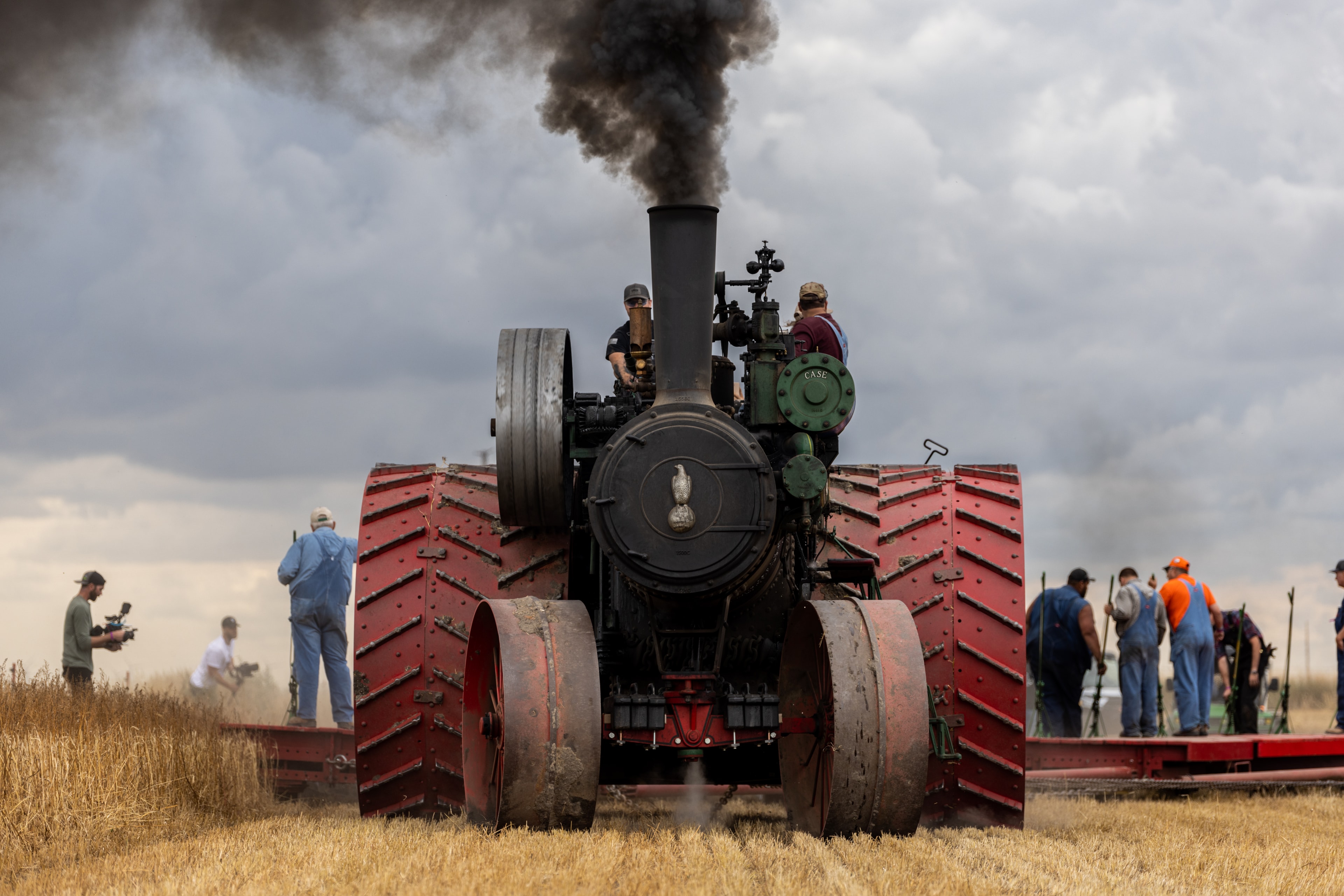
A Legend Lost. A Dream Realized.
The Story of the 150 HP Case
Nine were built. None survived. Until one man spent twelve years making the impossible real.
Explore the StoryNine Were Built. None Survived.
The Most Powerful Steam Traction Engine Ever Made
Between 1904 and 1907, the J.I. Case company designed and built nine experimental 150 HP Road Locomotives. These were the most powerful steam traction engines ever produced — massive iron machines that represented the absolute peak of agricultural and industrial steam power.
None of the original nine survived. They were lost to time, scrap drives, and the relentless march of the internal combustion engine. For more than a century, the 150 HP Case existed only in old factory test photographs and the imaginations of steam enthusiasts.
The Dream
A Nine-Year-Old Boy and a Factory Photograph
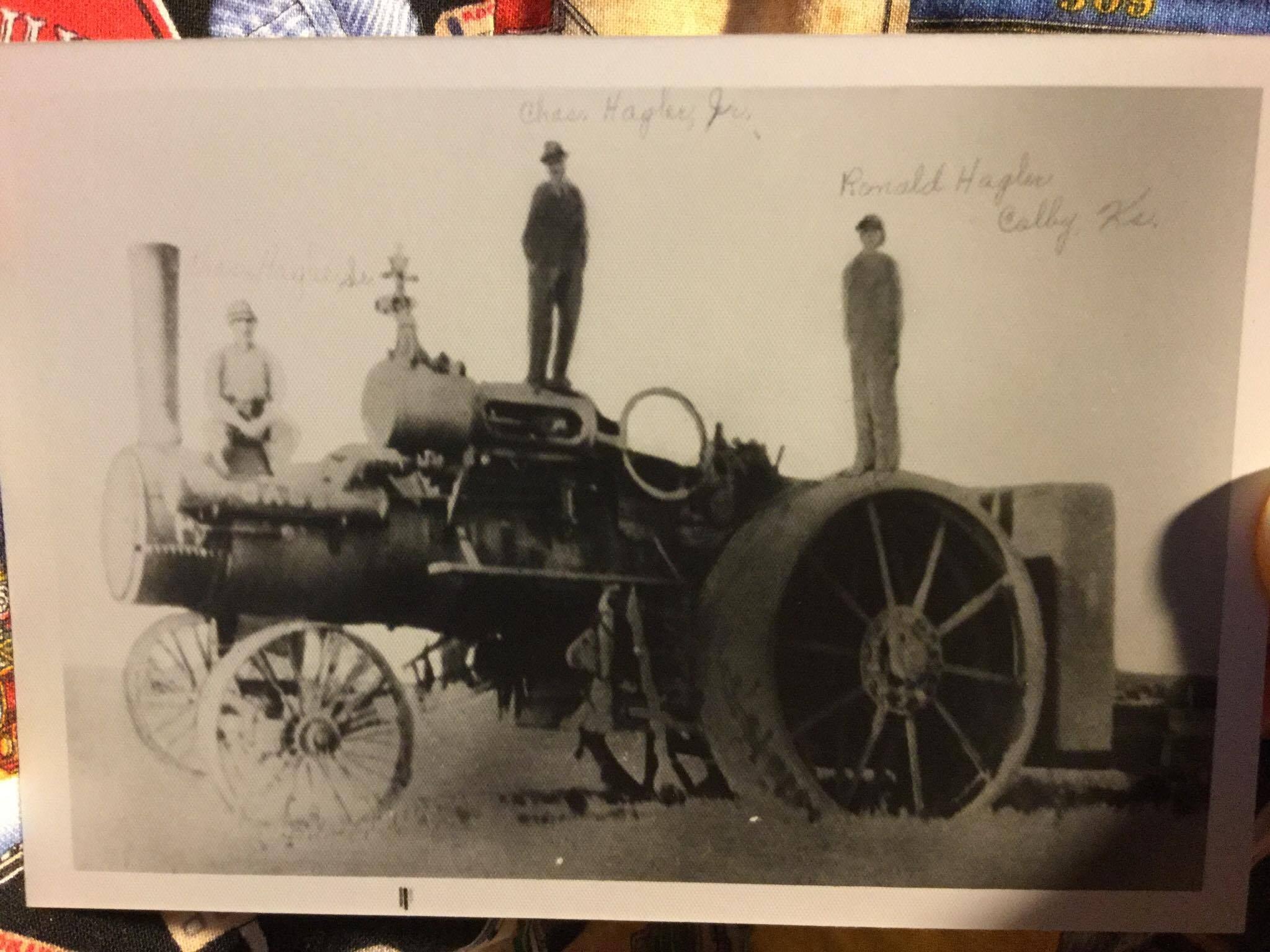
Kory Anderson first learned of the 150 HP Case at age nine, after seeing an old factory test photograph. The image of that massive machine — the largest steam traction engine ever built — planted a seed that would take decades to grow.
For the next twelve years, Kory pursued the dream of recreating the engine. He researched, planned, and gathered the knowledge and resources needed to bring the 150 HP Case back to life. It was not a question of if — only when.
The 12-Year Journey
TWELVE YEARS. ONE IMPOSSIBLE DREAM.
From a nine-year-old boy with an extraordinary vision to a Guinness World Record-holding achievement, every chapter of Kory Anderson's life helped prepare him to bring the legendary 150 Case back to life.
The Dream Begins
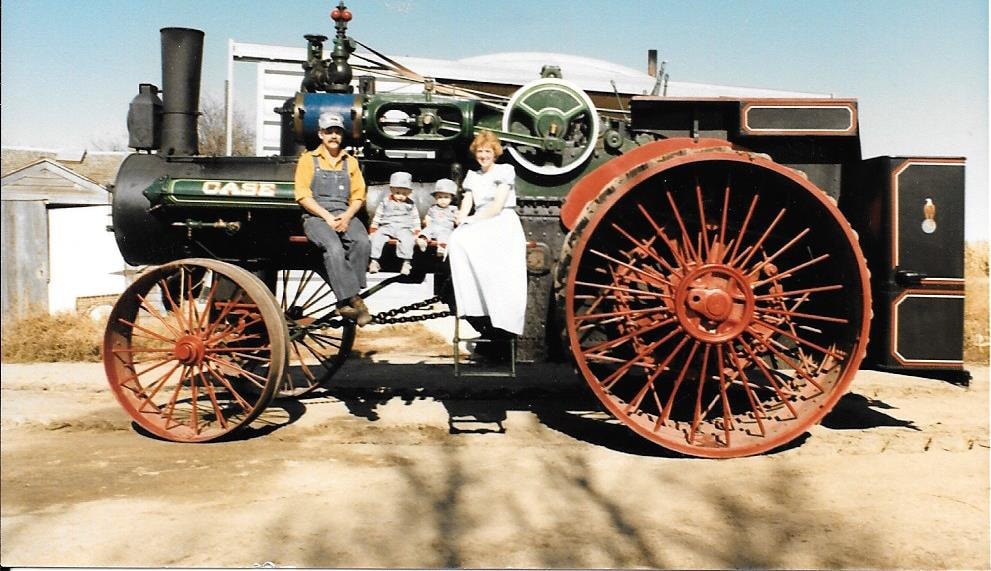
A young Kory Anderson discovers the legendary 150 HP Case Road Locomotive and begins dreaming of bringing the lost machine back to life.
The Dream Begins
A young Kory Anderson discovers the legendary 150 HP Case Road Locomotive and begins dreaming of bringing the lost machine back to life.
The First Restoration
Kory restores a 65 HP Case steam engine, developing the hands-on experience and mechanical skills that would shape his future.
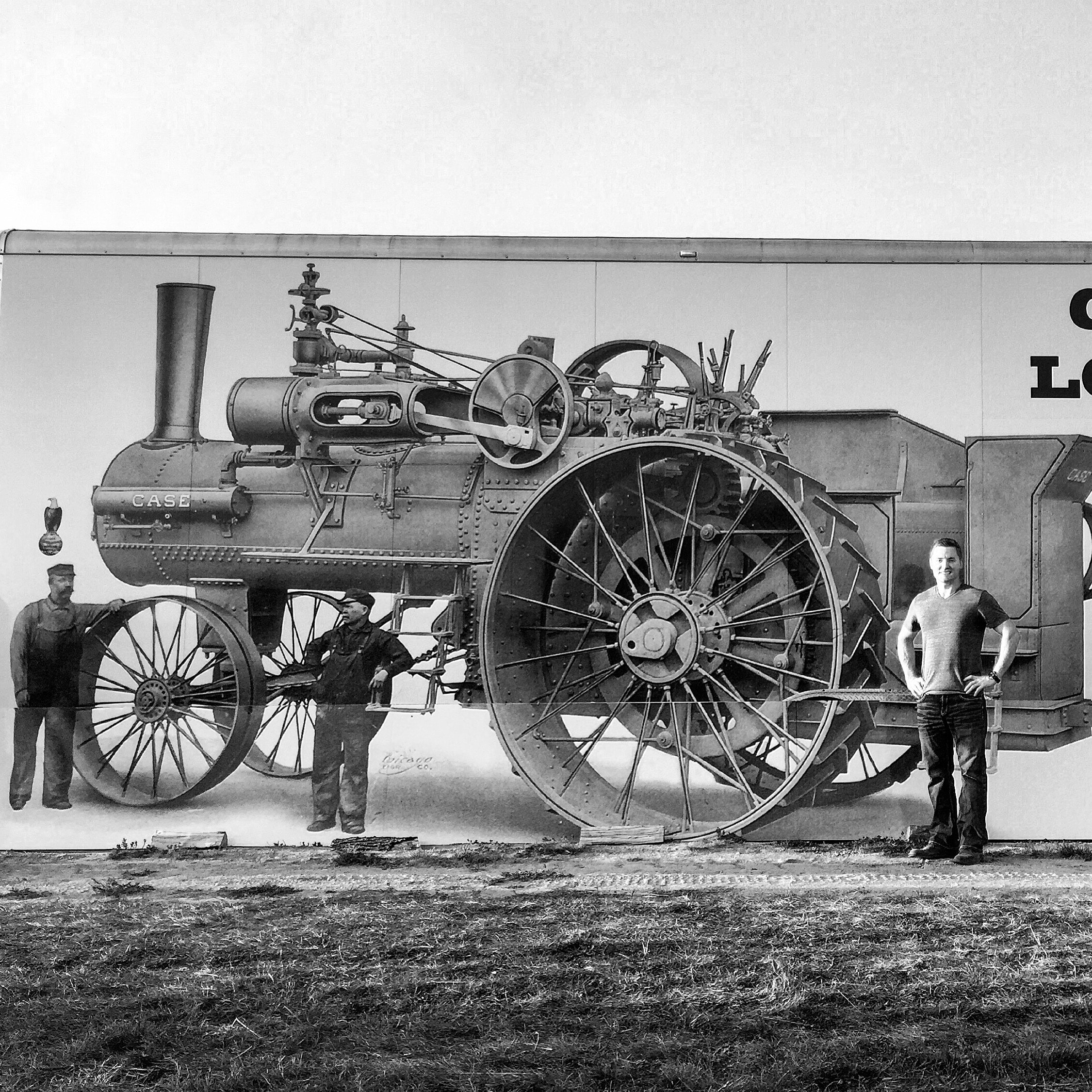
The First Restoration
Kory restores a 65 HP Case steam engine, developing the hands-on experience and mechanical skills that would shape his future.
Learning from the Best
While attending college, Kory works alongside mentor Jim Briden, developing skills in machining, engineering, and craftsmanship.
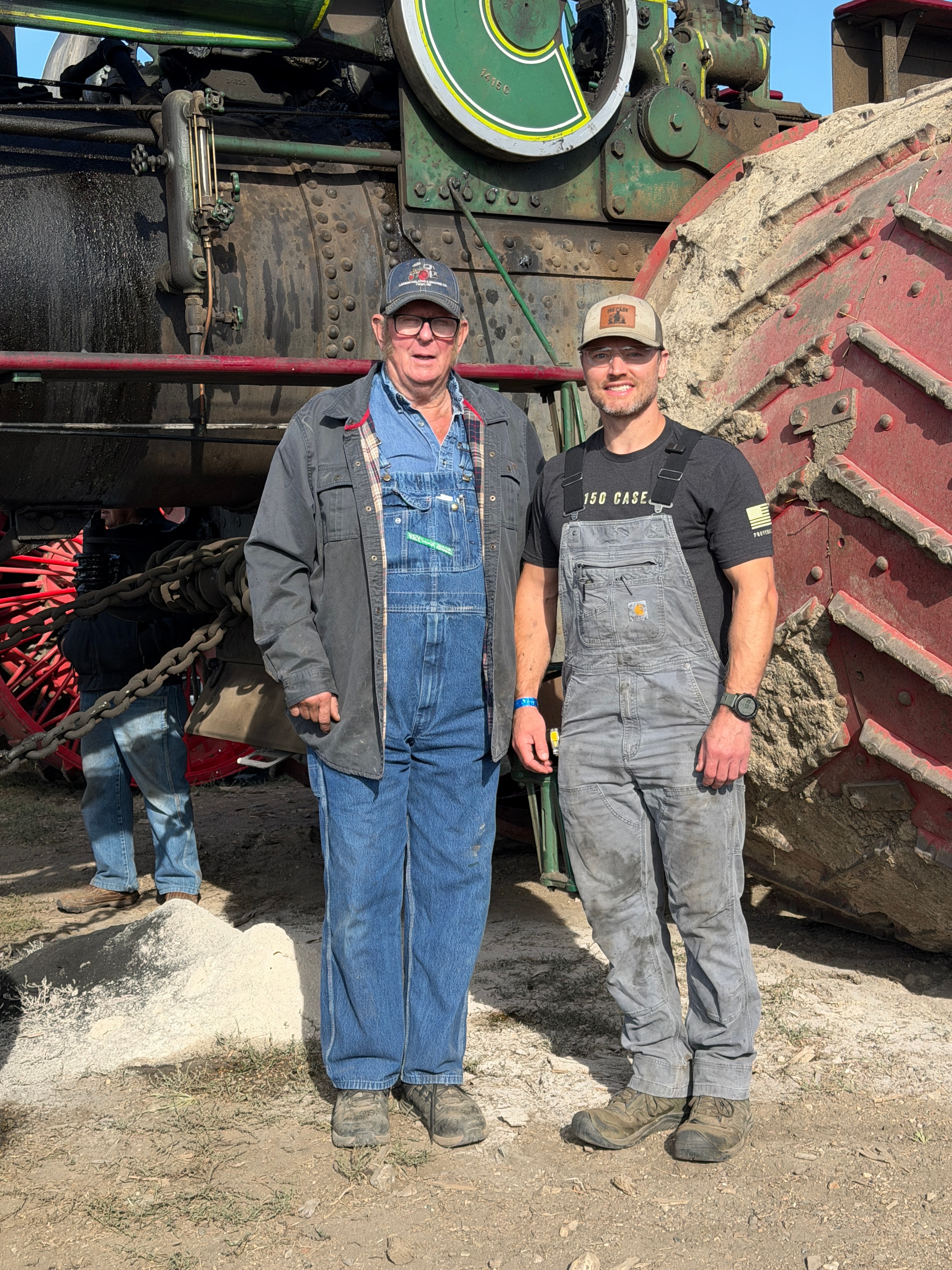
Learning from the Best
While attending college, Kory works alongside mentor Jim Briden, developing skills in machining, engineering, and craftsmanship.
Betting on the Dream
Kory leaves college to start his own business, determined to develop the resources and capabilities necessary to pursue his extraordinary vision.
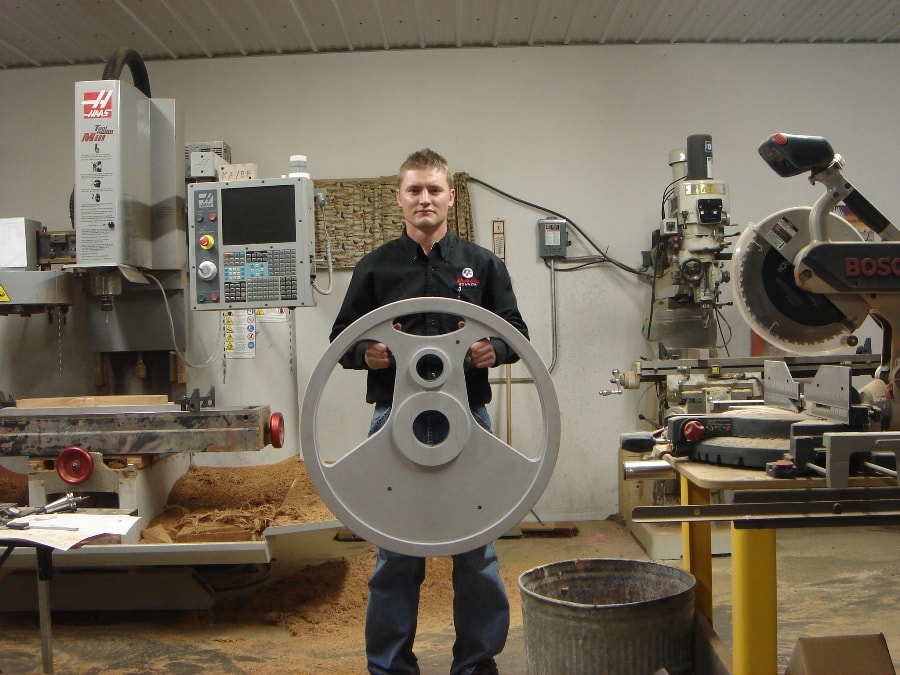
Betting on the Dream
Kory leaves college to start his own business, determined to develop the resources and capabilities necessary to pursue his extraordinary vision.
Building the Foundation
Kory acquires Dakota Foundry, giving him the metalcasting capabilities necessary to manufacture the massive iron components required for the 150 Case.
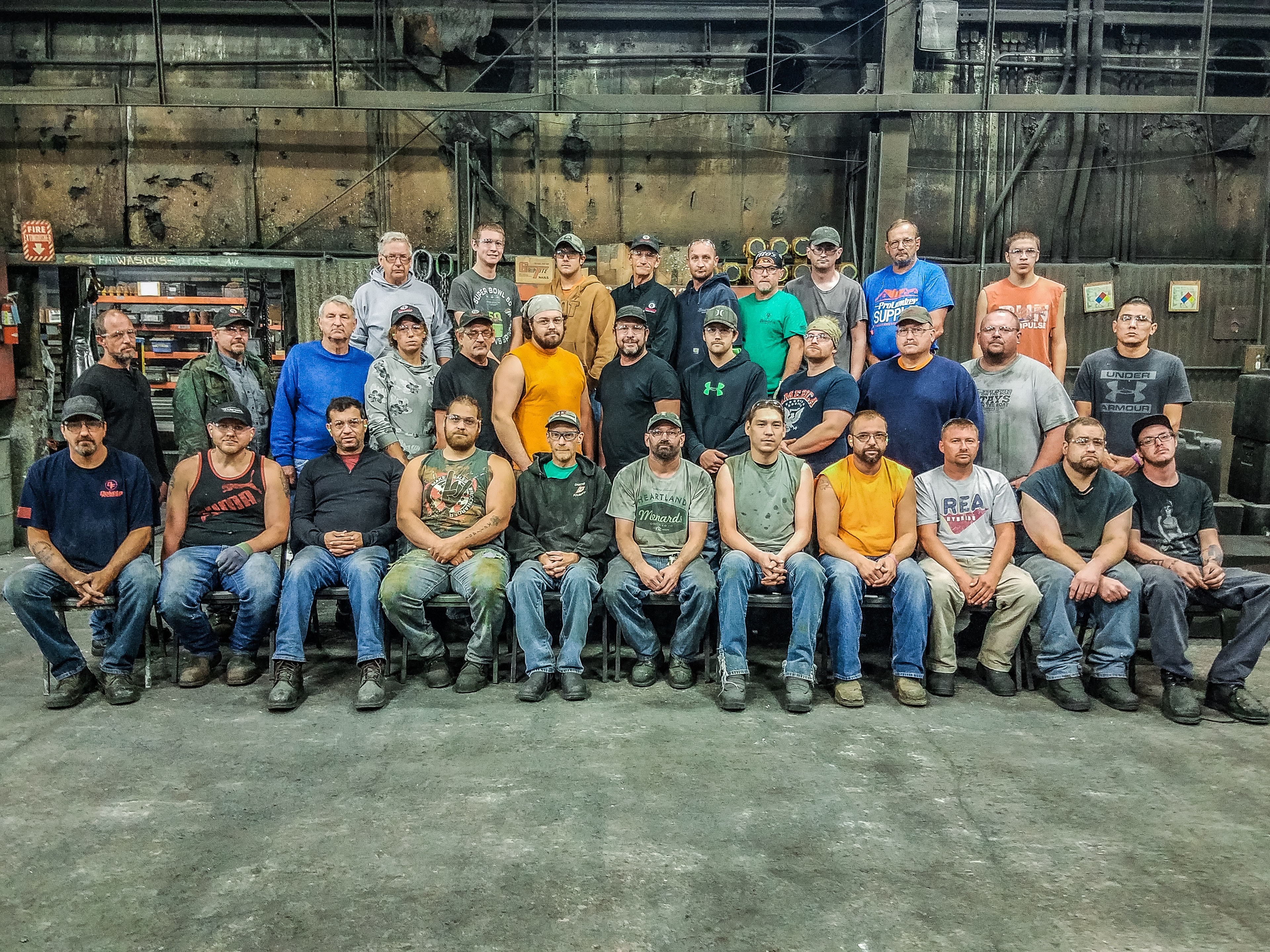
Building the Foundation
Kory acquires Dakota Foundry, giving him the metalcasting capabilities necessary to manufacture the massive iron components required for the 150 Case.
The Legend Returns
After 12 years of determination, engineering, and craftsmanship, Kory unveils the recreated 150 HP Case Road Locomotive on September 7, 2018, at the James Valley Threshing Show in Andover, South Dakota.
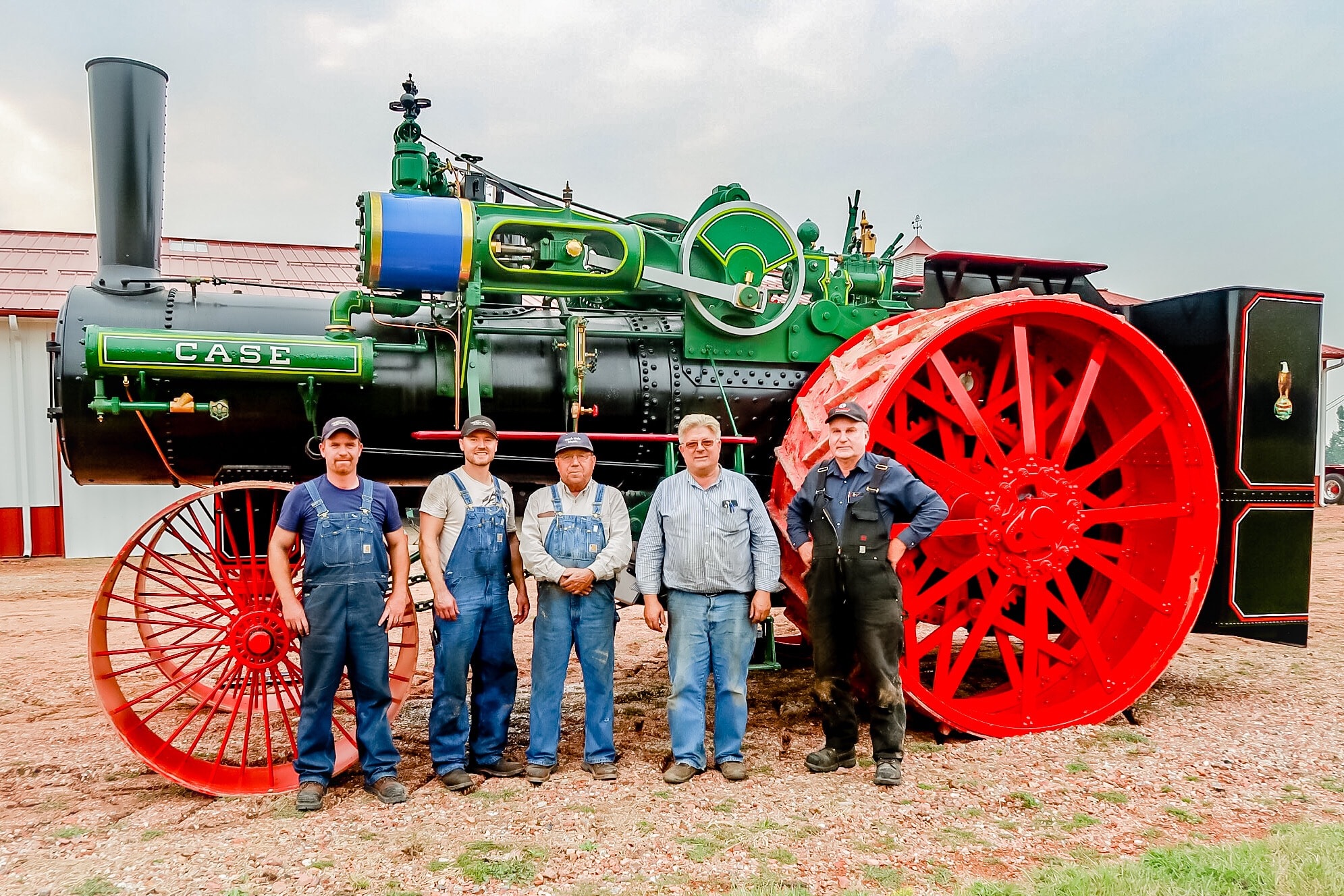
The Legend Returns
After 12 years of determination, engineering, and craftsmanship, Kory unveils the recreated 150 HP Case Road Locomotive on September 7, 2018, at the James Valley Threshing Show in Andover, South Dakota.
A Guinness World Record
The childhood dream reaches another remarkable milestone as Kory and the legendary 150 Case earn Guinness World Record recognition as the world's largest operational steam traction engine.
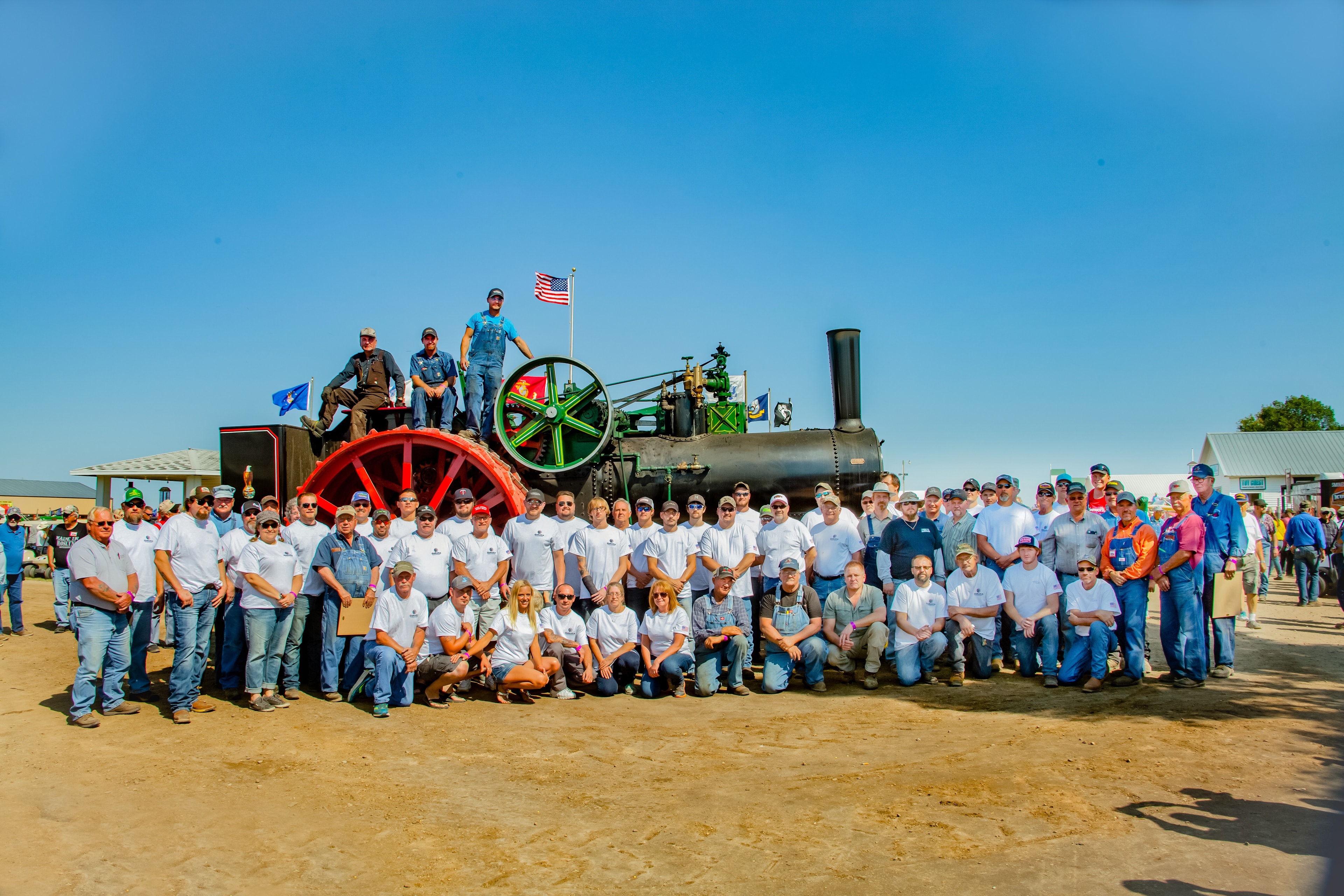
A Guinness World Record
The childhood dream reaches another remarkable milestone as Kory and the legendary 150 Case earn Guinness World Record recognition as the world's largest operational steam traction engine.
An Engineering Marvel from 1905
EXPLORE THE MACHINE.
Discover the remarkable engineering behind the legendary 150 HP Case Road Locomotive — and the craftsmanship required to bring a lost piece of American history back to life.
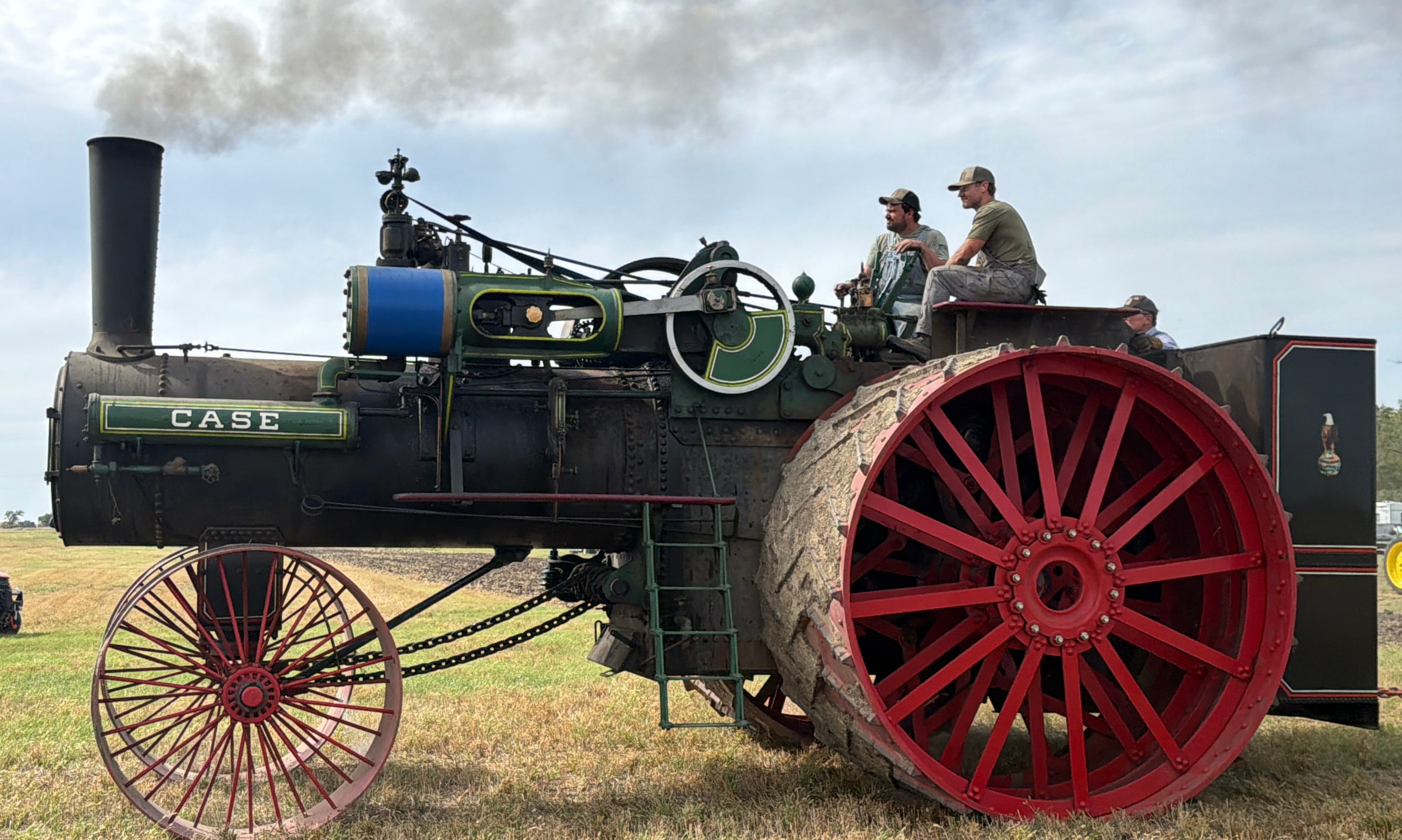
Select a component below the photograph to learn about the engineering behind each part of the 150 HP Case.
The People Who Built It
A Collective Effort
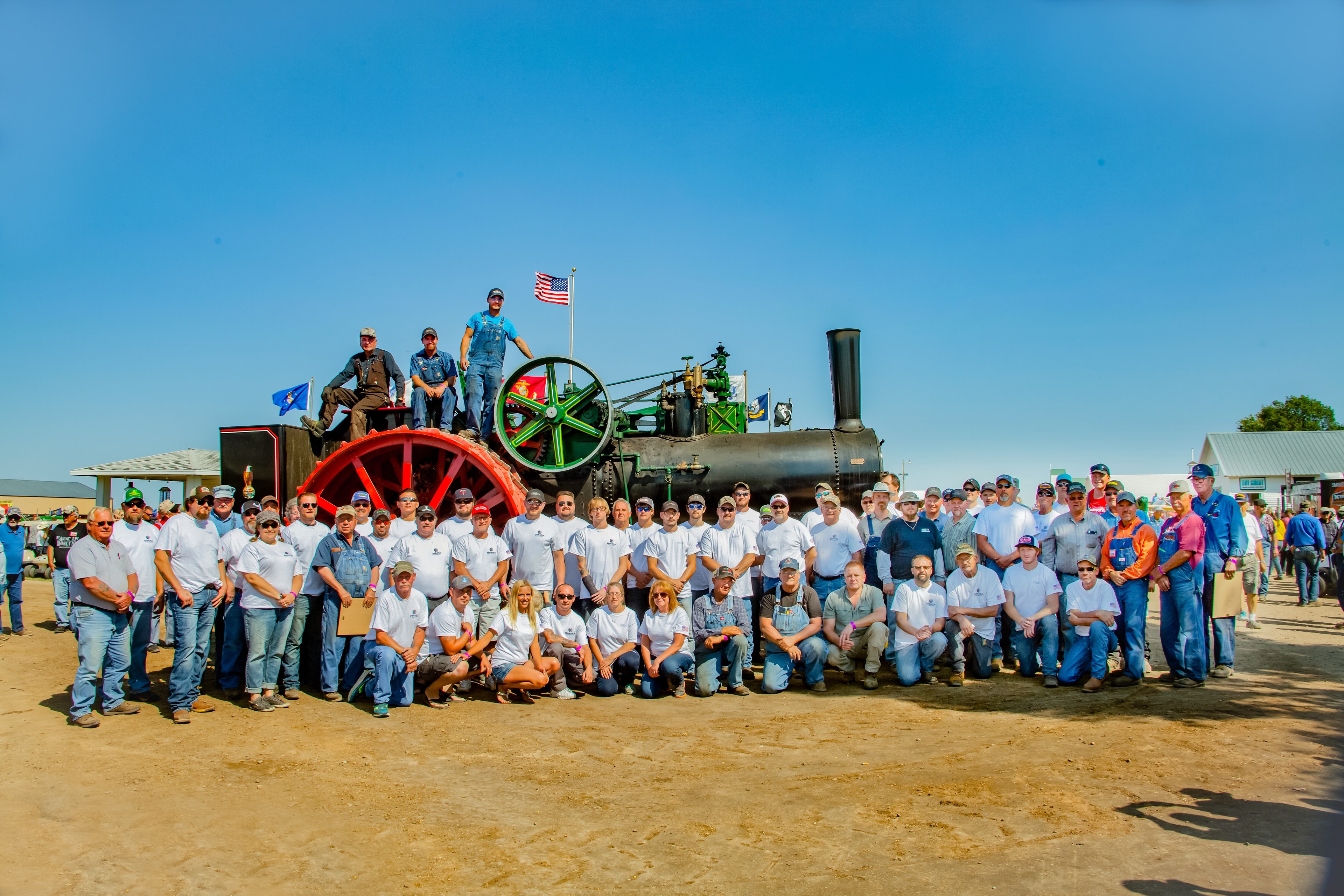
The 150 HP Case was not built by one person. It was built by a community of skilled craftsmen, machinists, foundry workers, and friends who believed in the dream and gave their time, expertise, and labor to make it real.
Gary Bradley hosted the final construction phase at his shop in Sheridan, Wyoming — providing the space, tools, and expertise that made the build possible.
Jim Briden contributed critical expertise and labor throughout the project, helping solve the engineering challenges of recreating a machine that had never been built in the modern era.
Kevin Anderson was part of the core team that brought the 150 HP Case from plans and patterns to finished iron.
Dakota Foundry in Webster, South Dakota produced the castings that form the heart of the engine — translating patterns into the iron components that make the 150 HP Case run.
Engineering the Impossible
Built by Hand. Forged in Fire.
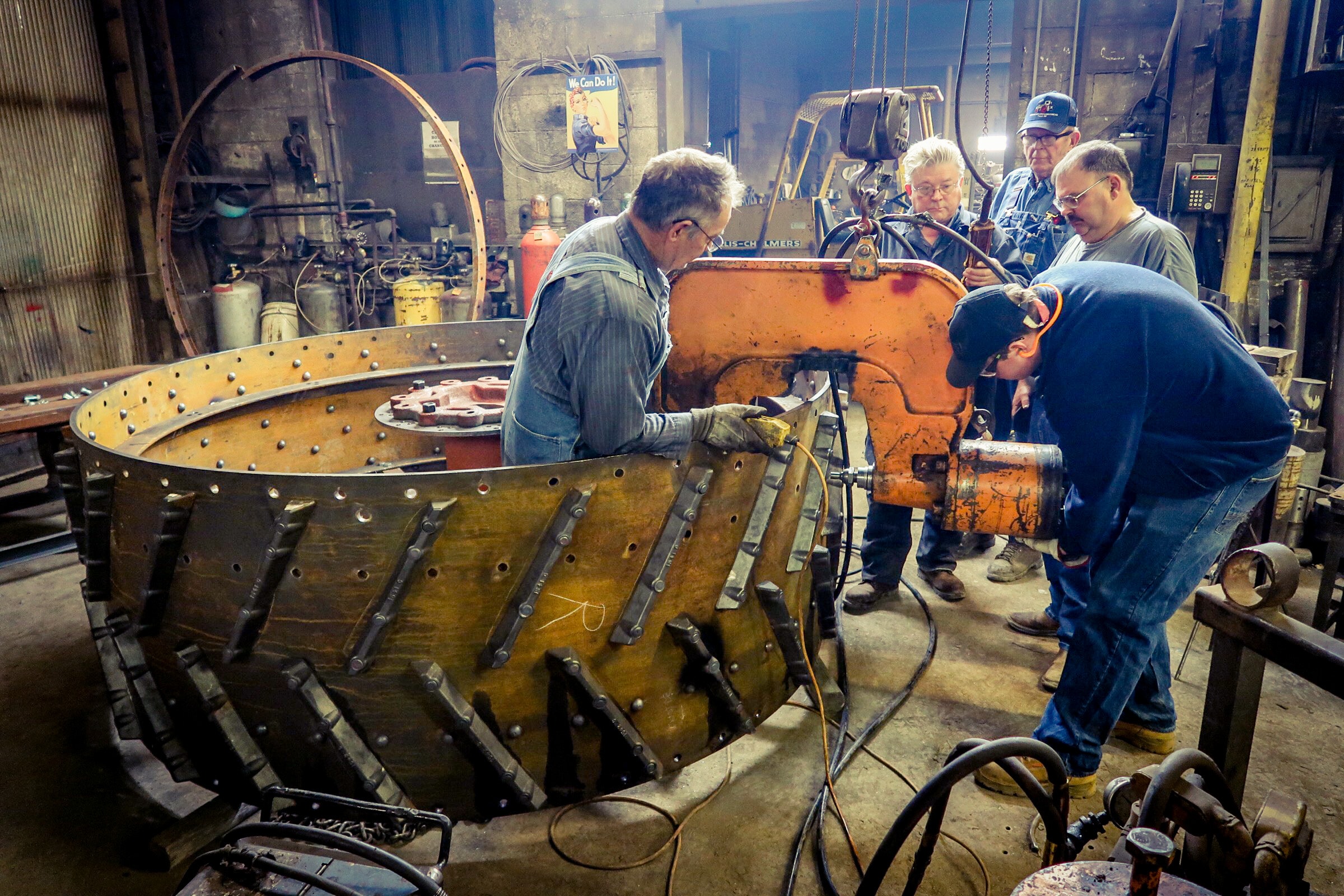
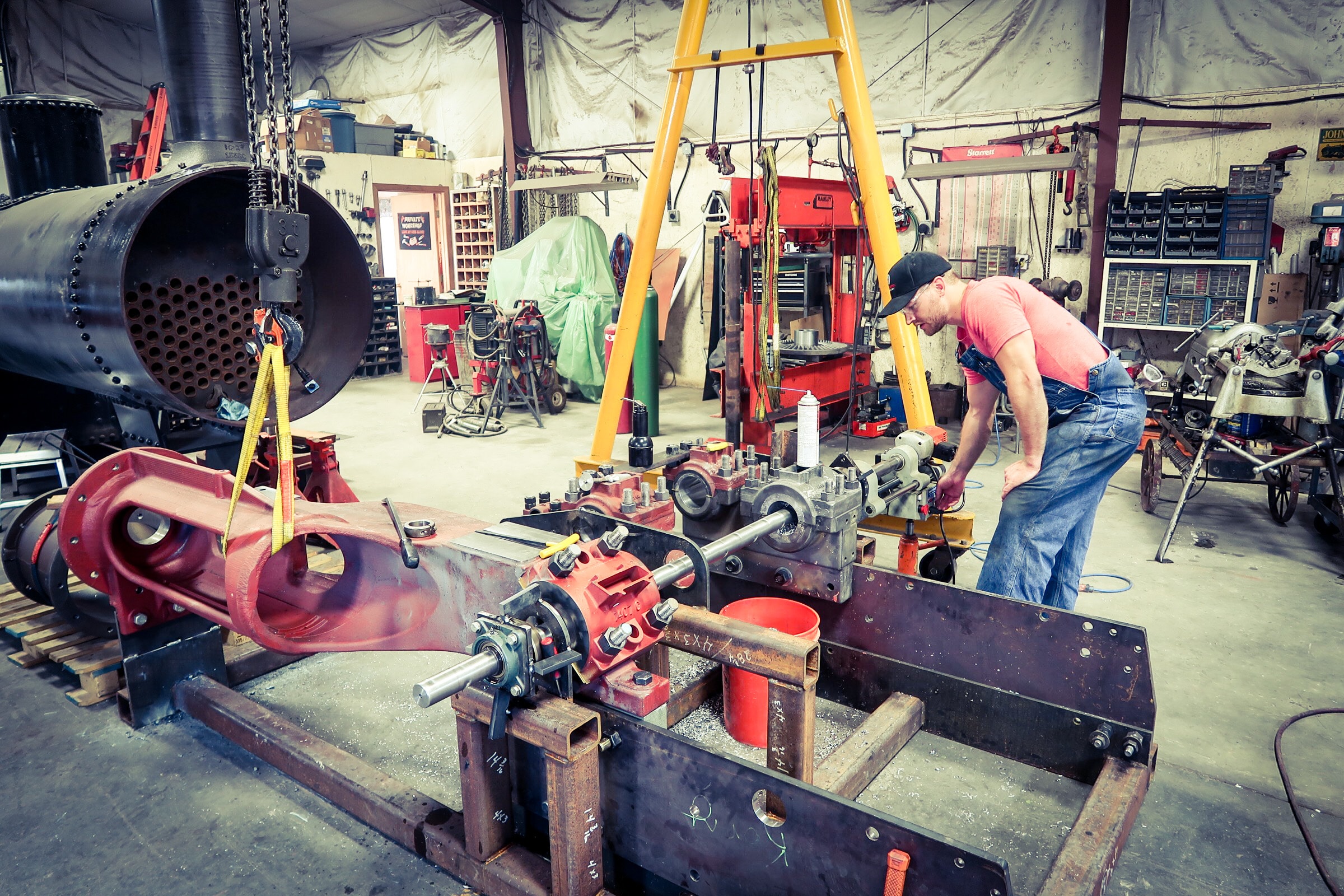
Recreating the 150 HP Case required mastering skills that had largely disappeared from modern practice — foundry pattern-making, large-scale casting, precision machining of engine frames and gears, and the lost art of hot riveting.
Each rear wheel is approximately eight feet in diameter and weighs more than three tons. More than 1,200 hot three-quarter-inch rivets were driven to assemble them — a process that required a team working in precise coordination, with iron heated to glowing orange and driven home before it cooled.
The Legend Lives On
Still Running. Still Pulling.
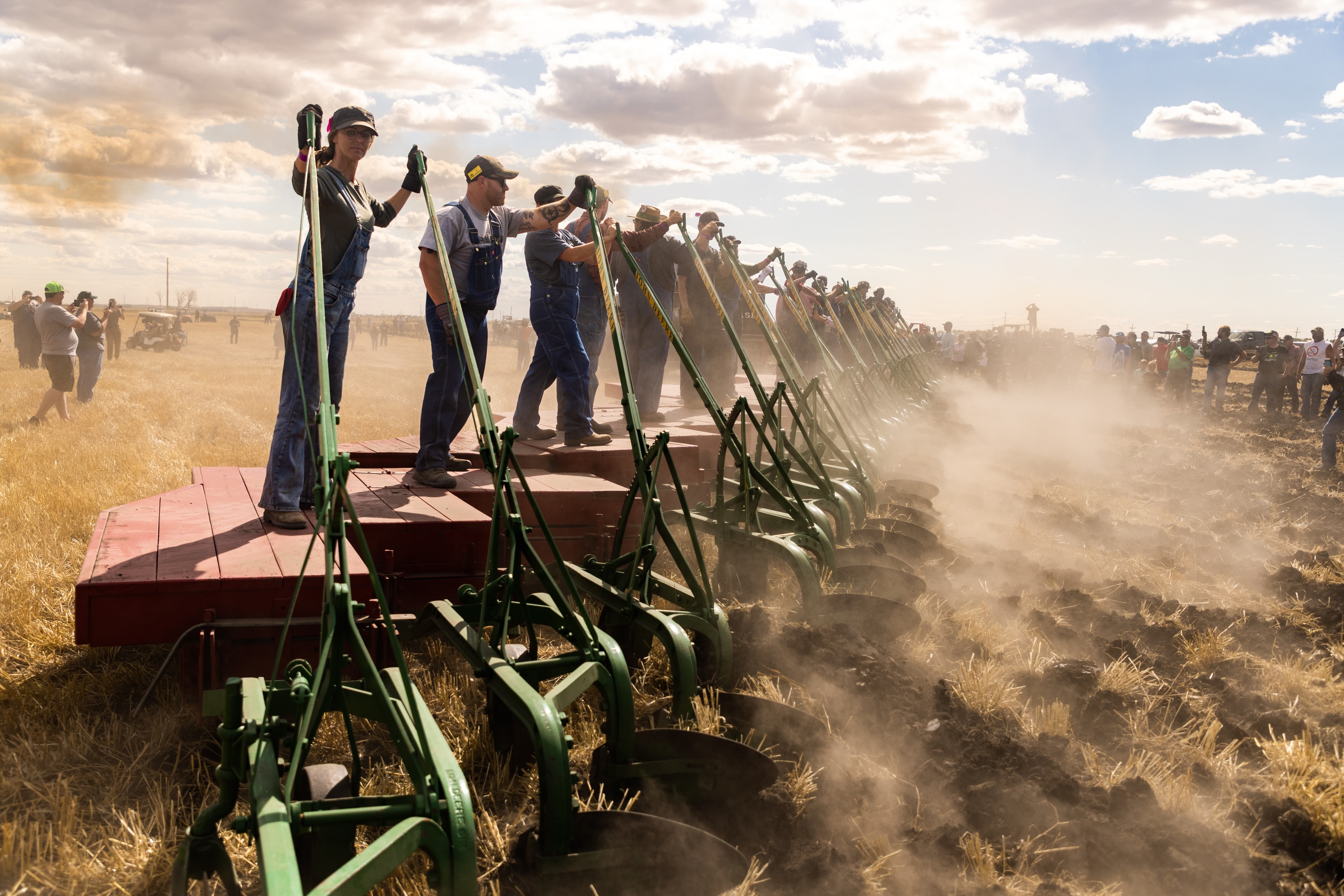
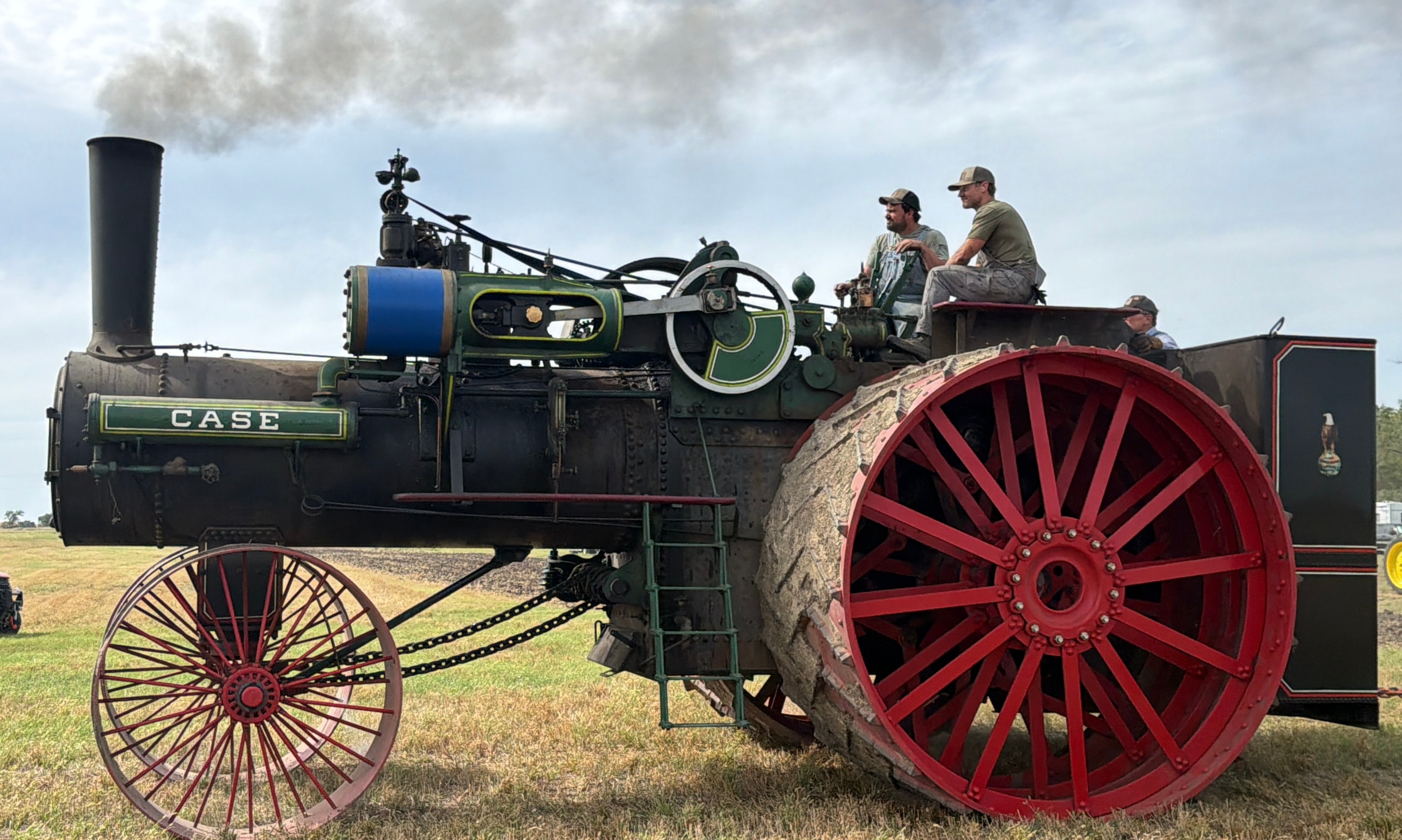
Since its 2018 debut, the 150 HP Case has become a phenomenon — drawing massive crowds at threshing shows and agricultural events across the Midwest, racking up millions of YouTube views, and inspiring a new generation of steam enthusiasts and skilled trades advocates. The engine that was lost for over a century is now the most-watched steam traction engine in the world.
Original Build Stories
Dream to Steam
Six firsthand accounts of the build — from the first pattern to the first fire. Written as the work unfolded, preserved here as a permanent record.
Every great project starts with a spark. For Kory Anderson, that spark came at age nine — a factory test photograph of a machine that no longer existed. What followed was twelve years of research, planning, and an unshakeable conviction that the 150 HP Case would live again.
I have been fascinated by the 150 HP Case Road Locomotive since I was nine years old. I saw a picture of one and was immediately captivated by its sheer size and power. The J.I. Case company built nine of these machines between 1904 and 1907 — the most powerful steam traction engines ever produced. None survived.
For years I collected every piece of information I could find about the 150. Old catalogs, factory records, photographs — anything that could help me understand how this machine was built. The dream of recreating one never left me.
On March 31, 2017, the dream became reality. We began the final construction phase at Gary Bradley's shop in Sheridan, Wyoming. The foundry patterns were made, the castings ordered from Dakota Foundry in Webster, South Dakota, and the real work began.
The parts pile grew. Gears, castings, machined components — each one a piece of a puzzle that hadn't been assembled in over a century. Every part had to be right. There was no original to copy from, only old photographs and engineering principles.
Kory Anderson stands before a full-scale mural of the original 150 HP Case — the image that started it all.
A rare historical photograph of an original 150 HP Case Road Locomotive with its operators.
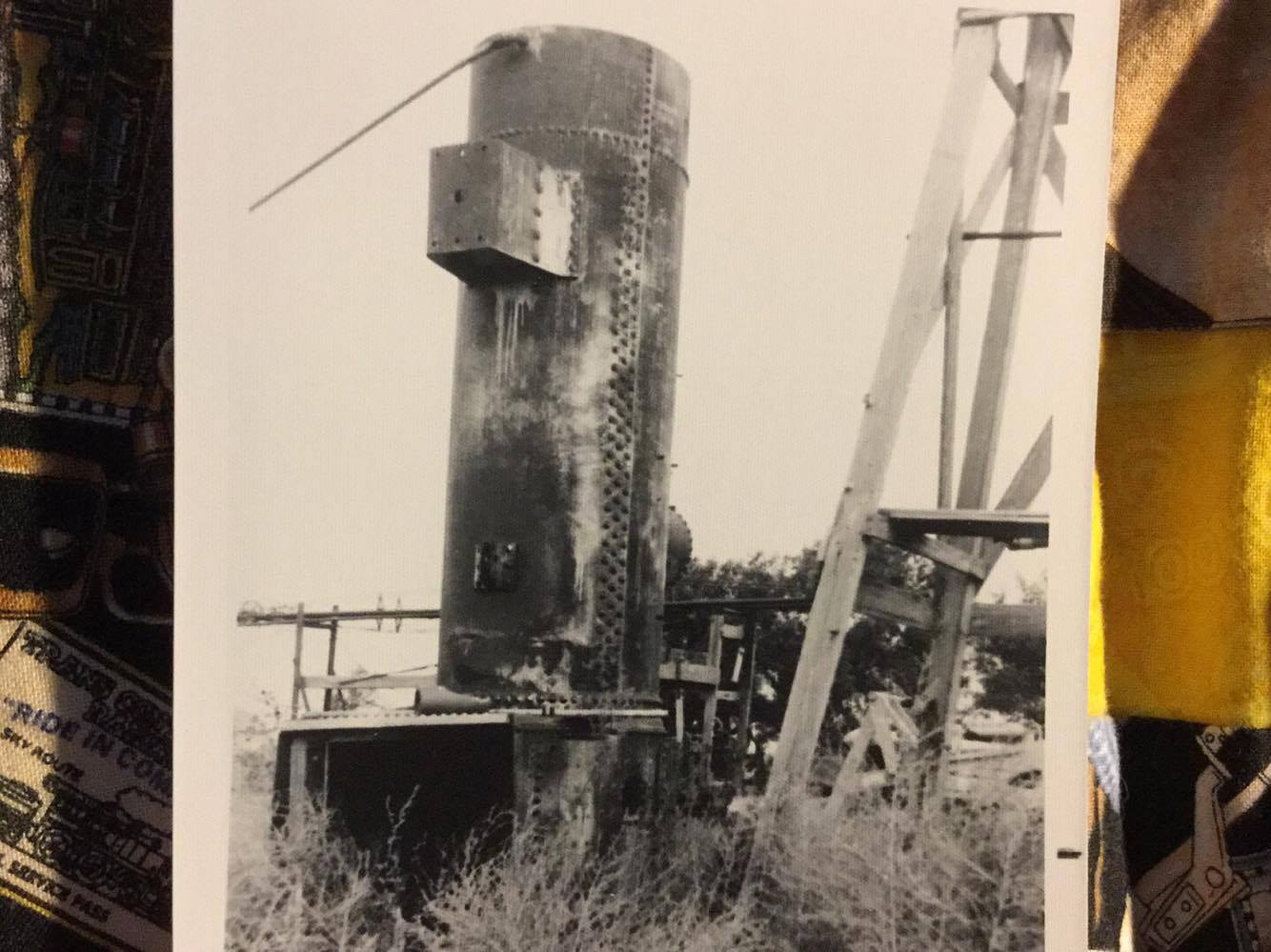
The original 150 Case boiler — a historical photograph that guided the recreation.
Kory with one of the first machined castings — the project taking physical form.
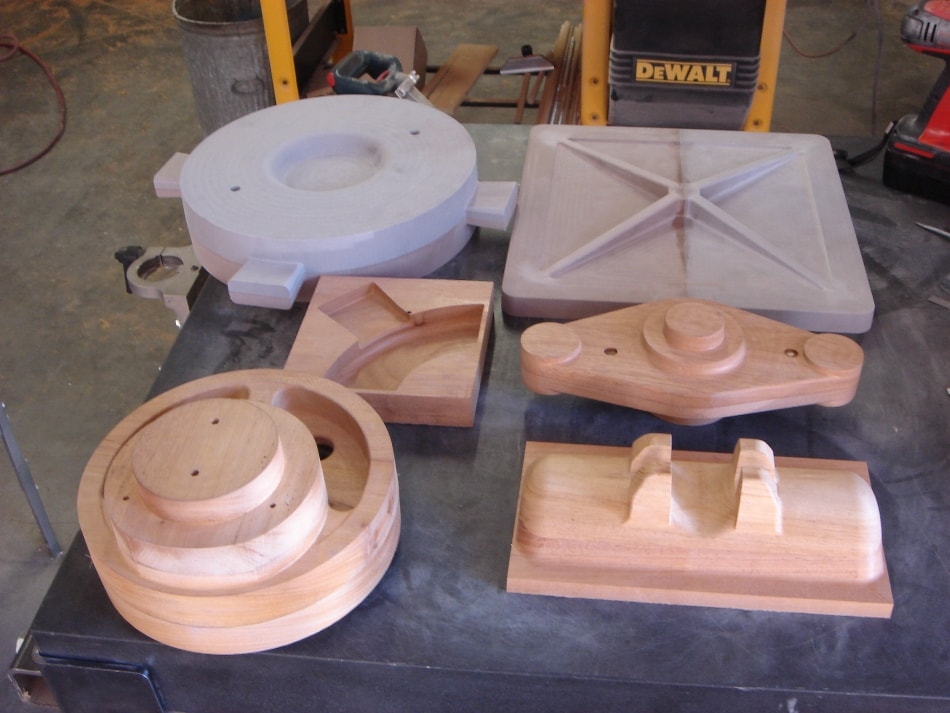
Foundry patterns — the wooden and resin forms used to create the iron castings at Dakota Foundry.
The parts pile grows — gears, castings, and machined components laid out before assembly.
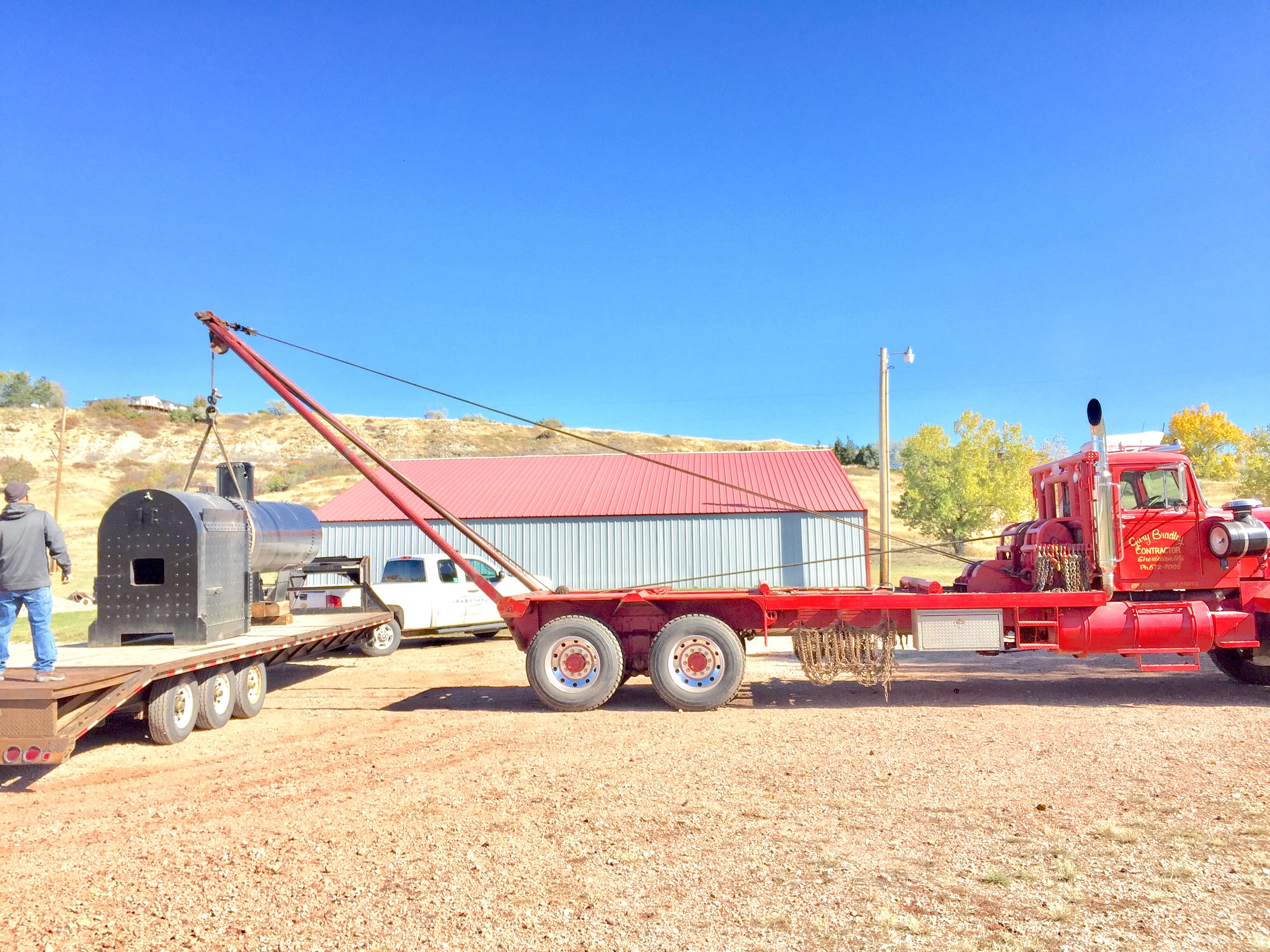
The boiler arrives at Gary Bradley's shop in Sheridan, Wyoming — a major milestone.
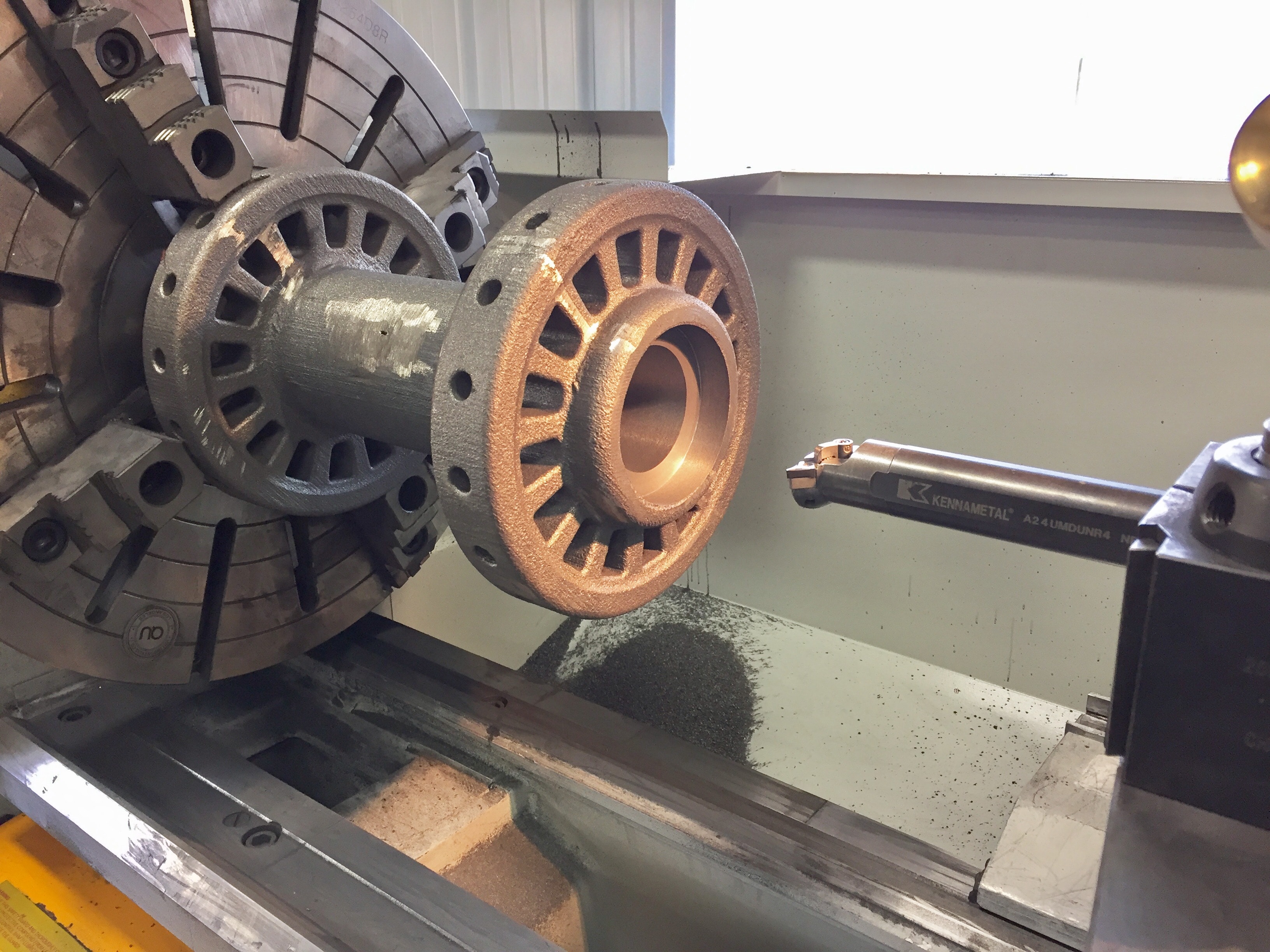
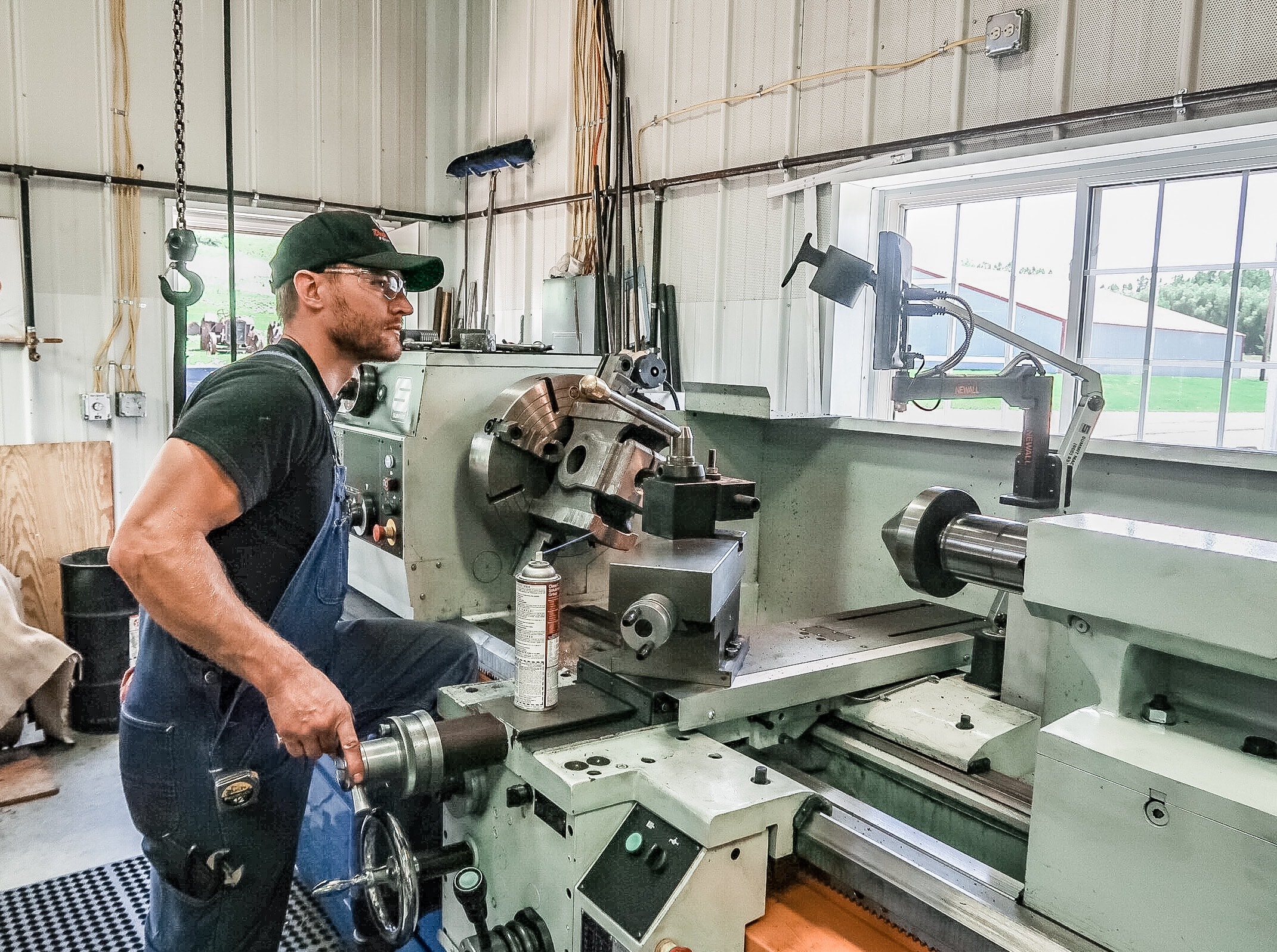
Precision machining of the front hubs on the lathe.
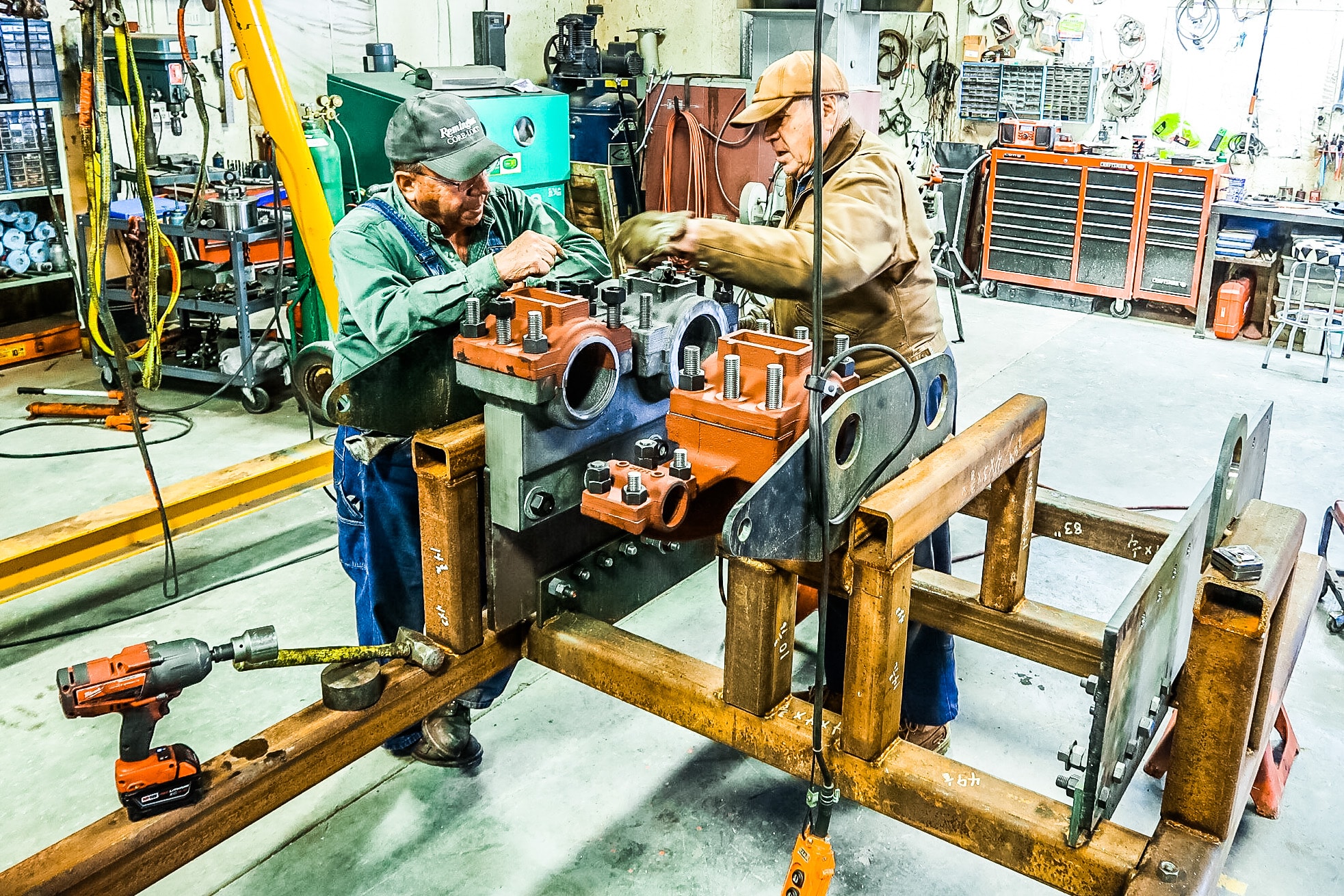
Gary Bradley and Jim Briden begin the engine assembly — two craftsmen working in perfect coordination.
Four months into 2018 and the milestones are stacking up. The engine frame is machined, the babbitt bearings are poured and line-bored, and in Fargo, North Dakota, a crew of friends is driving over 1,200 hot rivets into the most ambitious rear wheels built in a century.
We have achieved some major milestones in the first four months of 2018 to keep on track for our debut deadline on September 7, 2018. We have cast a great majority of the parts at the foundry and I've been making runs every few weeks to Gary Bradley's in Sheridan, WY to keep up with machining.
We finished machining the engine frame in Webster, SD — a huge challenge due to the size of the casting (nearly 1,000 lbs.) and the extreme accuracy required in the tolerances. Once we had the engine frame and bearing housings machined, we installed them into the fixture I had built to assemble the engine and pour the babbitt bearings. Gary was busy pouring the babbitt bearings while I continued to machine parts for the engine assembly.
Once the bearings were all babbitted, we line bored them all to size — giving each a clearance of .006" for the 4-5/8" crankshaft. We took great care getting everything to line up perfectly. On the original Road Locomotives the crankshaft and low-speed shaft weren't perfectly parallel, which caused the babbitt to melt out under extreme bearing force. We weren't going to repeat that mistake.
Meanwhile in Fargo, ND at Larson Welding, Jim Briden and I had been planning for about six weeks how we would build the massive rear wheels. Each wheel is 8 feet in diameter and weighs over 3 tons. Jim had modified a hydraulic squeezer we could use to punch the inside angle and channel irons. Once I had all the steel parts fabricated and the lugs, hubs, and bull gears machined — the real work began.
We rounded up an incredible crew of friends who helped us over the course of a few weeks to assemble and build the rear wheels. We installed over 1,200 hot 3/4" rivets. Most we were able to squeeze with the large hydraulic squeezer designed and welded together by Wimpy Anderson in Jim's shop. Around 80 rivets had to be put in by hand with the air hammer when we got to riveting in the drag links — no room left for the squeezer. By the time we were done, we had the building of wheels down to a science. We built each wheel in just under 3 days — much less than planned.
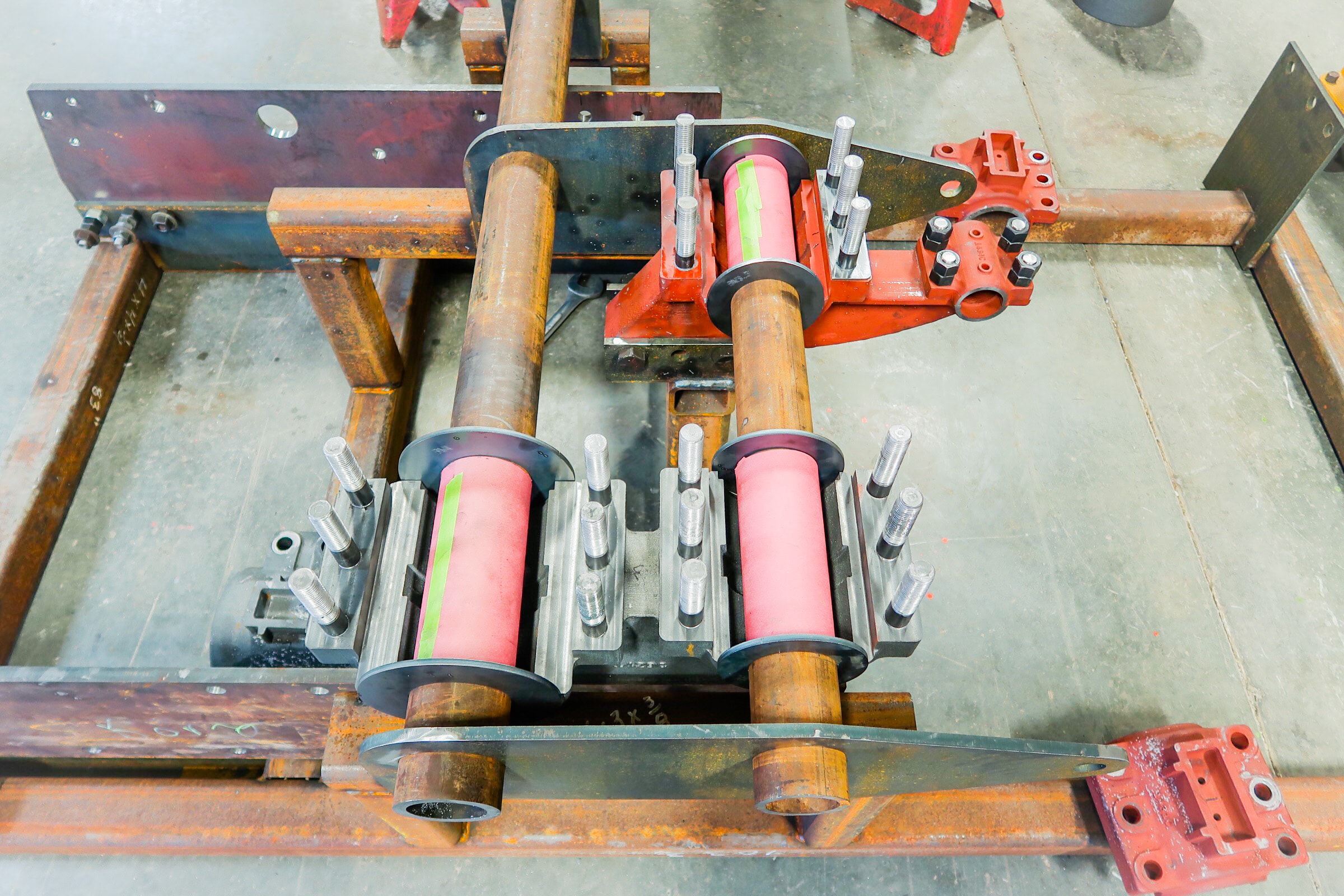
Babbitt bearings prepped and ready — the pink Babbitt material visible in the precision-machined housings.
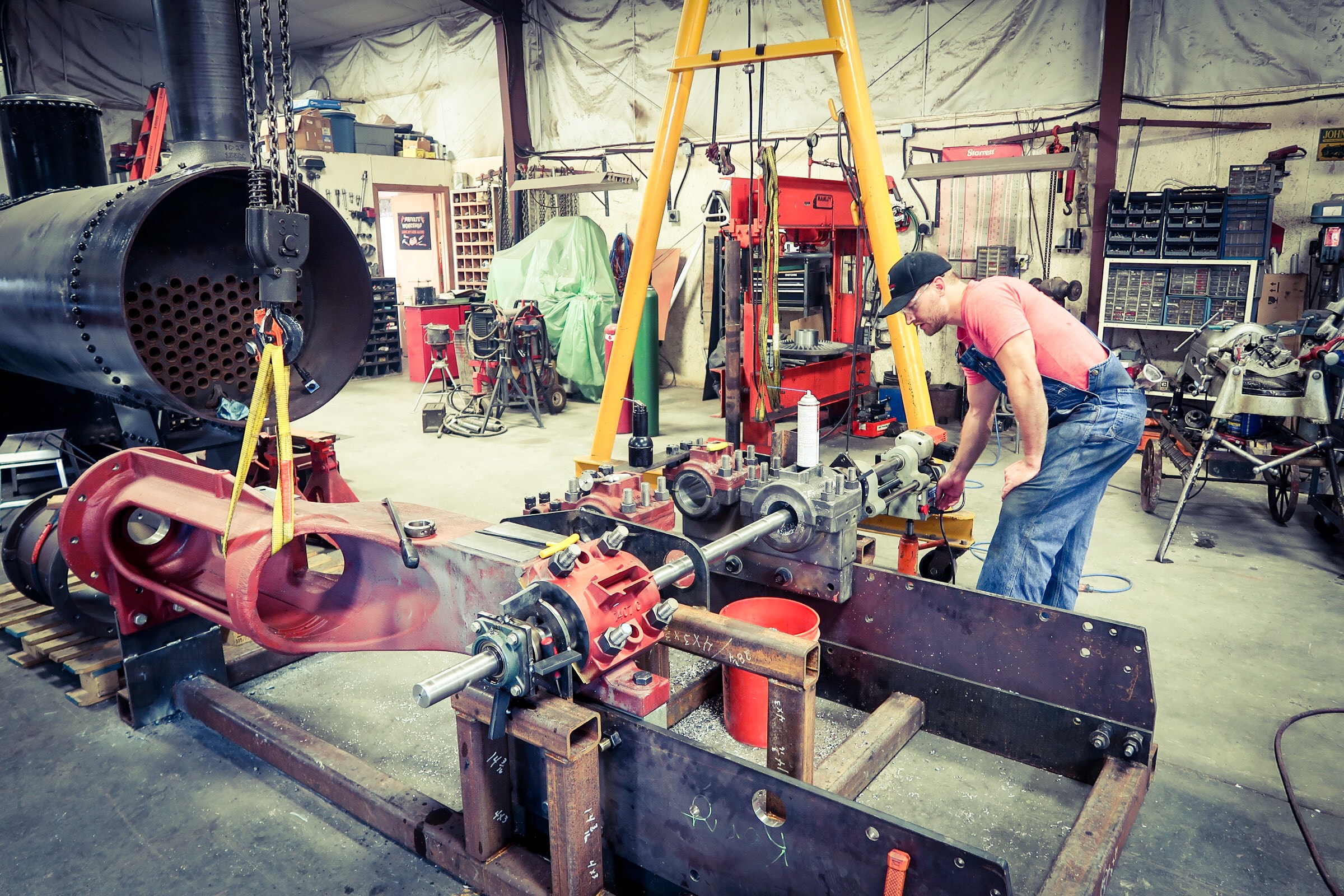
Line boring the babbitt bearings to .006" clearance for the 4-5/8" crankshaft — precision work that the originals got wrong.
Del Compaan machining the engine frame — a nearly 1,000 lb. casting requiring extreme accuracy.
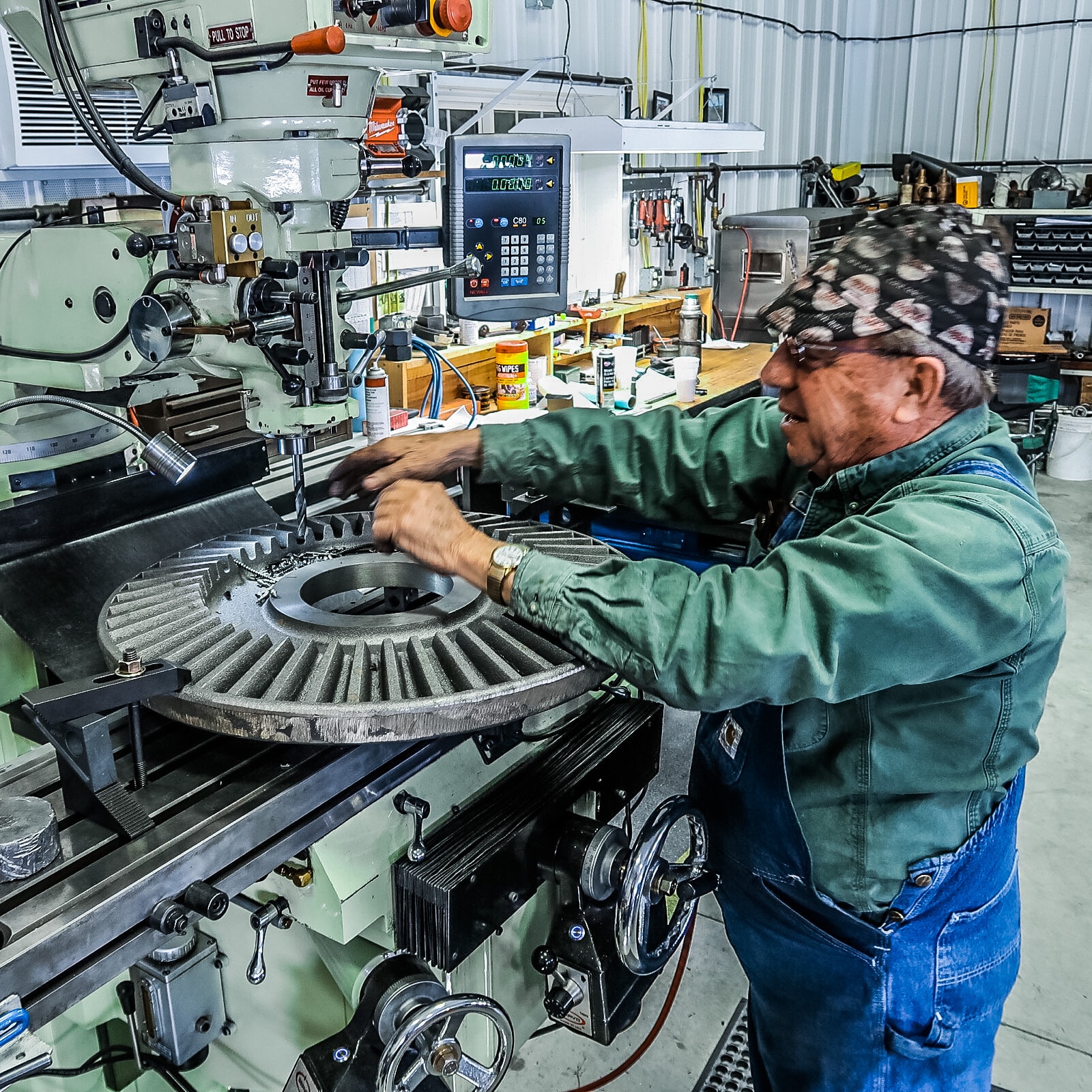
Gary drilling the bevel gear — one of dozens of precision machining operations on the engine components.
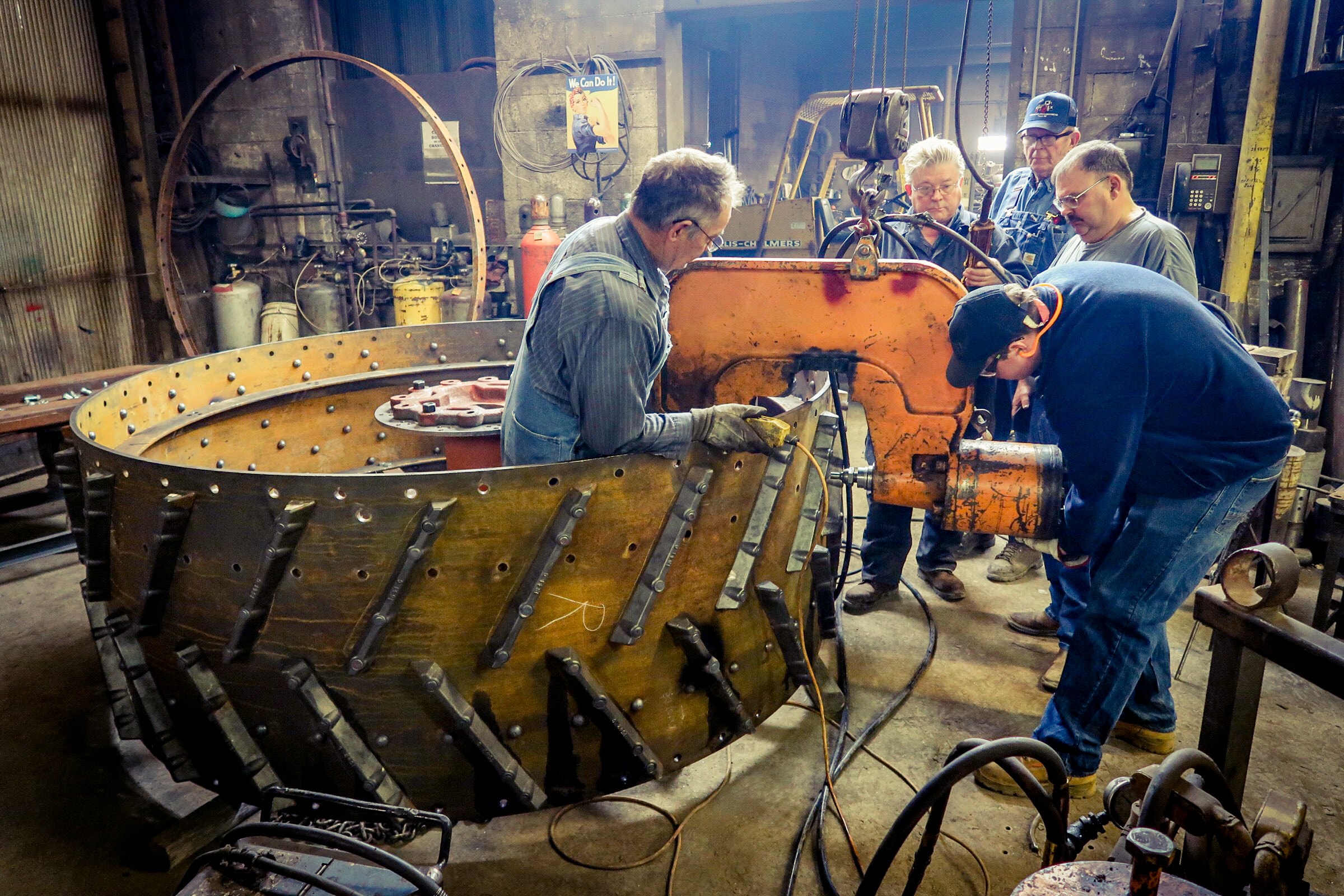
Punching holes in the inner angle irons — the hydraulic squeezer Jim Briden modified made this possible at scale.
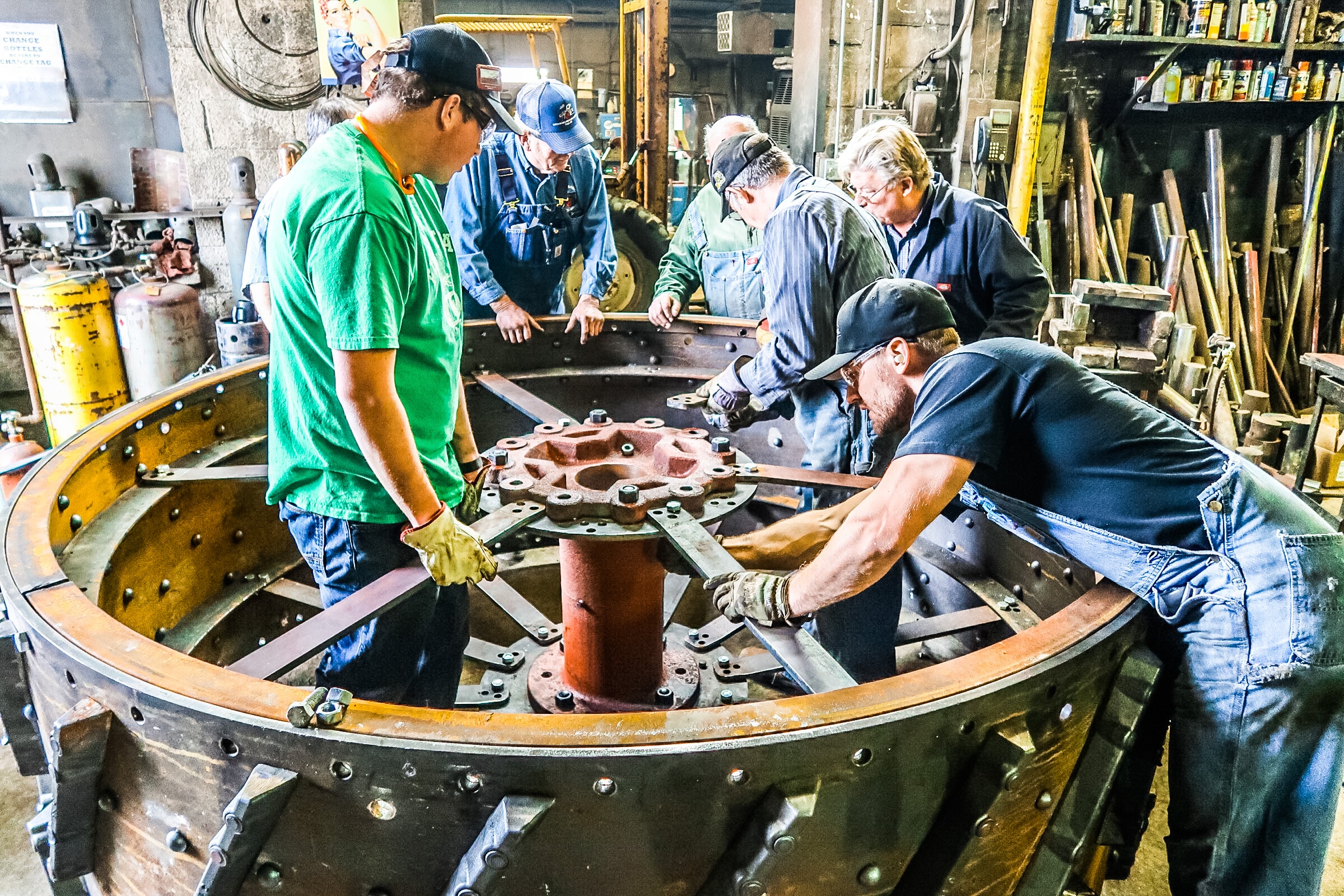
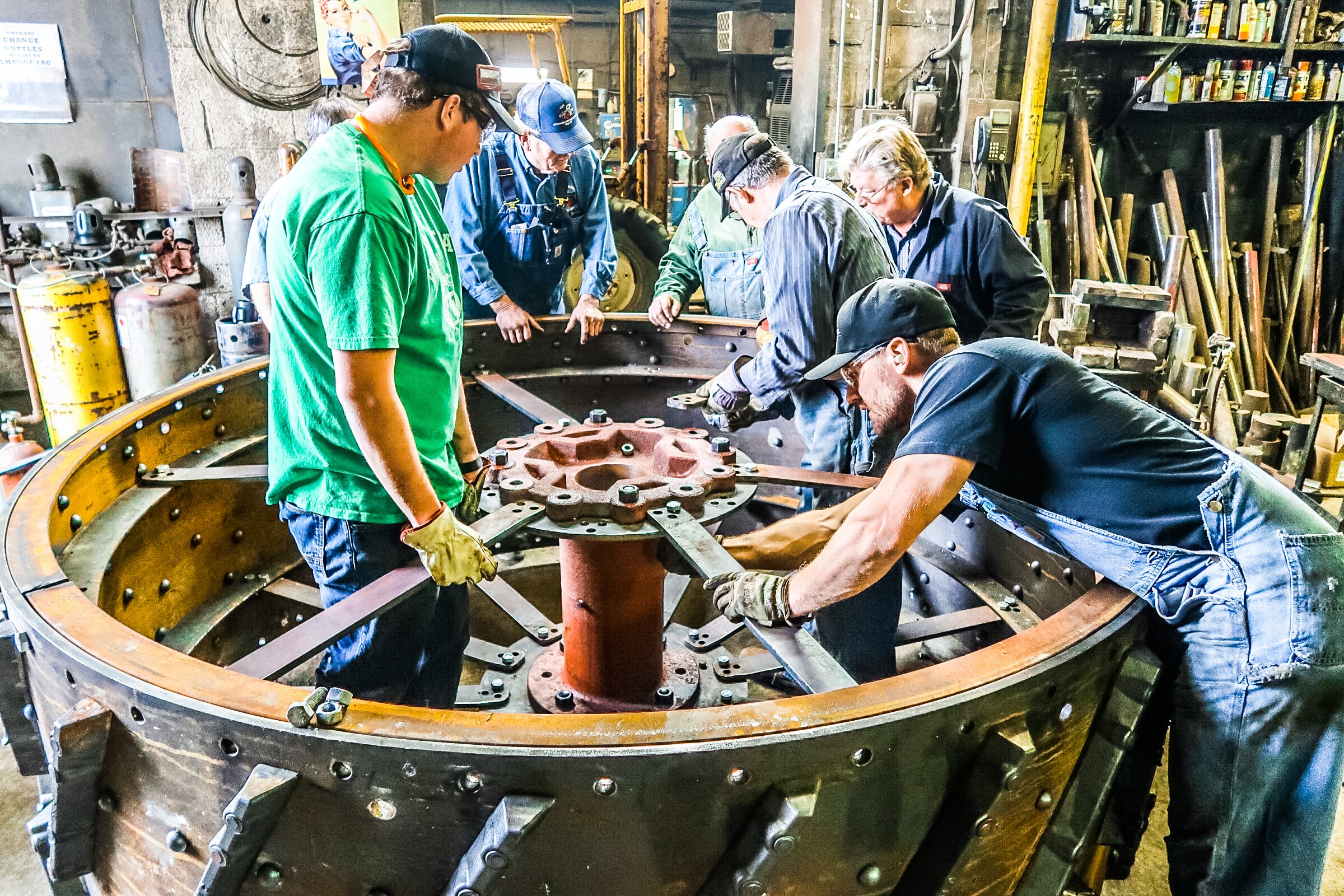
Installing the hubs and spokes — the crew working inside the 8-foot wheel rim.
The crew with the finished rear wheel — seven men, three days, over 600 hot rivets per wheel.
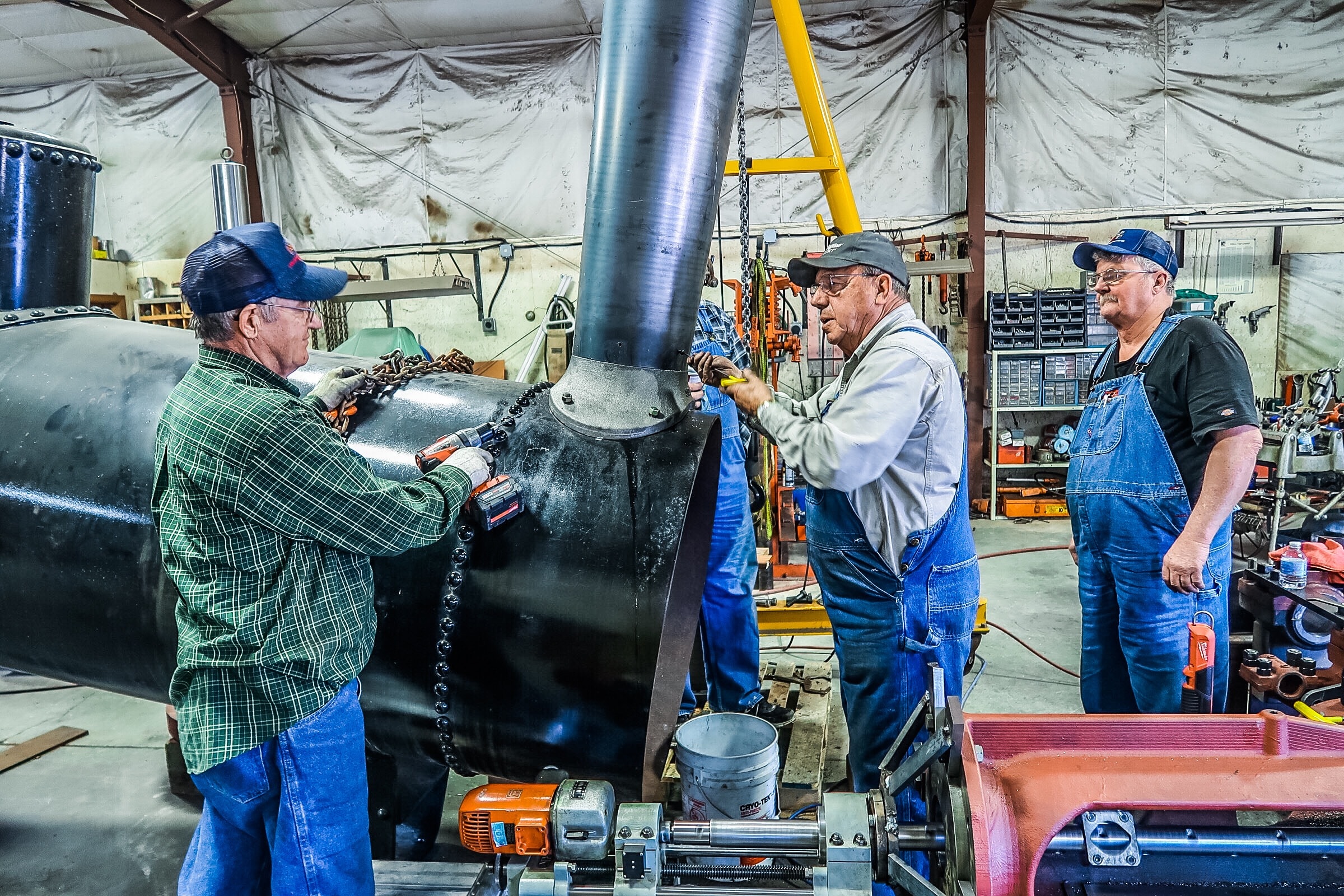
Installing the smokestack — Gary Bradley, Kory, and Jim Briden guiding it into position.
Five weeks to first firing. The engine is on the boiler, the wheels are powder coated, and every remaining hour counts. Kory's account of the final sprint — machining, fabricating, and assembling a machine that the 'old boys' never thought anyone would build again.
We've been running the governors balls out the last two months continuing to design and cast parts, finish machining, painting and bringing it all together in the assembly process. We powder coated the rear wheels at one of our equipment manufacturing facilities, HORSCH LLC, in Mapleton, ND. The process starts with a full white-out blast to bare metal with steel shot, then the powder is applied through an electrostatic process and finally cured in the large oven at 400°F for 45 minutes.
In Wyoming, assembly of the engine onto the boiler began in early May. We picked the engine assembly off the fixture, raised it and placed it onto the boiler. Everything fit perfect as planned when we lowered the engine down onto the boiler wing sheet plates. After squaring and leveling the entire assembly to the boiler, Dad and Gary transfer drilled the holes from the engine wing sheets into the boiler and secured the assembly down. We then mounted the forward bracket that supports the front of the engine frame and cylinder, secured by tapered boiler studs. It was a damn good feeling to have that engine secured and in place on top of the boiler after all.
In Manitoba, Trevor Guenter and his team were busy fabricating and riveting together the water tank and bunkers. Trevor volunteered to help build the tanks and bunkers in trade for 110 Case parts for his own project — we very much appreciated the support. After riveting the bottom section of the water tank together, he had it lined and then assembled the top. The tank and bunker sections were painted prior to assembling to eliminate any rusting between the surfaces.
We machined the crosshead and wrist pin, along with about a week of work turning $1,500 of bronze bearing stock into packing glands, nuts, stuffing boxes and connecting rod bearings. Fabricated the connecting rod from 2-1/2" thick plate steel and assembled it with the wedges and bearings. The connecting rod bearings were finished after being assembled — tightening the wedge block put them out of round .005", so we had to finish them in place. We now have a perfect fit on the wrist pin and crank pin.
The level of accuracy and tolerance that we're building this engine with was not practical in a production setting and was not even achievable in the early 1900's with the tools they had for measuring. It will be very interesting to see this engine perform when finished. We just hope that the 'old boys' looking down on us would be proud! We have about five weeks until the target date for first firing and testing. Nevertheless, we will have the engine completed, tested and ready to break chains in September.
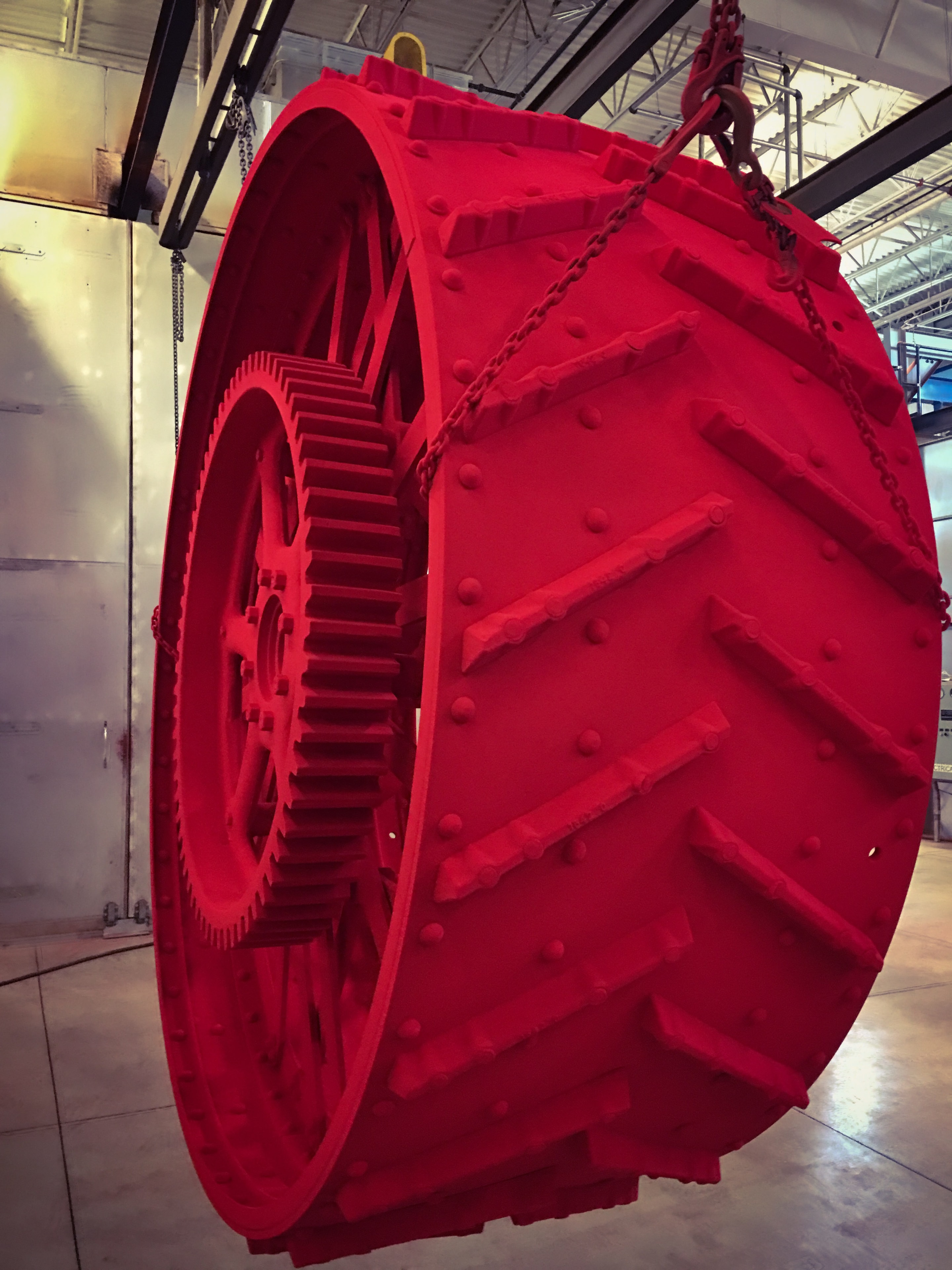
A finished rear wheel coated in red powder primer — hanging in the powder coat facility at HORSCH LLC in Mapleton, ND.
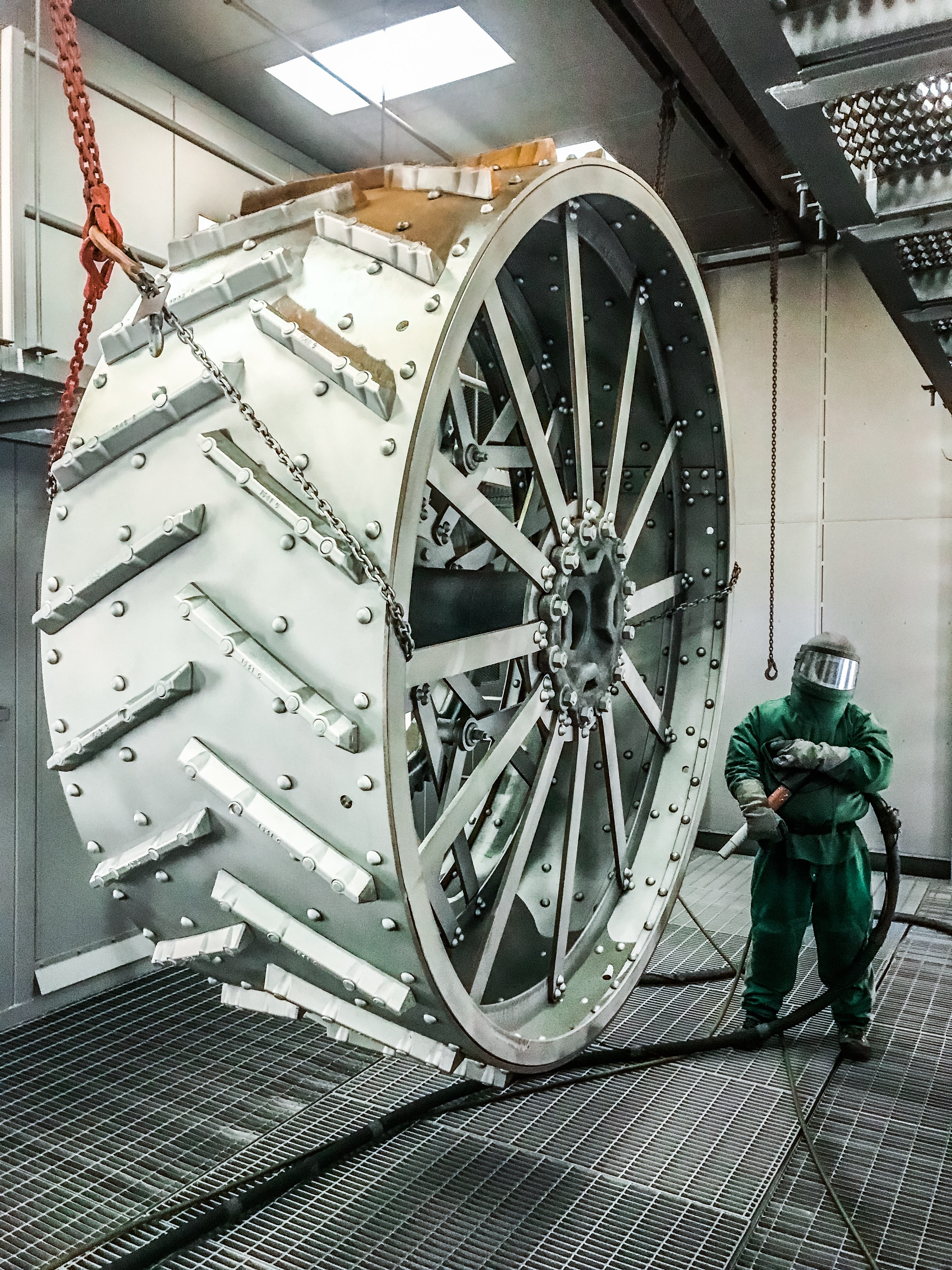
Steel shot blasting the rear wheel to bare metal before powder coating — the scale of the 8-foot wheel dwarfs the operator.
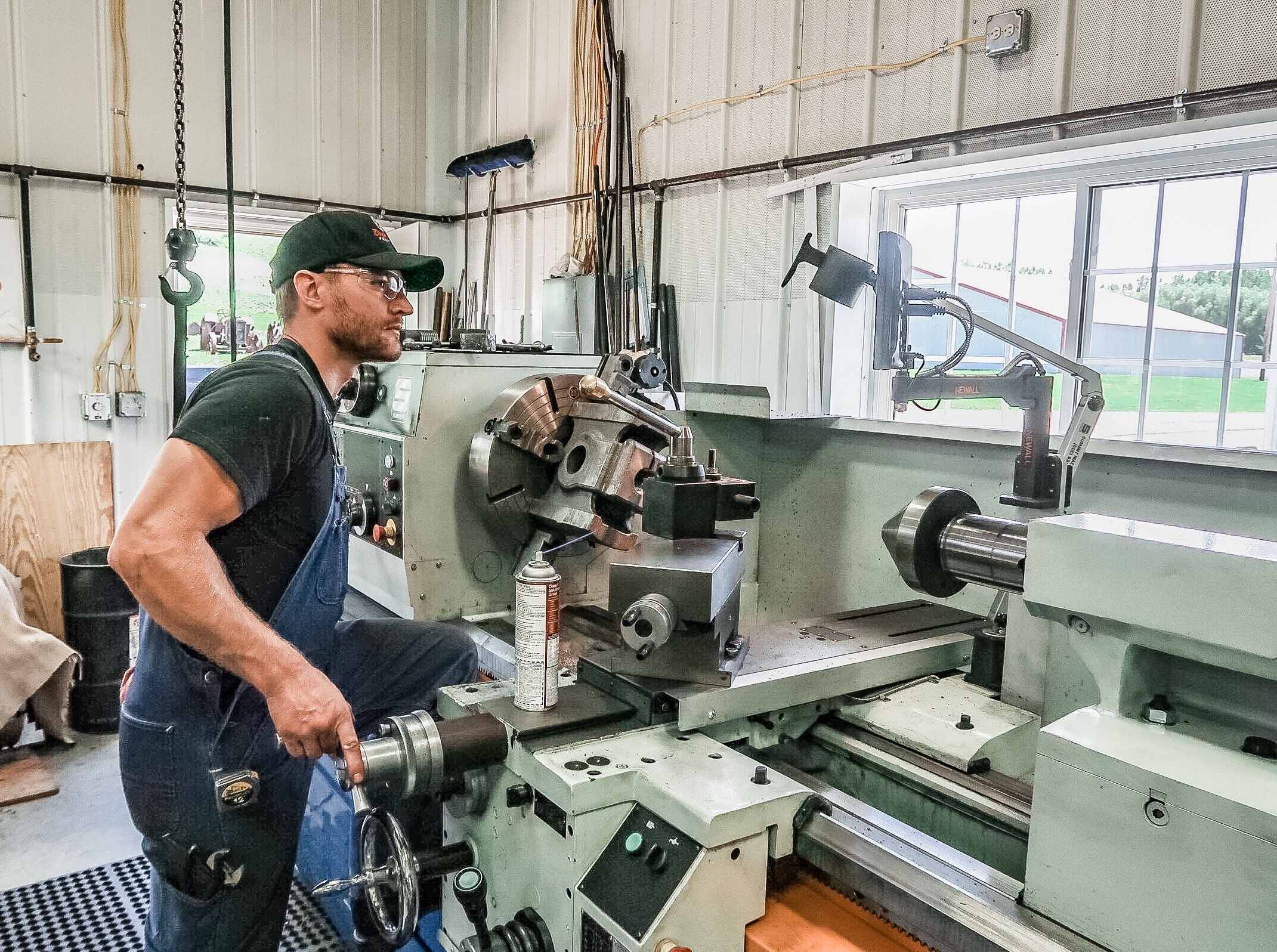
Kory machining the crosshead threads for the piston — one of dozens of precision operations in the final sprint.
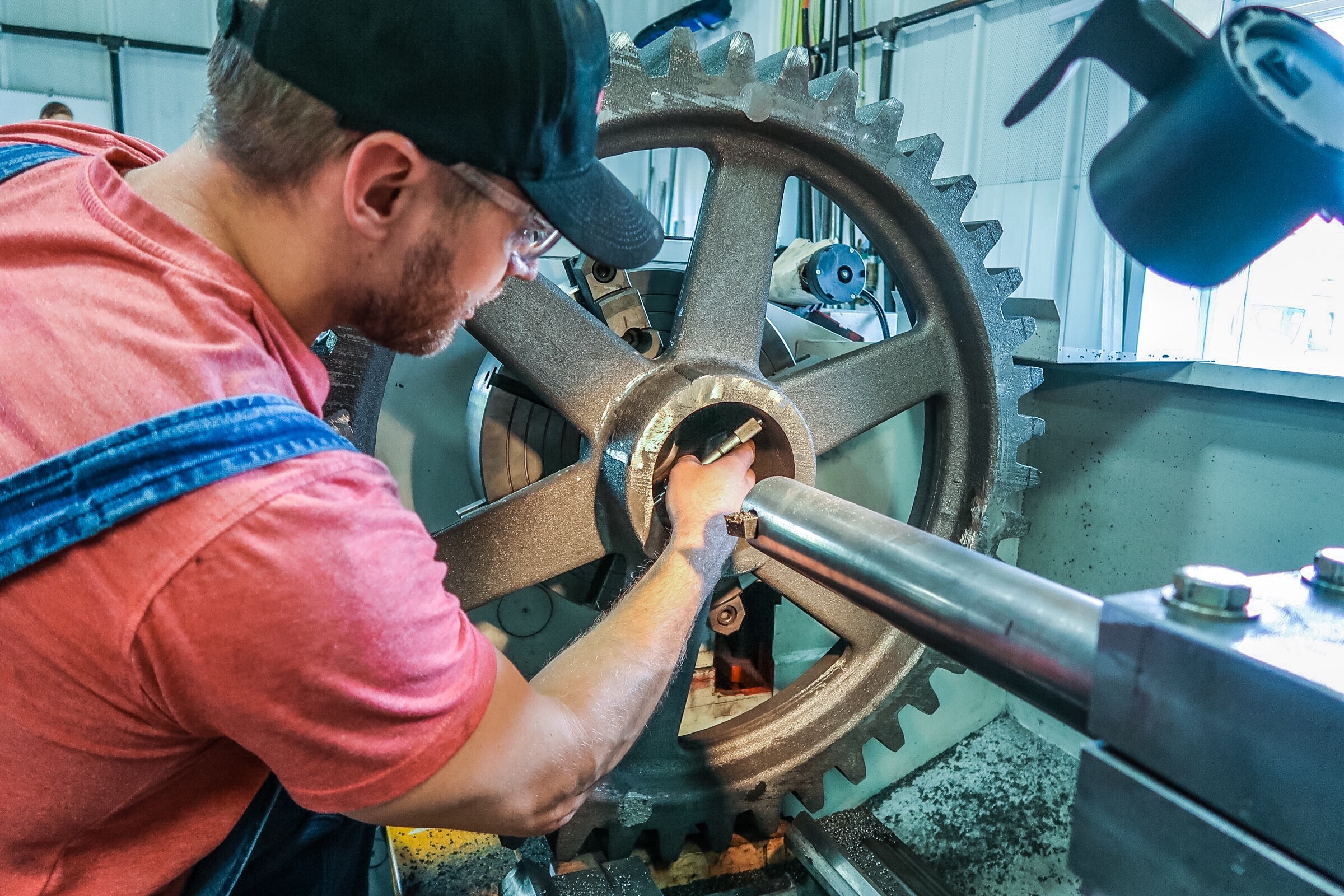
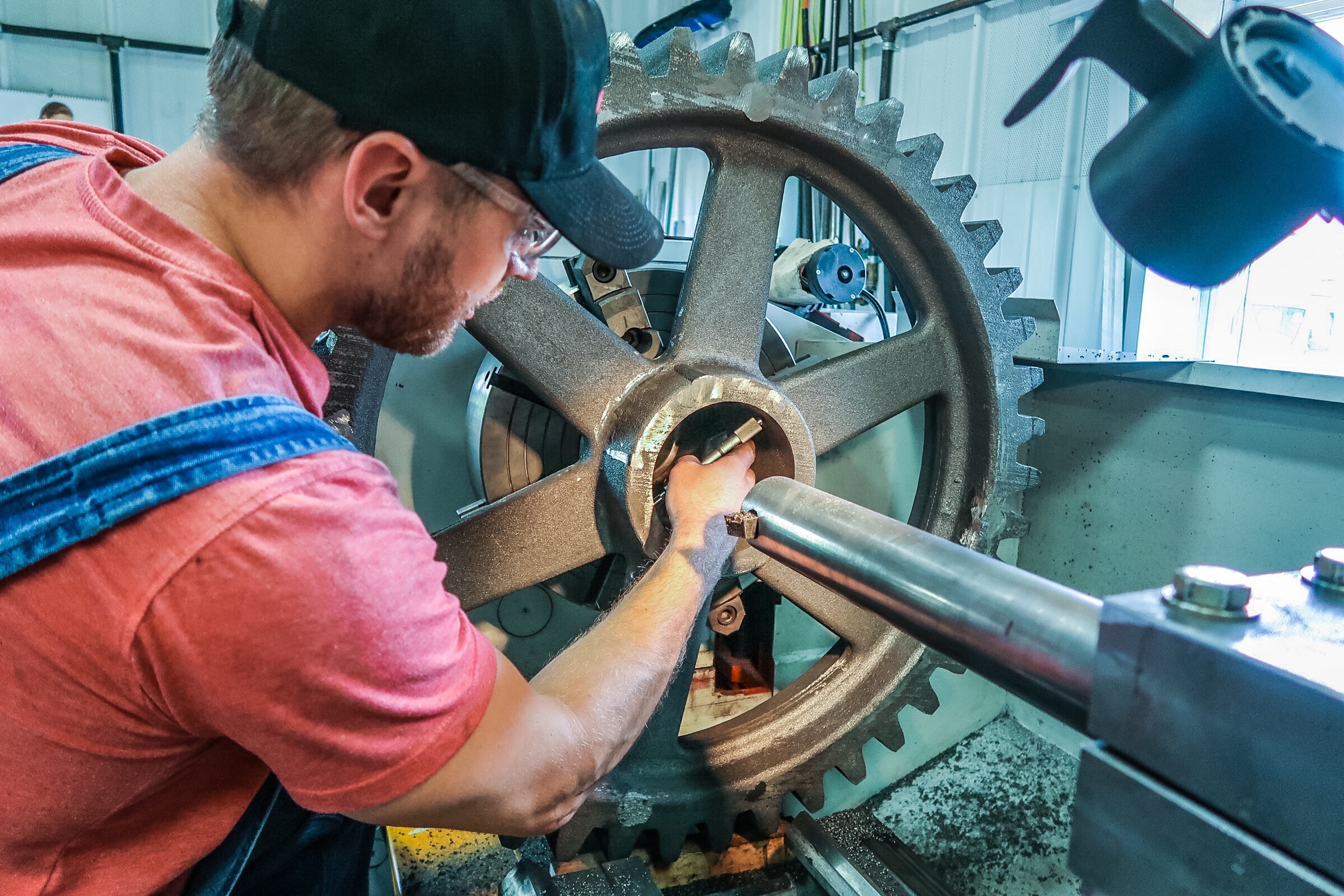
Boring the intermediate gear on the lathe — the large cast gear taking its final dimensions.
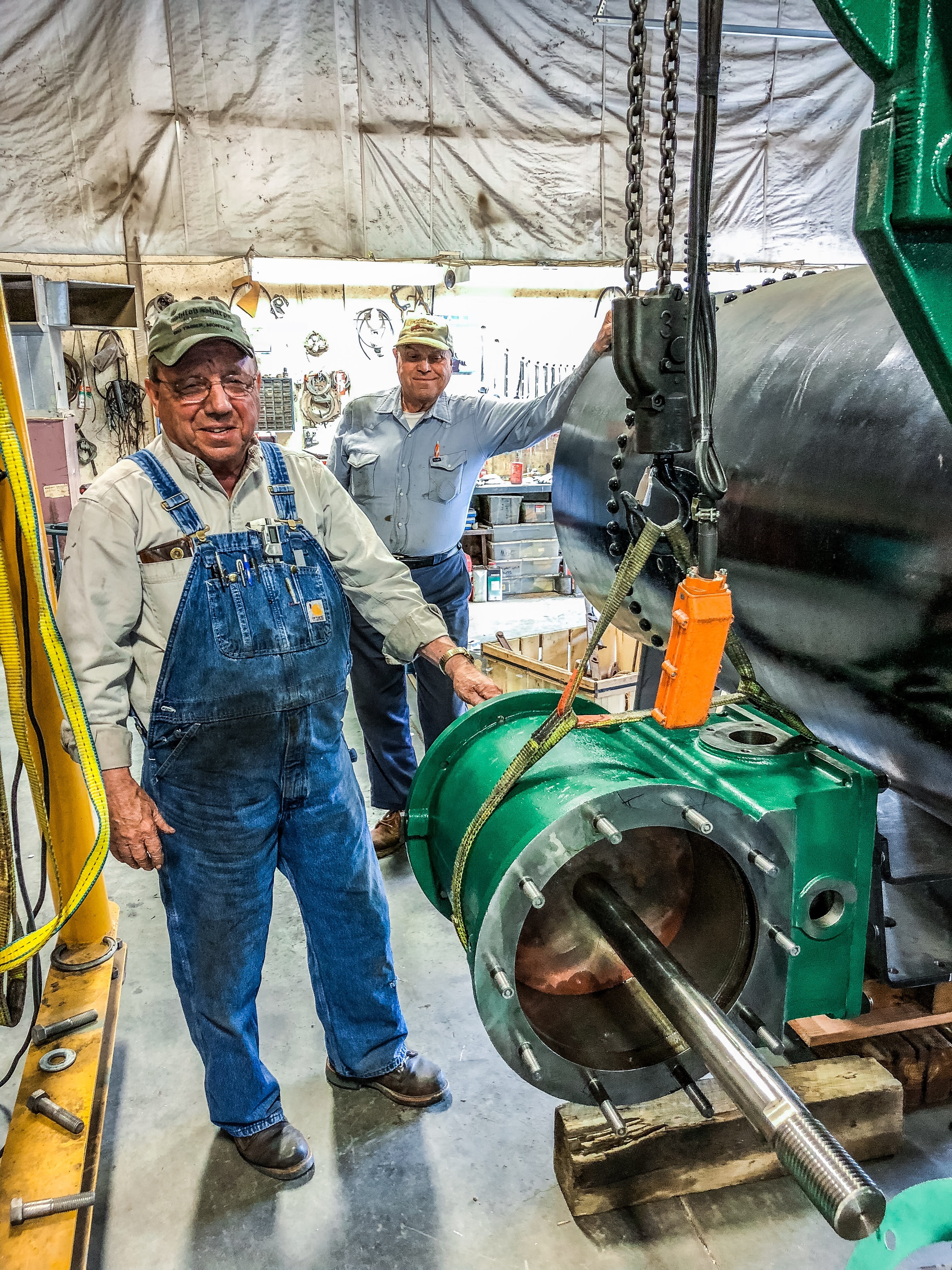
Gary Bradley and Kevin Anderson mounting the cylinder to the engine frame — a critical alignment operation.
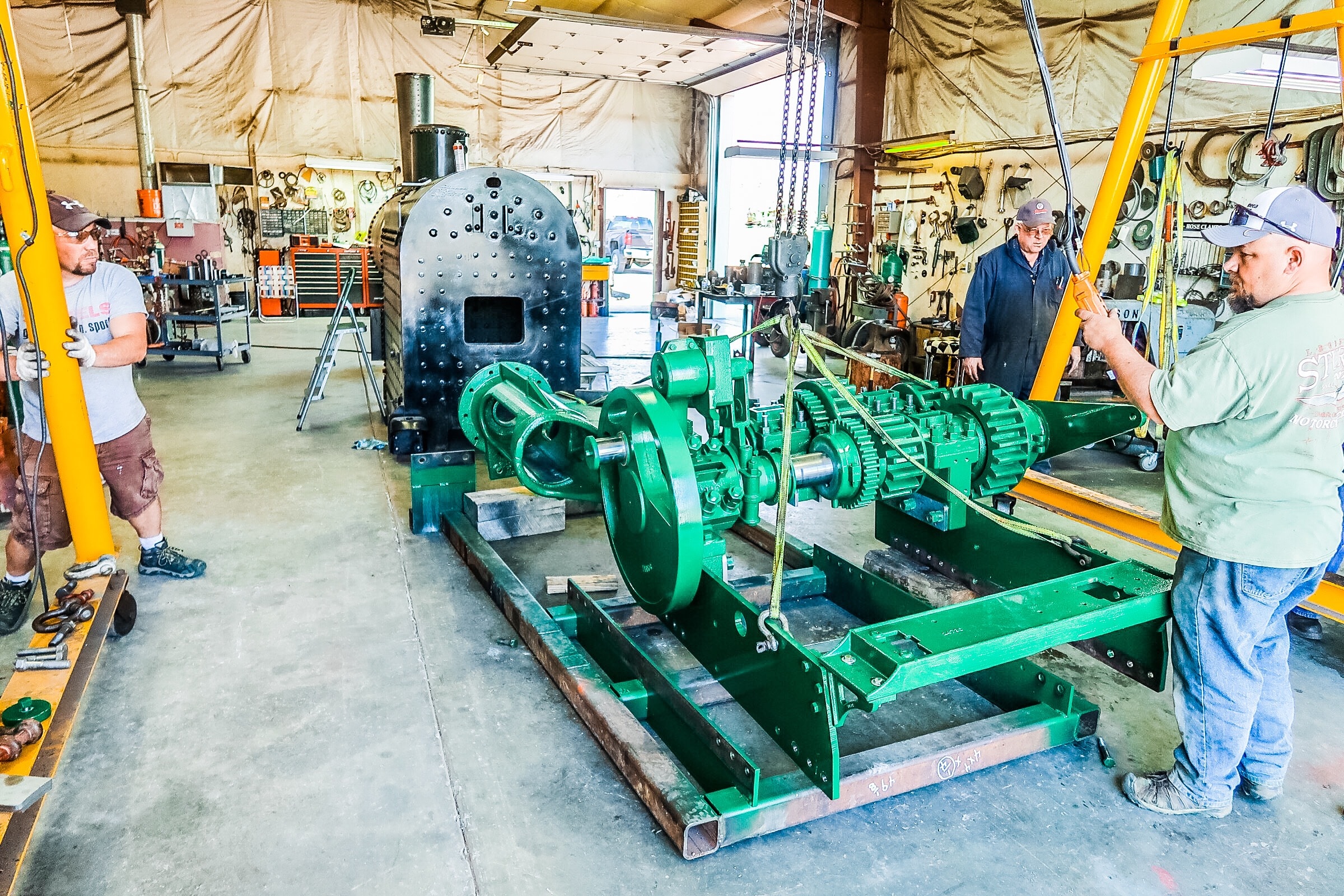
Lifting the completed engine assembly off the fixture — the moment before it meets the boiler for the first time.
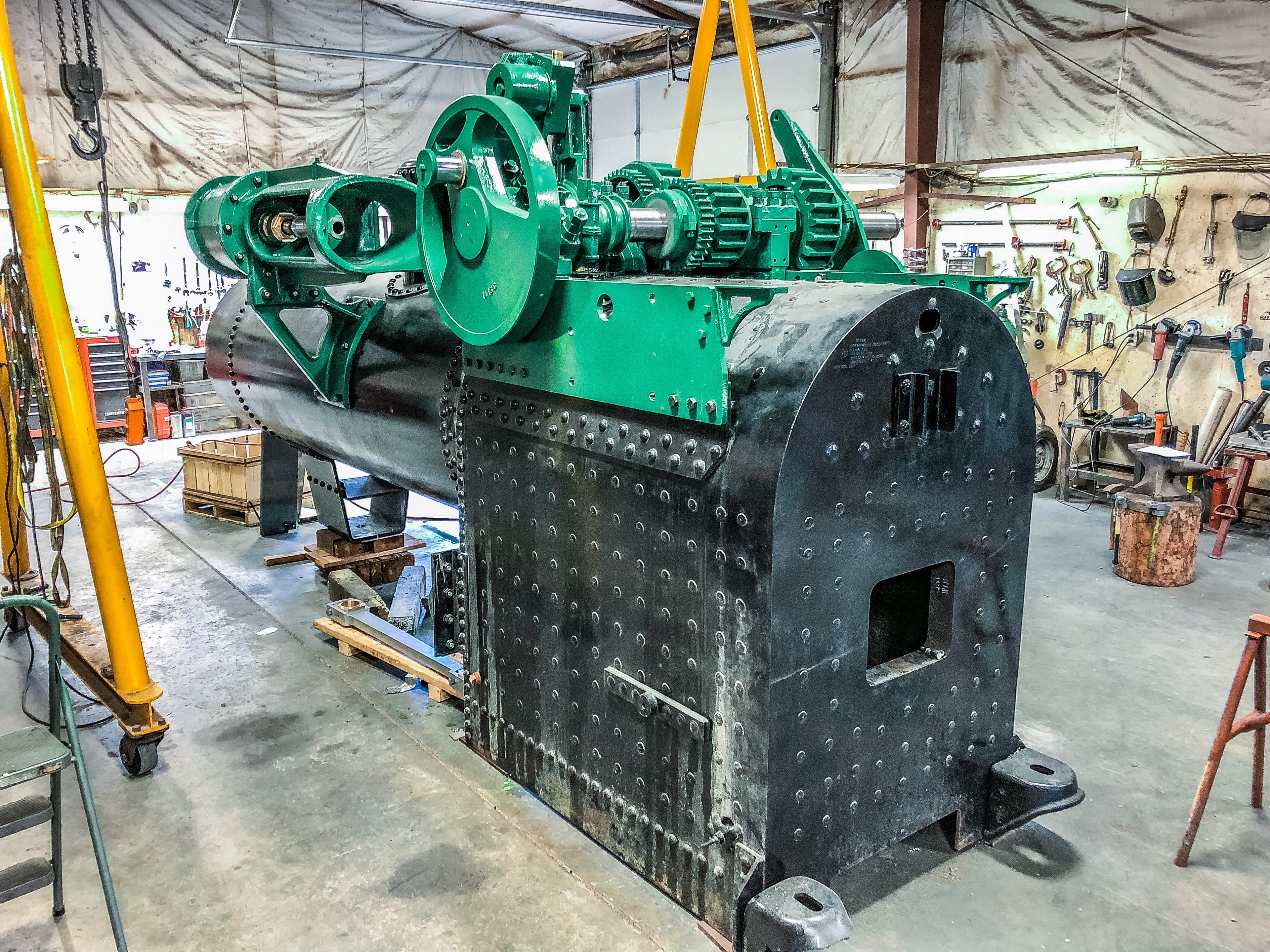
The engine assembly lowered onto the boiler — everything fit perfectly as planned.
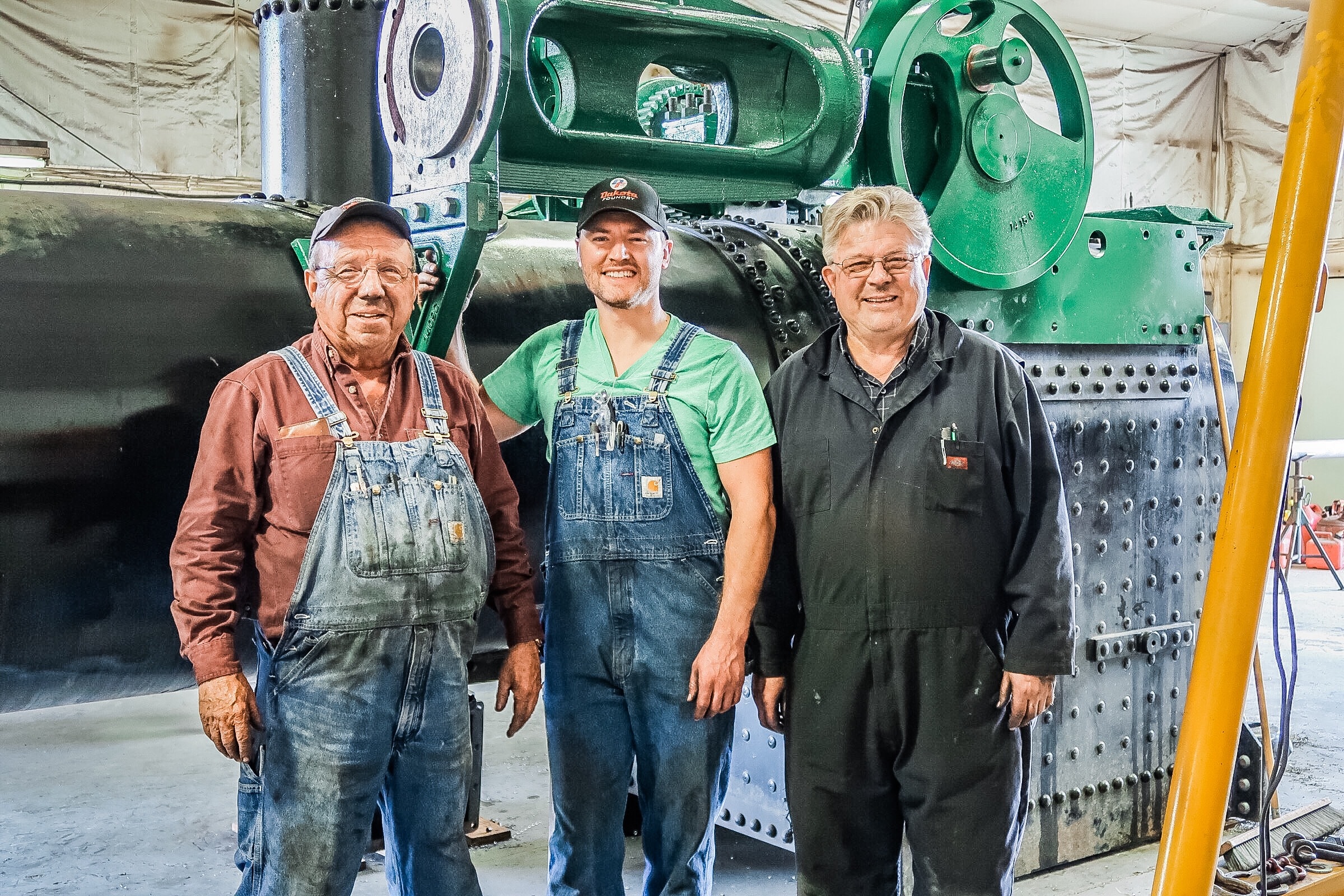
Gary Bradley, Kory Anderson, and Jim Briden with the engine mounted on the boiler — a milestone worth celebrating.
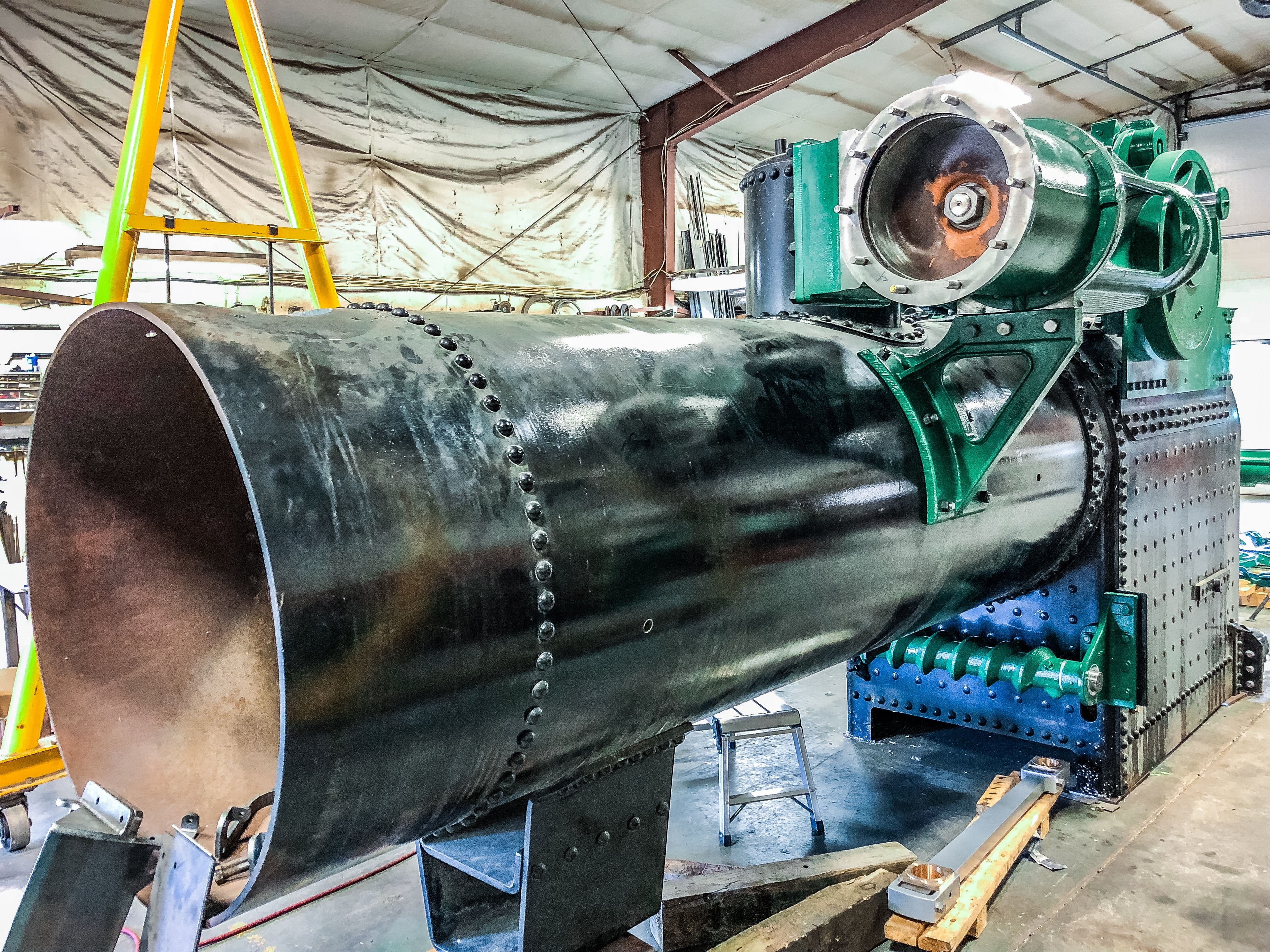
The engine as of July 1, 2018 — five weeks from first firing, the 150 Case is unmistakably itself.
The engine is complete, tested, and ready. Now comes the final challenge — loading 35 tons of living history onto a flatbed and hauling it to Andover, South Dakota, for its public debut on September 7, 2018.
It has been a hard push to get to this point, but the 150 Case is complete and has been successfully tested. The wheels are on, the paint is done, the decals and striping are applied, and she is everything we dreamed she would be. Standing next to those 8-foot rear wheels — knowing every rivet, every casting, every machined surface — is a feeling that's hard to put into words.
The 150 and 110 Case rear wheels side by side tell the whole story. The 110's wheel looks like a toy next to the 150's. Each rear wheel on the 150 is 8 feet in diameter and weighs over 3 tons — and we built two of them from scratch, with over 1,200 hot rivets apiece. Seeing them powder coated and installed, the scale of what we built finally hits you.
Getting the engine out of Gary's shop in Sheridan and onto the transport required a serious rigging operation. Gary Bruns and his crew brought in the heavy equipment — cranes, chains, and a lot of experience — to lift the engine and ease it onto the lowboy trailer. Kory guided it from the operator's platform the whole way. The engine barely cleared the shop door on the way out.
With the engine loaded and secured, the convoy headed east toward Andover, South Dakota. RDO Equipment Co. provided the transport — a fitting partner for a machine of this scale. The 150 Case rode on a Towmaster lowboy, drawing stares at every stop. After 18 months of concentrated construction, the road to Andover felt like the longest and shortest drive of our lives.
We want to thank every single person who helped make this happen — Gary Bradley, Jim Briden, Kevin Anderson, Dakota Foundry, Trevor Guenter, Wimpy Anderson, Larson Welding, HORSCH LLC, Gary Bruns, RDO Equipment, and the dozens of friends who showed up when we needed them. This engine belongs to all of you. We'll see everyone in Andover on September 7.
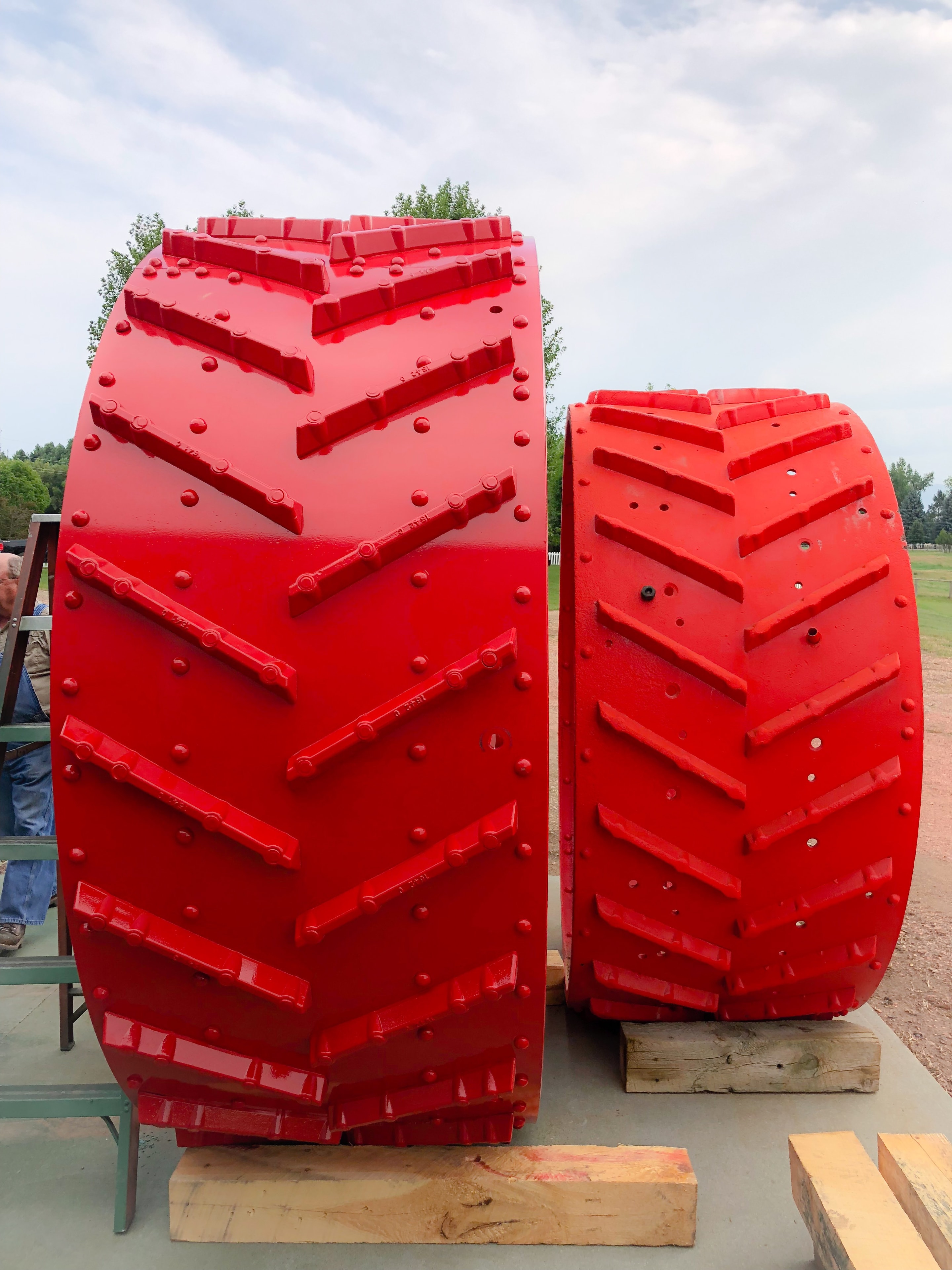
The 150 Case rear wheel beside the 110 Case rear wheel — the size difference says everything about what was built.
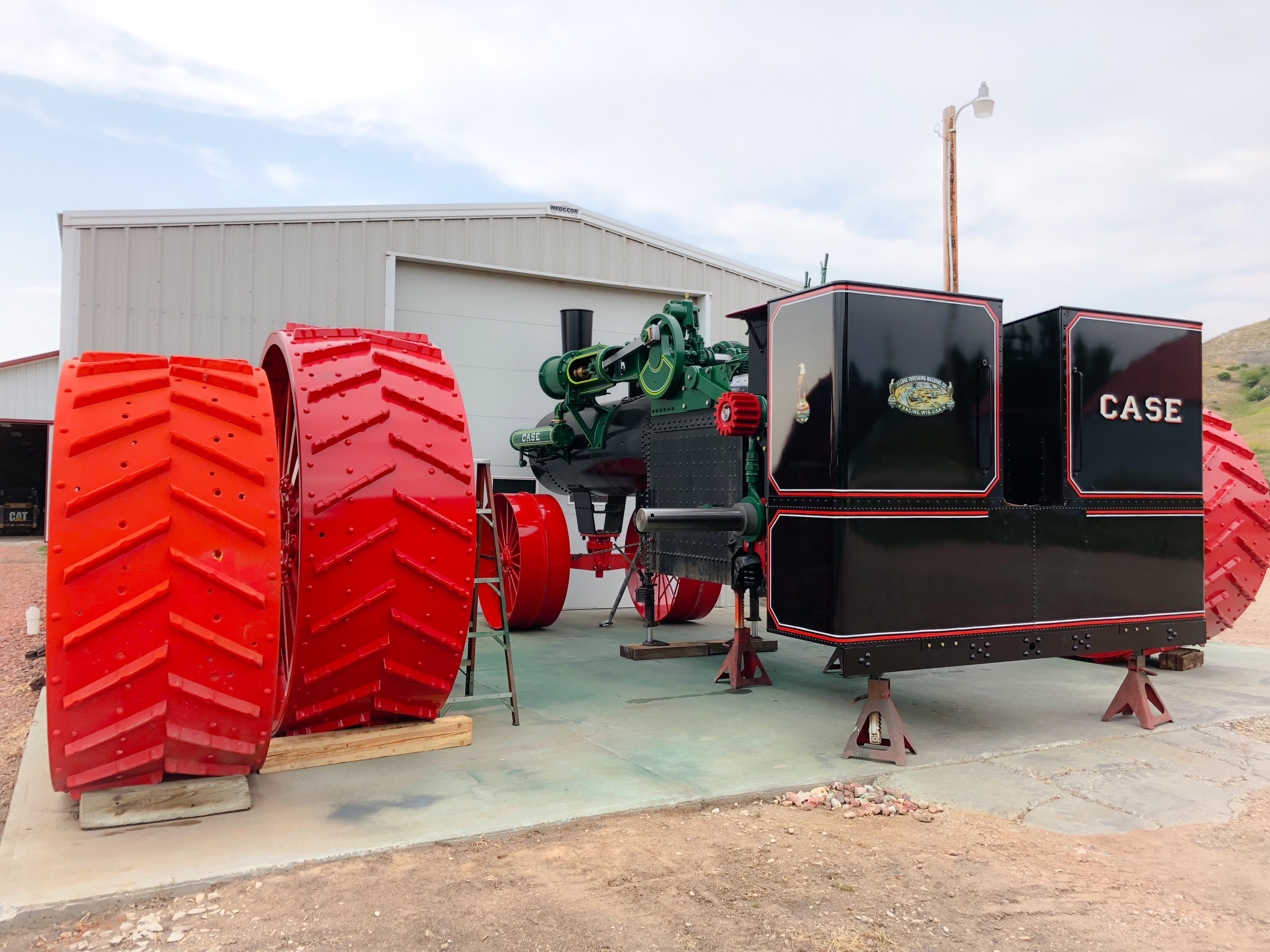
The 150 Case outside for final assembly — wheels on, bunkers fitted, the machine taking its full form for the first time.
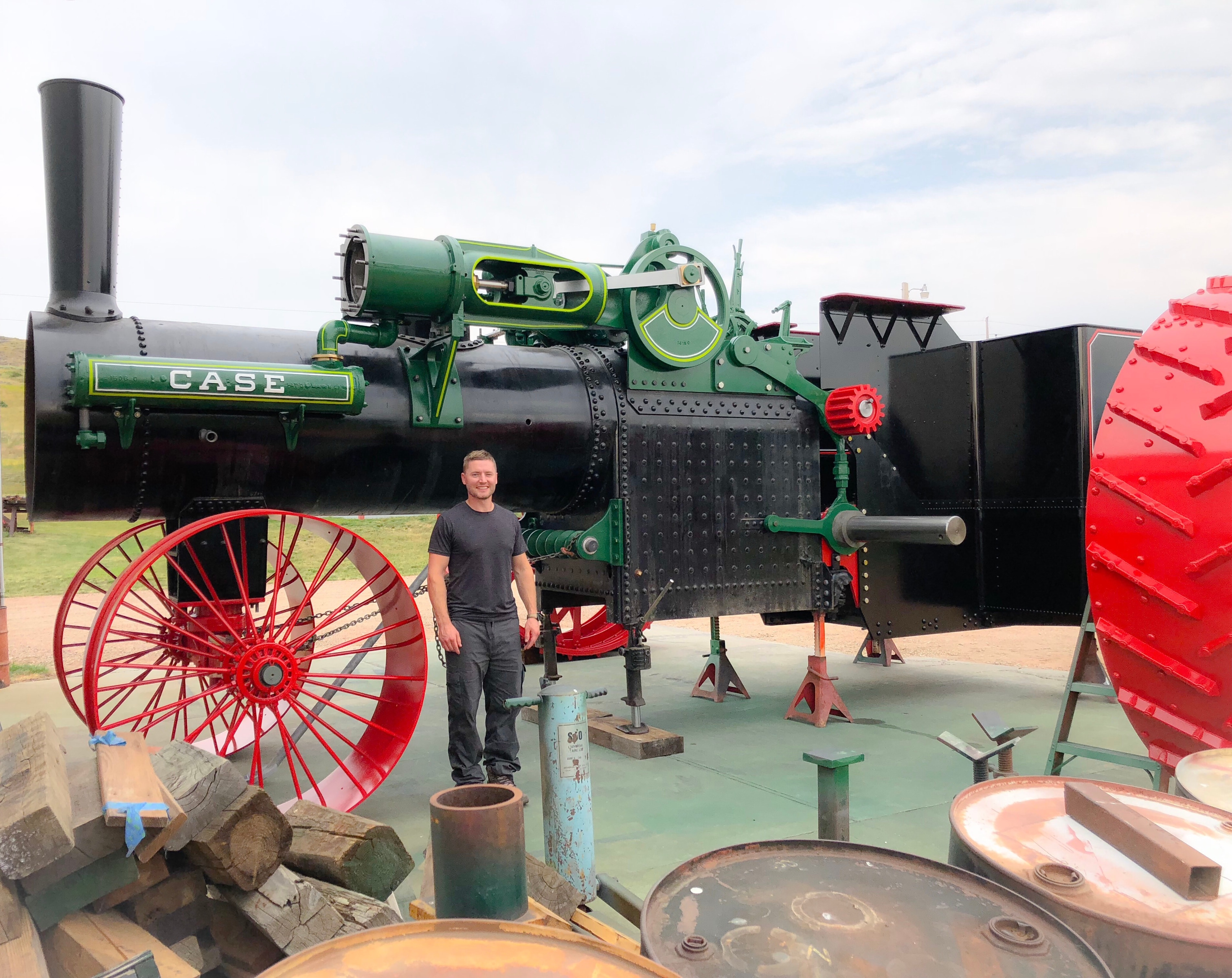
Kory Anderson beside the completed 150 Case — the culmination of twelve years of determination.
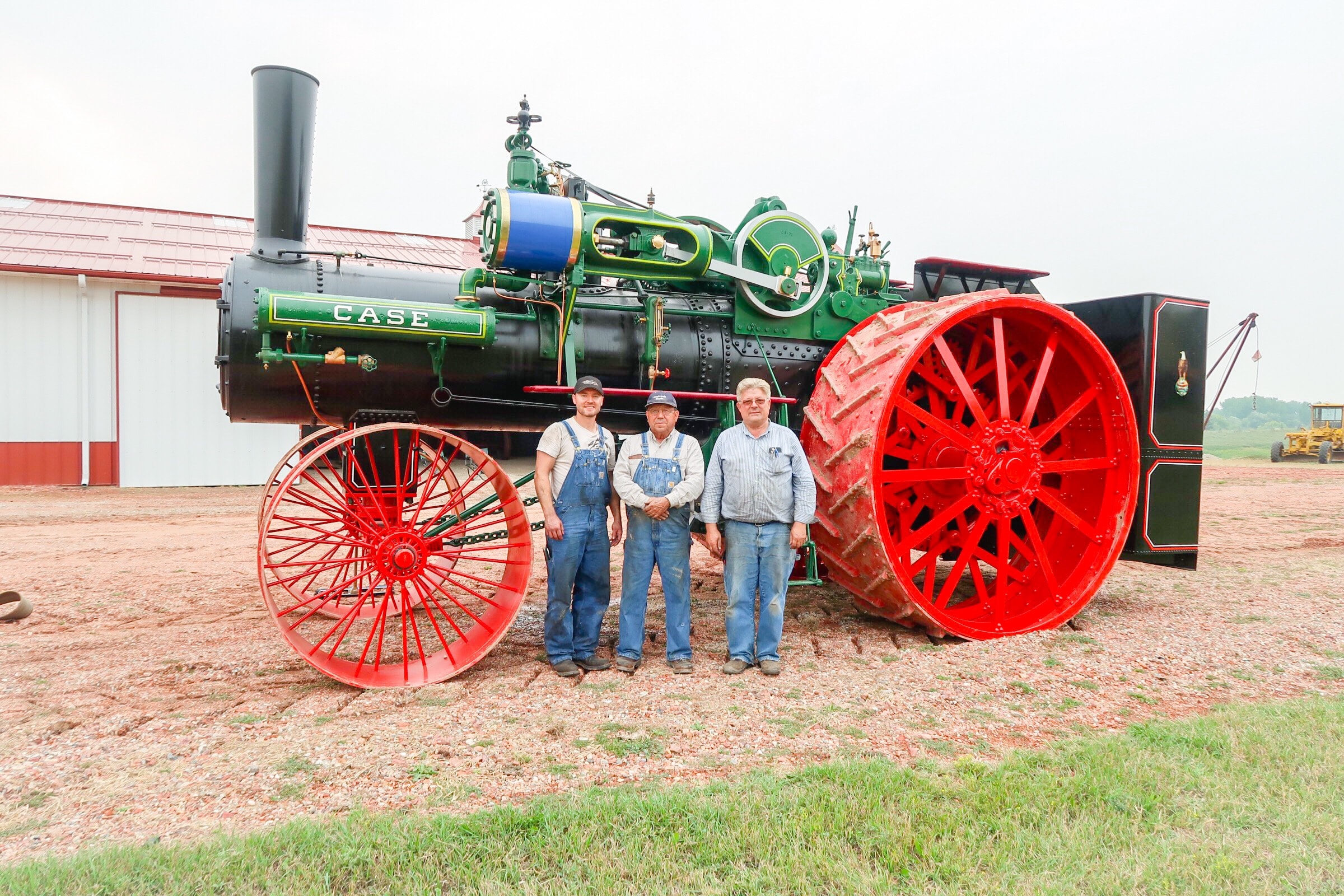
Kory, Gary Bradley, and Kevin Anderson — three of the key builders with the finished engine.
Kory at the controls, driving the 150 Case under its own power for the first time outside Gary's shop.
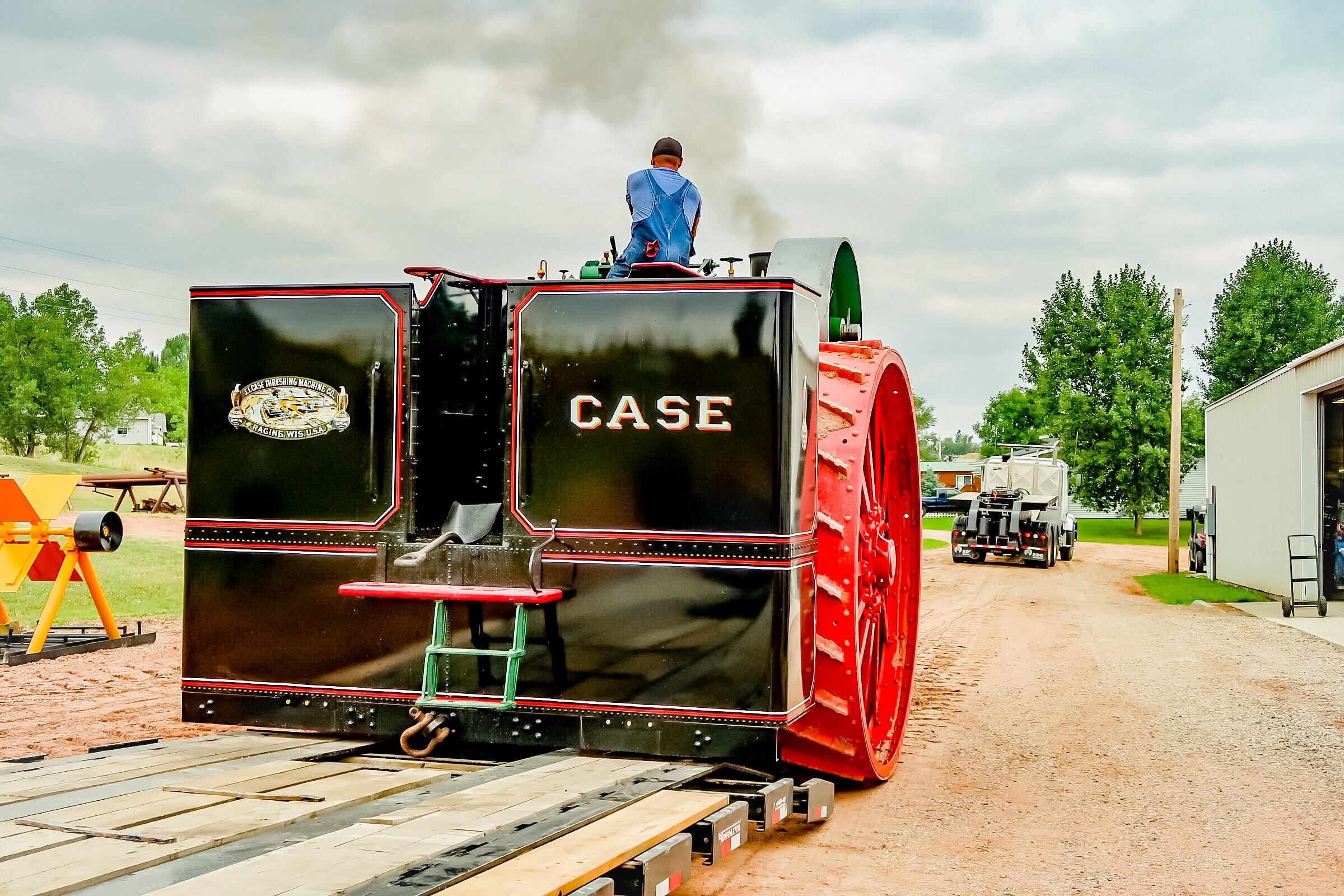
Gary Bruns and crew rigging the 150 Case out of the shop and onto the transport — a precision lift of 35 tons.
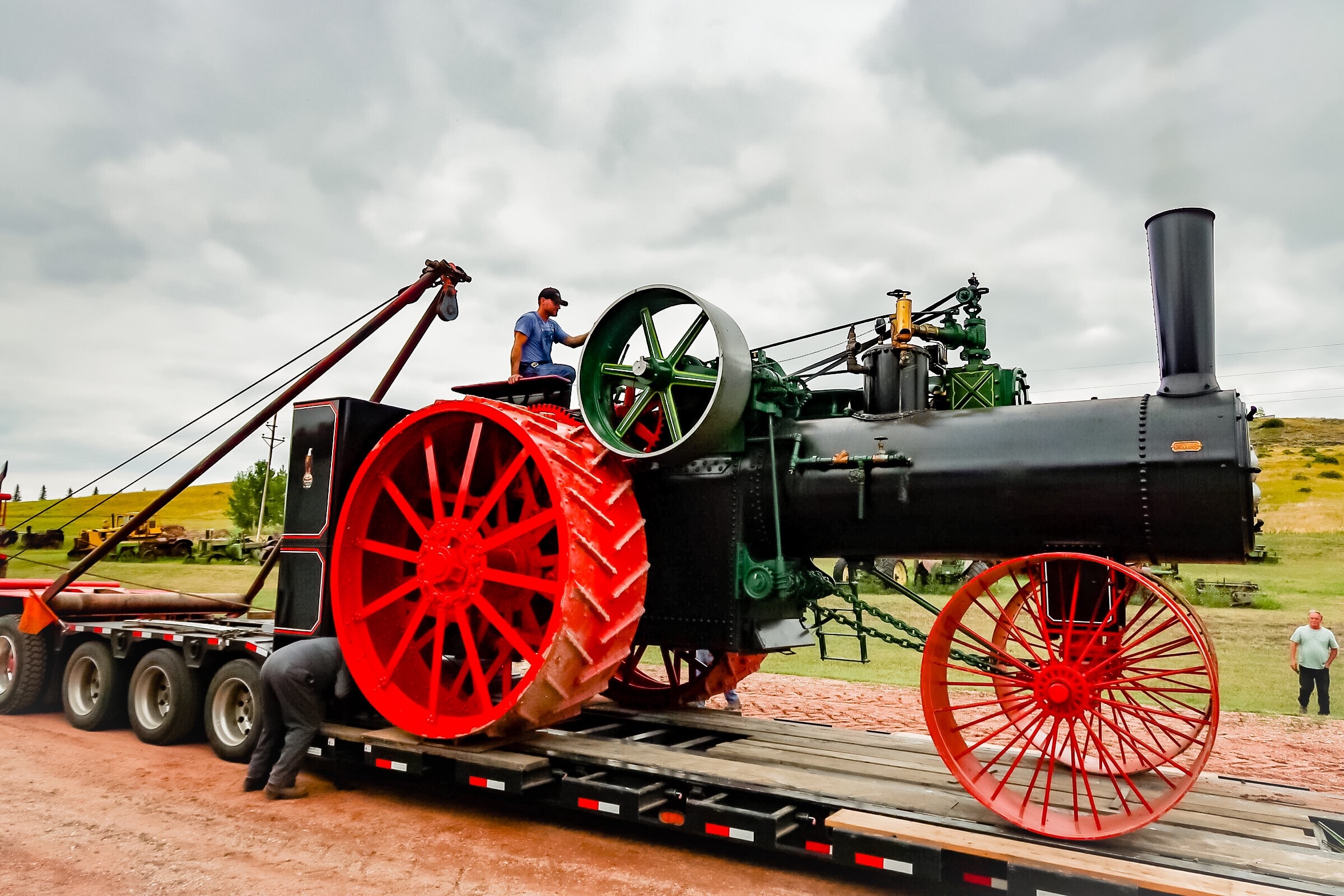
The 150 Case loaded on the lowboy, Kory at the controls — heading out of Sheridan for the last time before the debut.
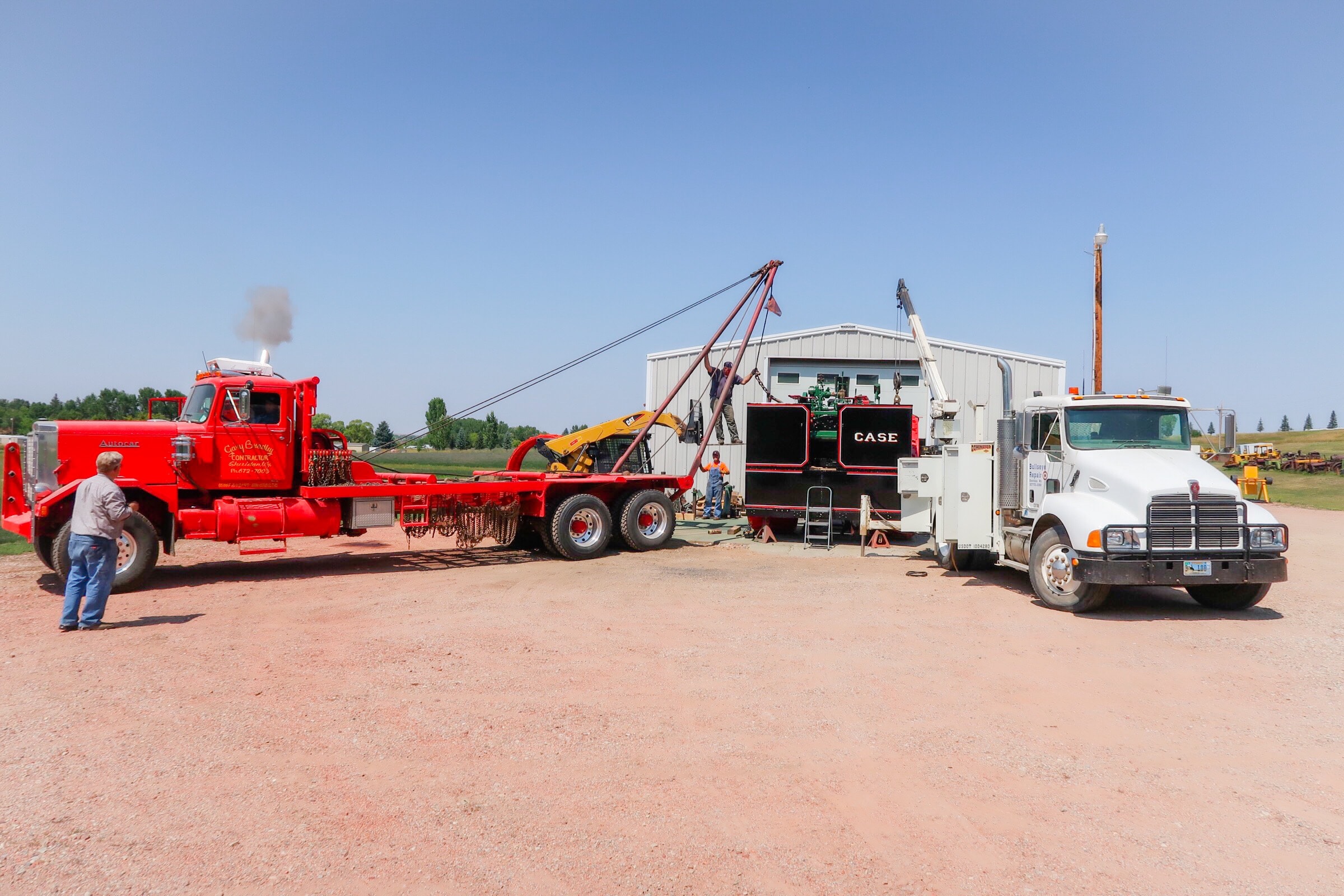
Installing the massive rear wheels at Gary's shop — the final major assembly step before transport.
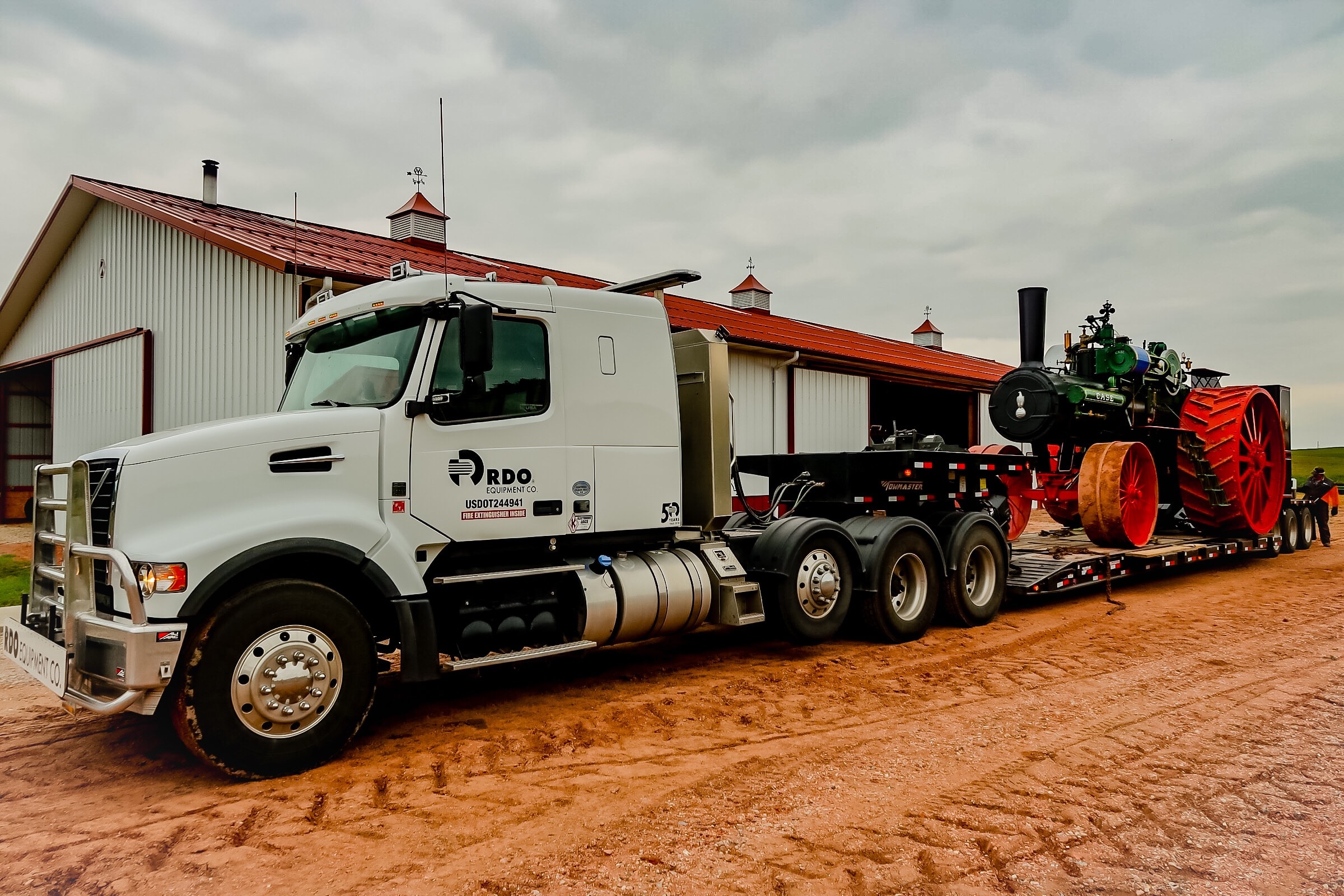
The 150 Case loaded on the RDO Equipment Co. Towmaster — ready for the road to Andover, South Dakota.
Three days before the public debut, the intermediate gear seizes. With the clock running and 24 bottoms to pull, Kory calls in every favor he has — and a shop full of strangers at RDO Equipment in Webster, SD step up to save the show.
Tuesday, September 4 — 3:00 pm. After previous issues with the intermediate gear seizing onto the steel hub and a failed plowing attempt with the 12-bottom plow, only 3 days remained until show time. I knew we were out of time to find a solution in the field. I had my mind set that the 150 Case had to perform and failure was not an option.
I called friend Mark Davidson who had hauled the 150 Case from Sheridan home to Andover. I said, "Mark, I've got trouble." He said he'd be there in 25 minutes. We loaded the 150 onto the lowboy and hauled it into Webster to the shop of RDO Equipment. By 4:30 pm we had the engine pulled inside. Some of the mechanics gathered around — many seeing a steam engine for the first time. Jeff Kwasniewski asked if I was going to try to get the gear off that night. I told him, "Hell yeah, I have to machine it tomorrow and get it back together. It has to perform on Friday!" Jeff said, "Let me punch out — I'll help you." Within a few minutes there were a half dozen new faces, guys I had never met, who just finished an 8-hour day in the shop, standing there by the engine ready to go to work.
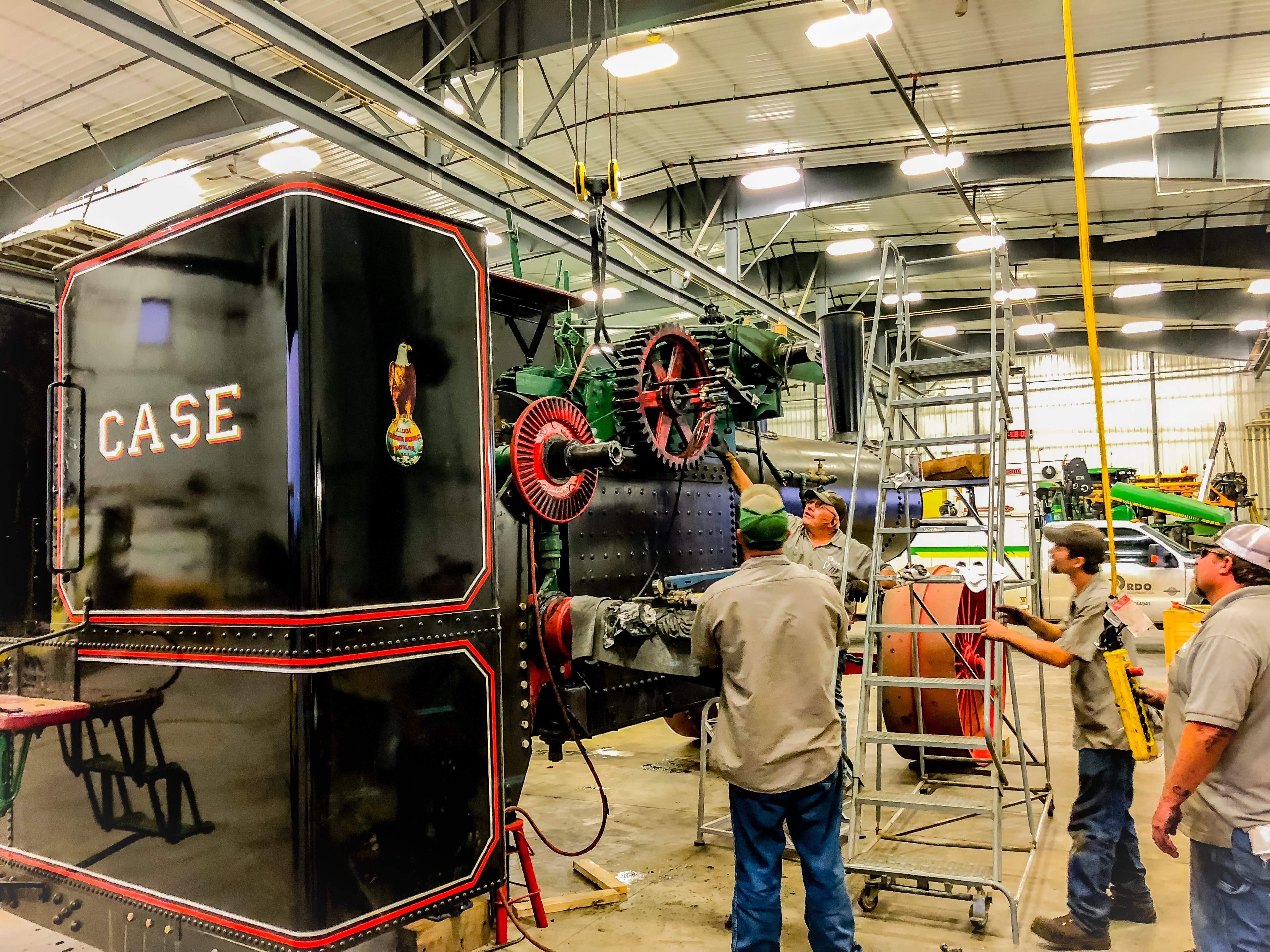
By 9:00 pm we had the entire right side torn down. It took nearly 2 hours to get the intermediate gear off the stub. The issue: the ductile iron gear had too similar frictional wear properties to the 1045 steel shaft of the hub it ran on. The ductile grabbed the steel, galling and pulling chunks up as well as cutting ridges — making it almost impossible to remove. We got a transmission puller, enough port-a-power, sled hammers, and a combination of turning, pulling, and swearing to finally get the gear off.
Wednesday, September 5 — 48 hours until plowing with 24 bottoms. I called my friends Chad and Paul at P4 Machining in Clark, SD. They had a job running but said bring it down — they'd tear their job down and start on mine right away. Meanwhile, Pat the plant manager at our Webster facility set the gear up in the Haas mill to be bored while I ran to Clark with the stub shaft. By 4:30 that afternoon I had the gear and aluminum bronze bushing machined, ran over to Mereen Johnson and pressed the bronze bushing into the gear. Bob Clark picked up the finish-machined stub shaft from P4.
I returned to RDO just in time to meet Colin and Jack Beamish arriving from Manitoba. The RDO pit crew was just finishing another day in the shop. I asked if they were ready to put it back together — they said they couldn't take something apart and not see it go back together. Starting just after 5:00 pm, we had the stub, intermediate gear, differential, clutch, flywheel, gear shields, wheel, and lock nut back on by 6:30. Then we installed the extension rims for the very first time. Everything fit well and we had the engine finished with extensions on by 8:00 pm.
Thursday, September 6 — 24 hours until unveiling. We fired up at RDO in Webster and made a few test runs around the parking lot — the first time I had ever been on a tractor and looked down at the cab of a combine. Test runs went well. We loaded after 1:00 pm and headed back to Andover for a successful test run with the 12-bottom plow. Being out of time, we'd just have to wait and see what Friday would bring.
Friday, September 7 — Public Debut. After the public debut, as we were backing the engine up to the 24-bottom plow, there was a loud clunk and clanging from the differential. The 1" key holding the left-hand pinion had come loose, allowing the differential to spread itself apart by pulling the countershaft through the cannon bearing. A simple fix — just bad timing. After an hour with a loader and skid steer pushing the countershaft back through and driving the key back in place, I hollered out to the crowd, "Are you ready yet?" — to which everyone roared "YES" — and off we went. The rest, I guess, is history.
The irony of the story is we had to have the Big Case in the John Deere shop to get it tuned up. I probably won't hear the end of that. The moral of the story is: no matter what adversity or challenges present themselves, you can never quit. I am forever grateful for the team of RDO mechanics and all of the incredible friends who volunteered late nights and countless hours to make the 150 Case ready for a successful debut.
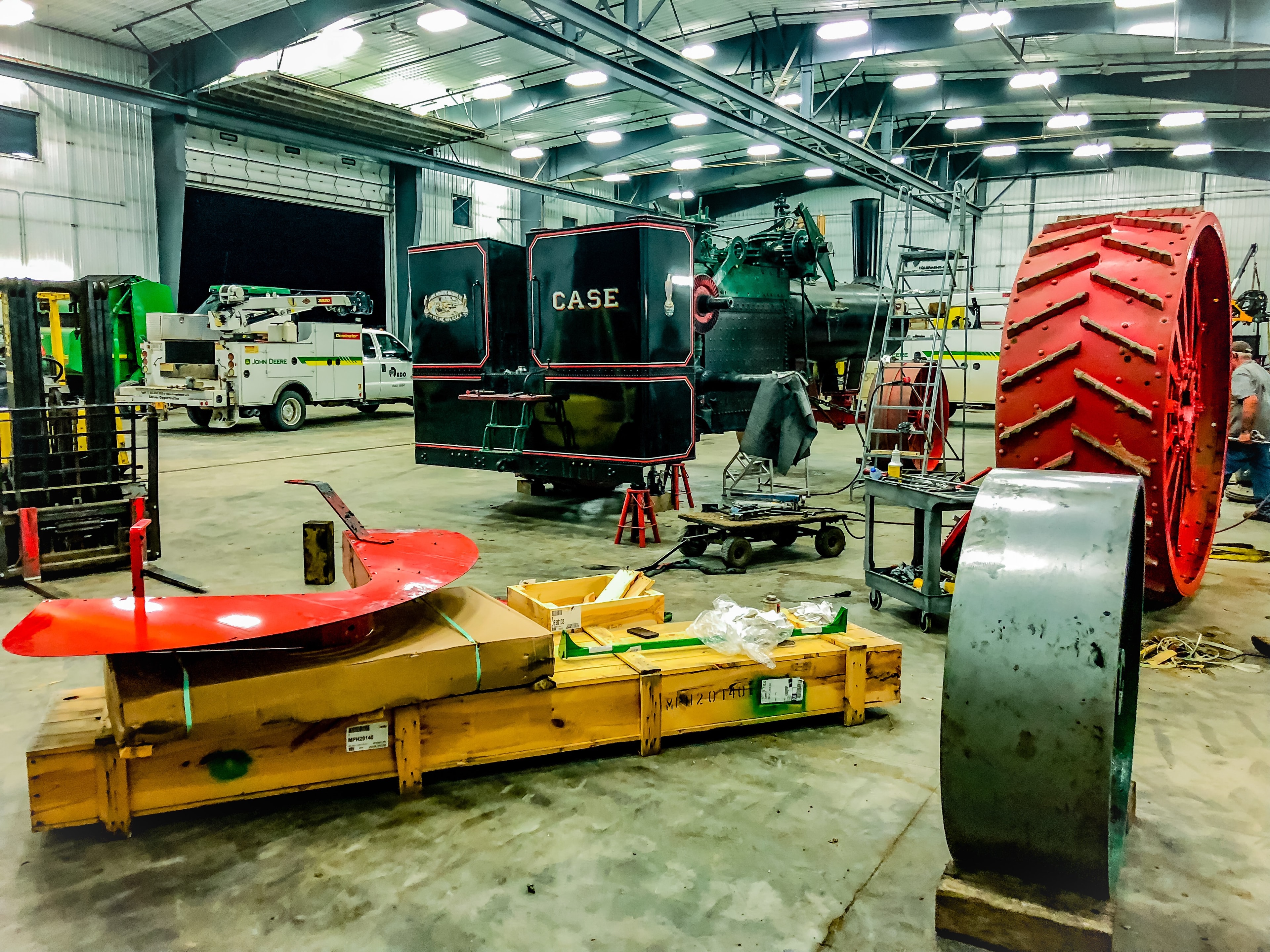
The 150 Case disassembled at RDO Equipment in Webster, SD — three days before the public debut, with the intermediate gear problem exposed.
Pulling the intermediate gear off the stub shaft — two hours of transmission pullers, port-a-power, sled hammers, and determination.
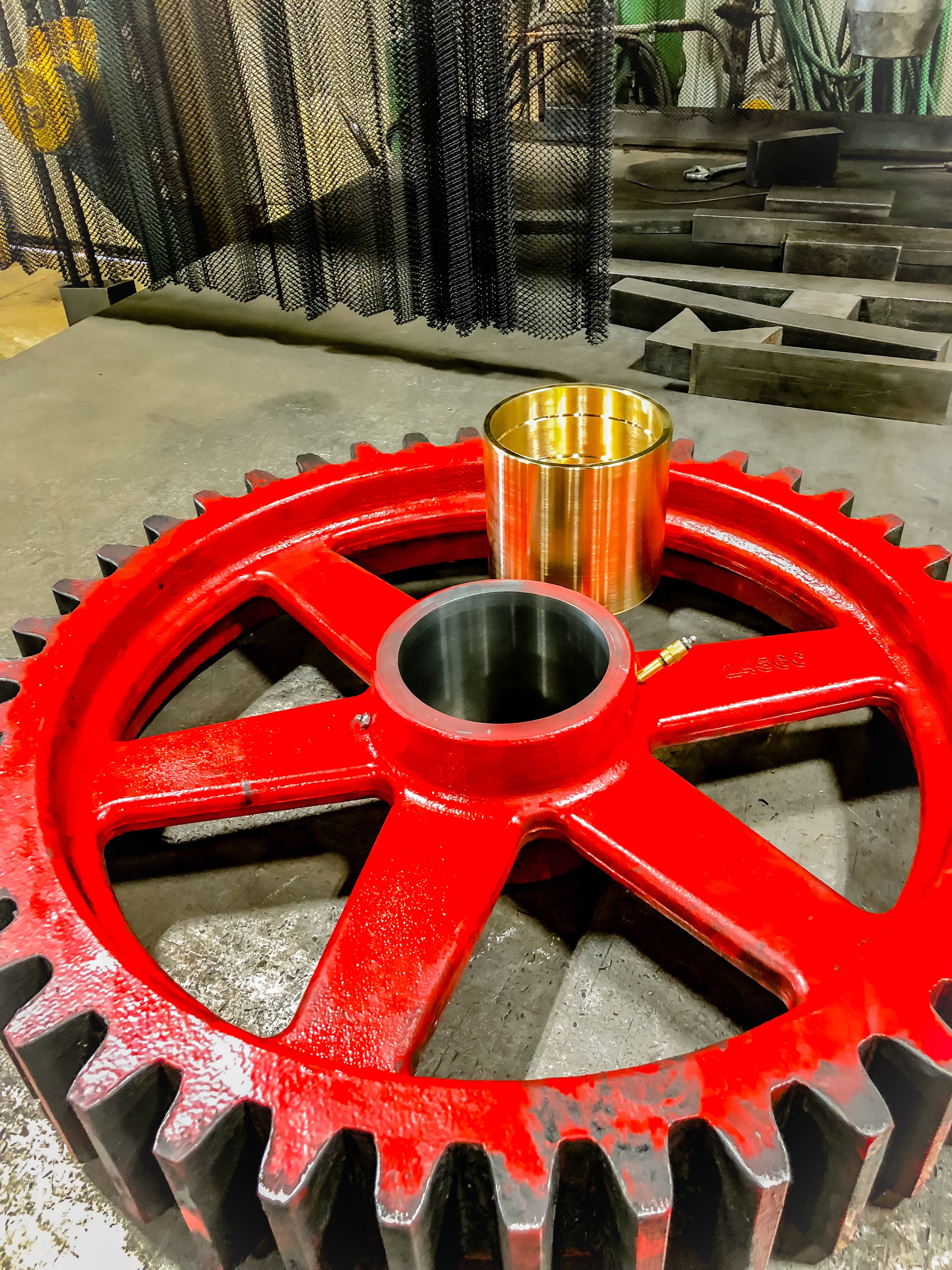
The intermediate gear bored and fitted with the new aluminum bronze bushing — machined at P4 in Clark and pressed in at Mereen Johnson.
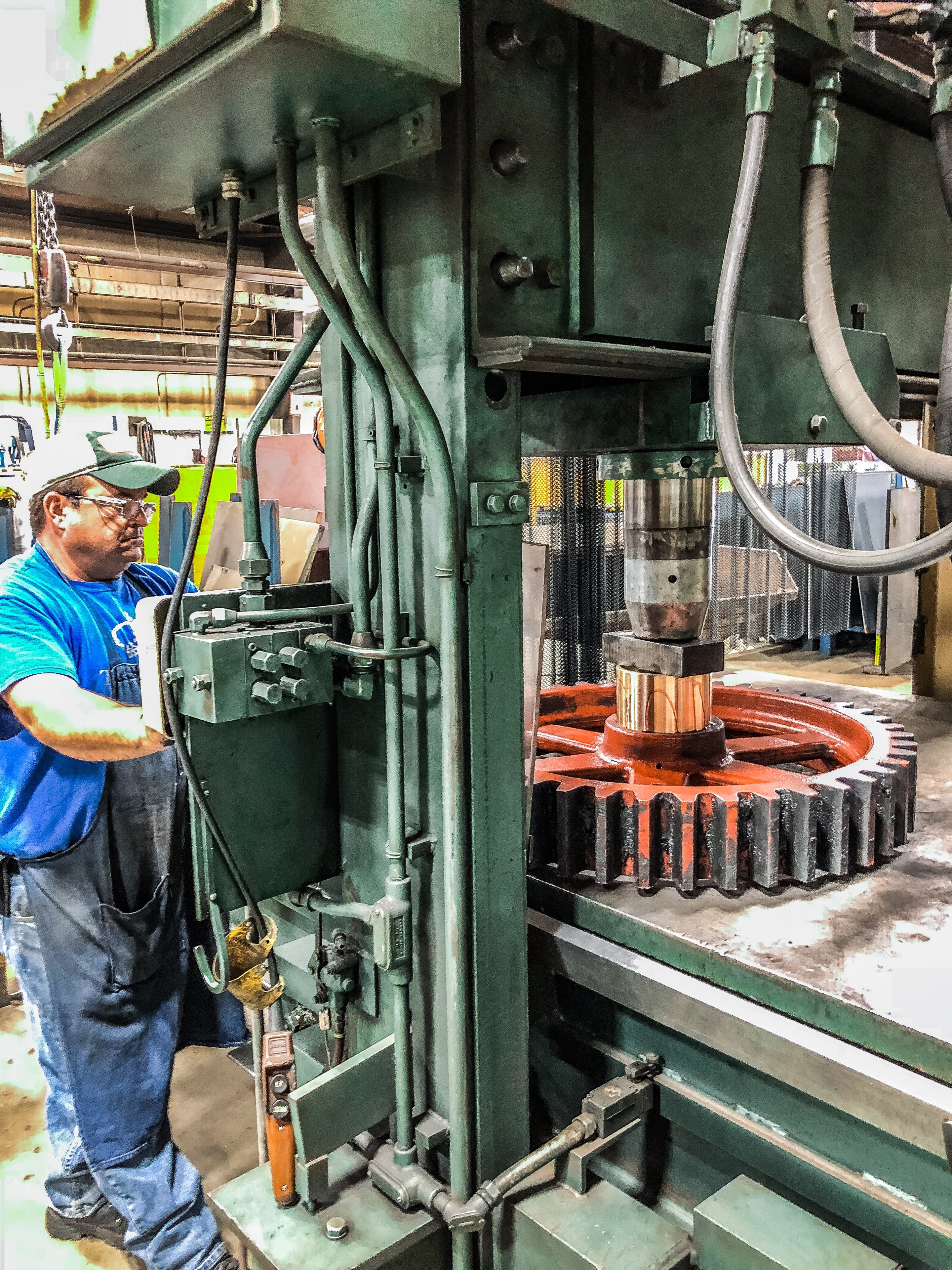
Rob Grewe at Mereen Johnson pressing the bronze bushing into the gear — the critical fix that made the debut possible.
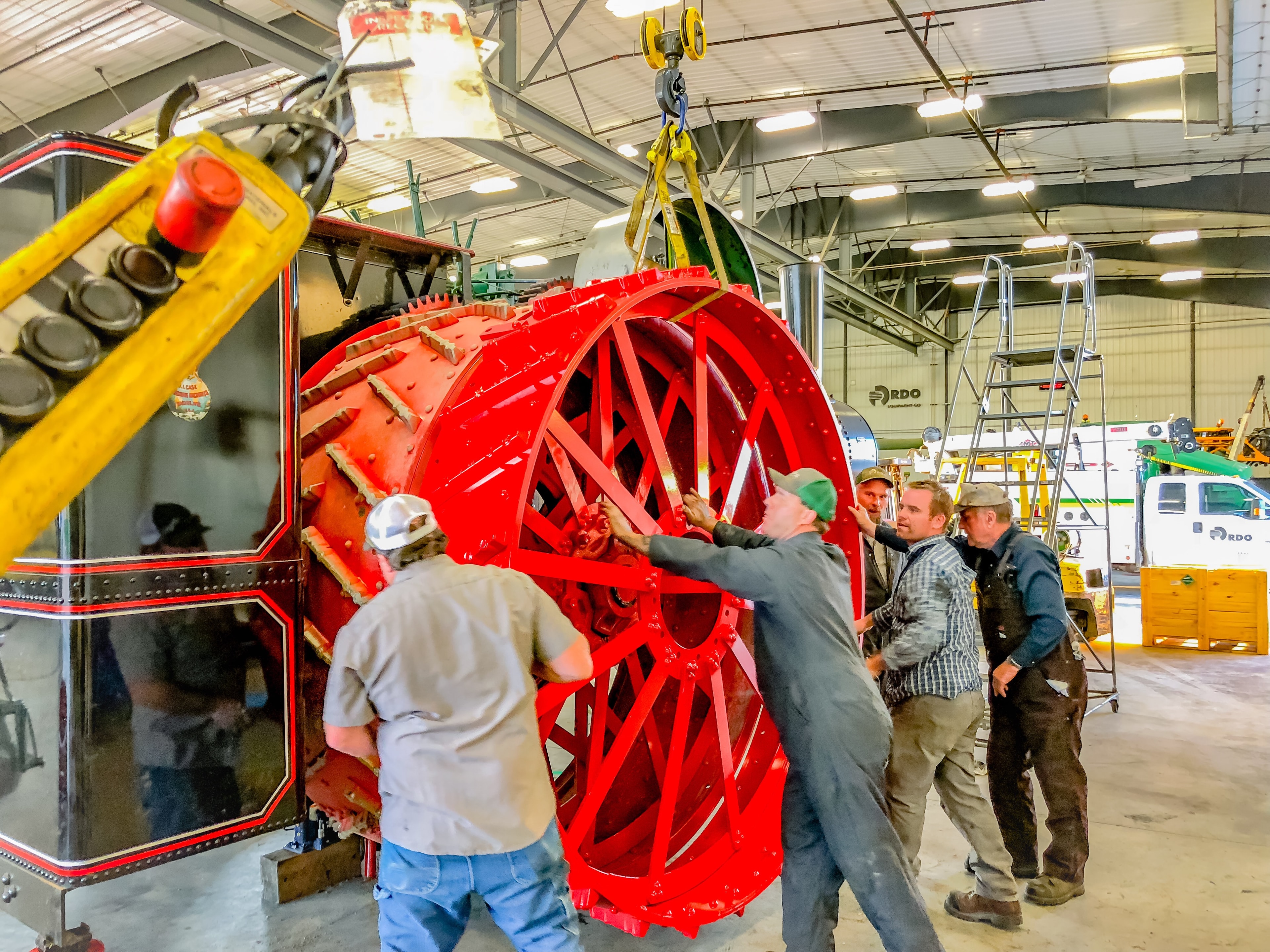
Chad Hanson, Tim Kwasniewski, Colin and Jack Beamish, and Jeff Kwasniewski installing the extension rims for the very first time.
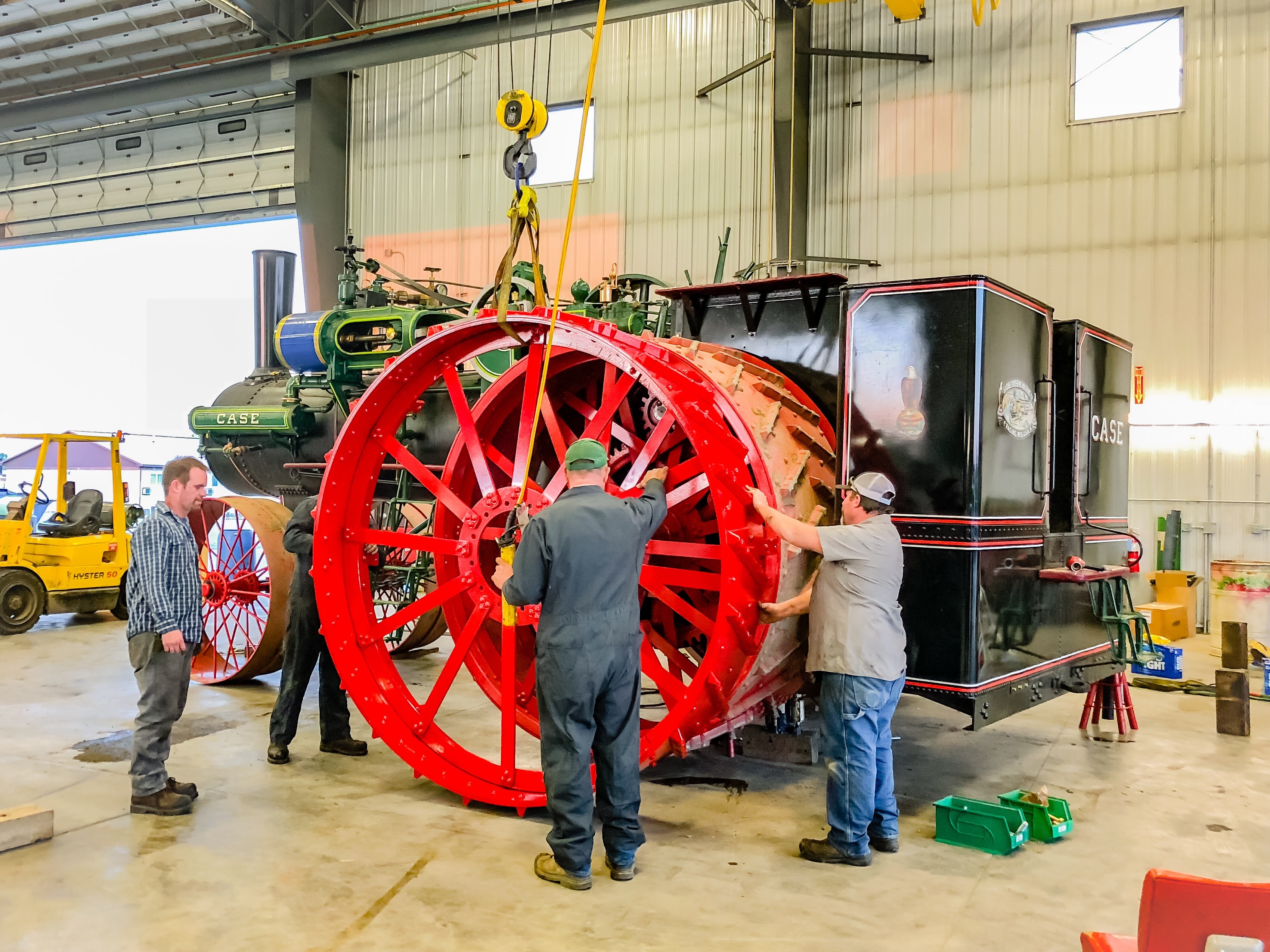
Installing the extension rims at RDO — the 150 Case growing even larger as the extensions go on.
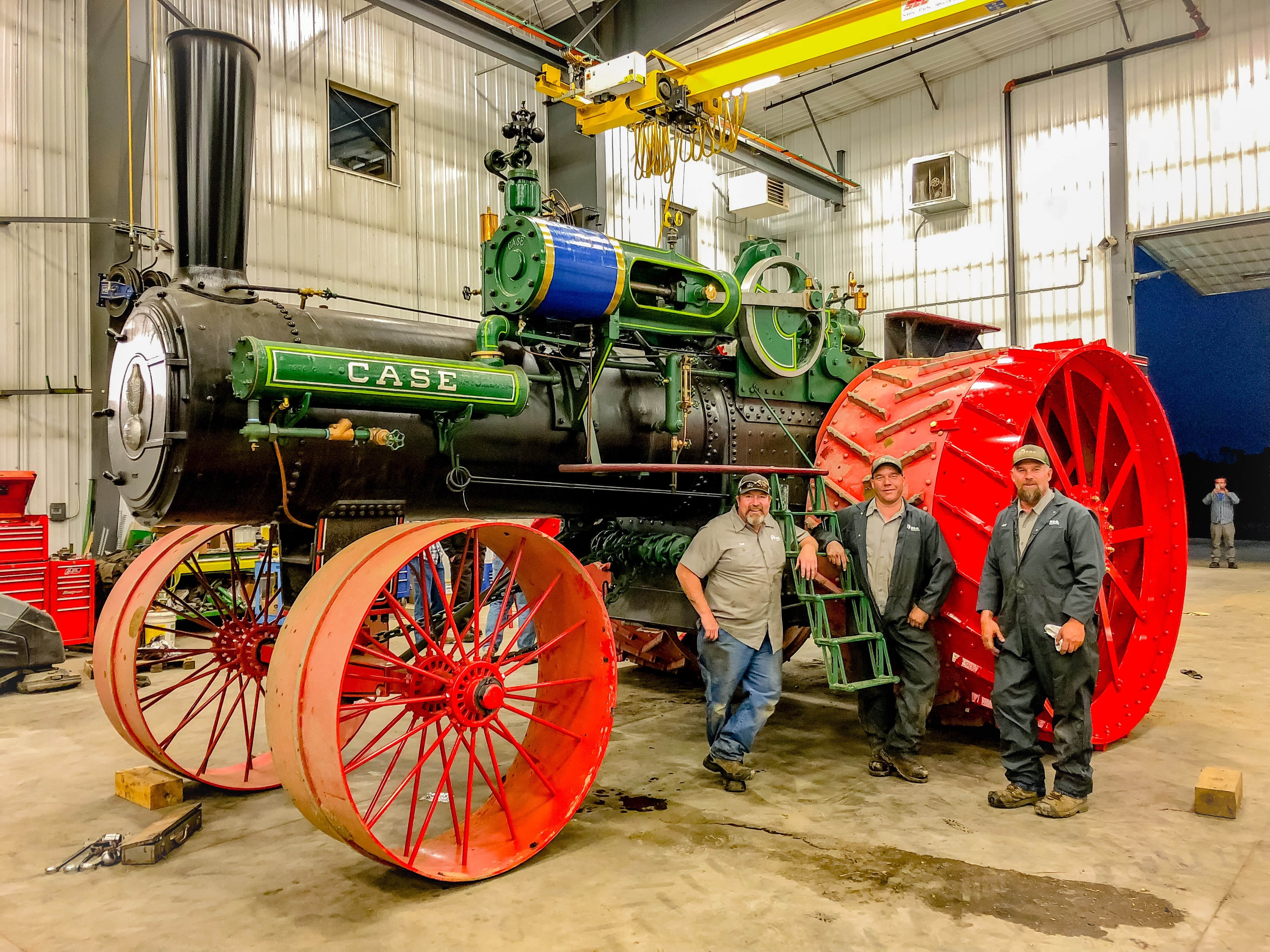
Chad, Tim, and Jeff from RDO after getting the extension rims on — strangers who became the pit crew that saved the show.
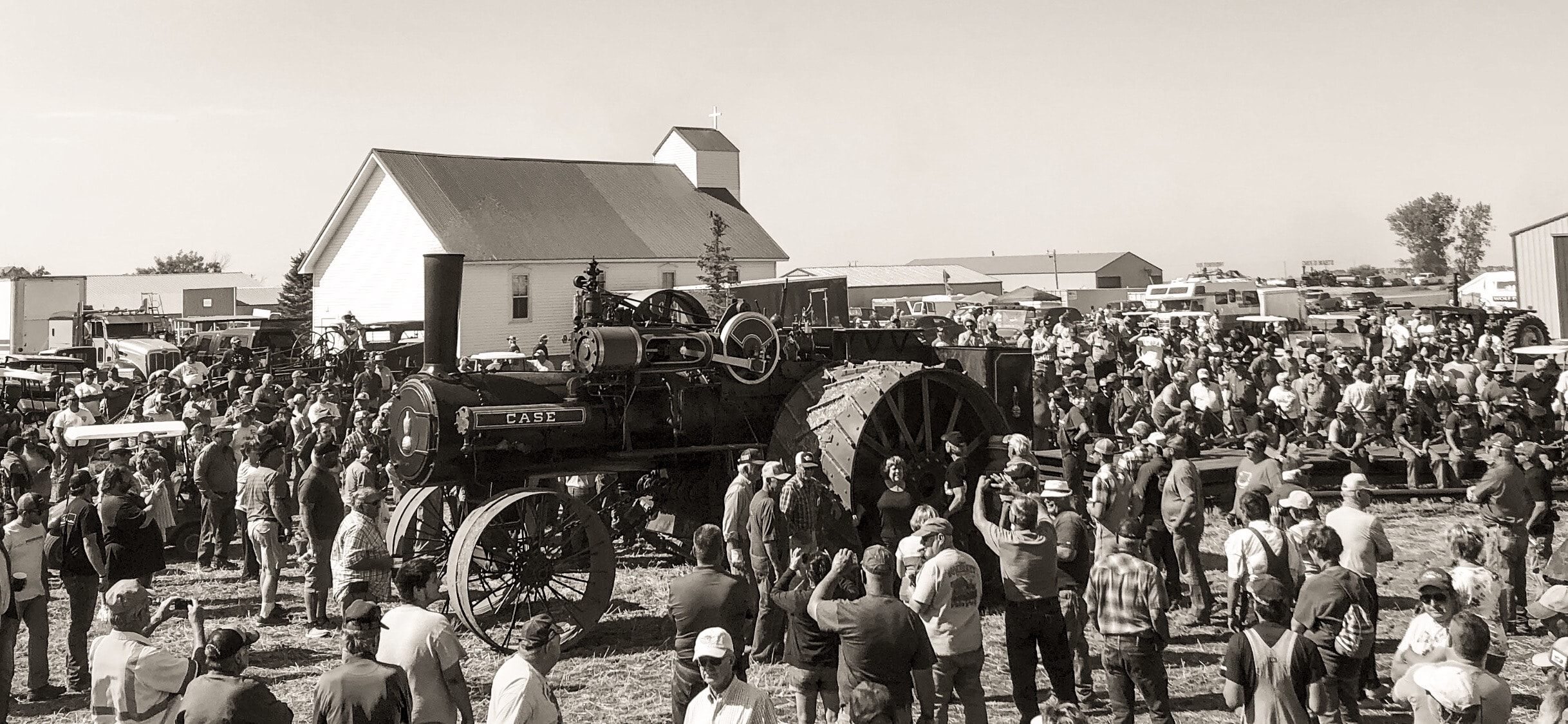
The crowd gathered in anticipation for the 24-bottom plowing — hundreds of people who came to witness history.
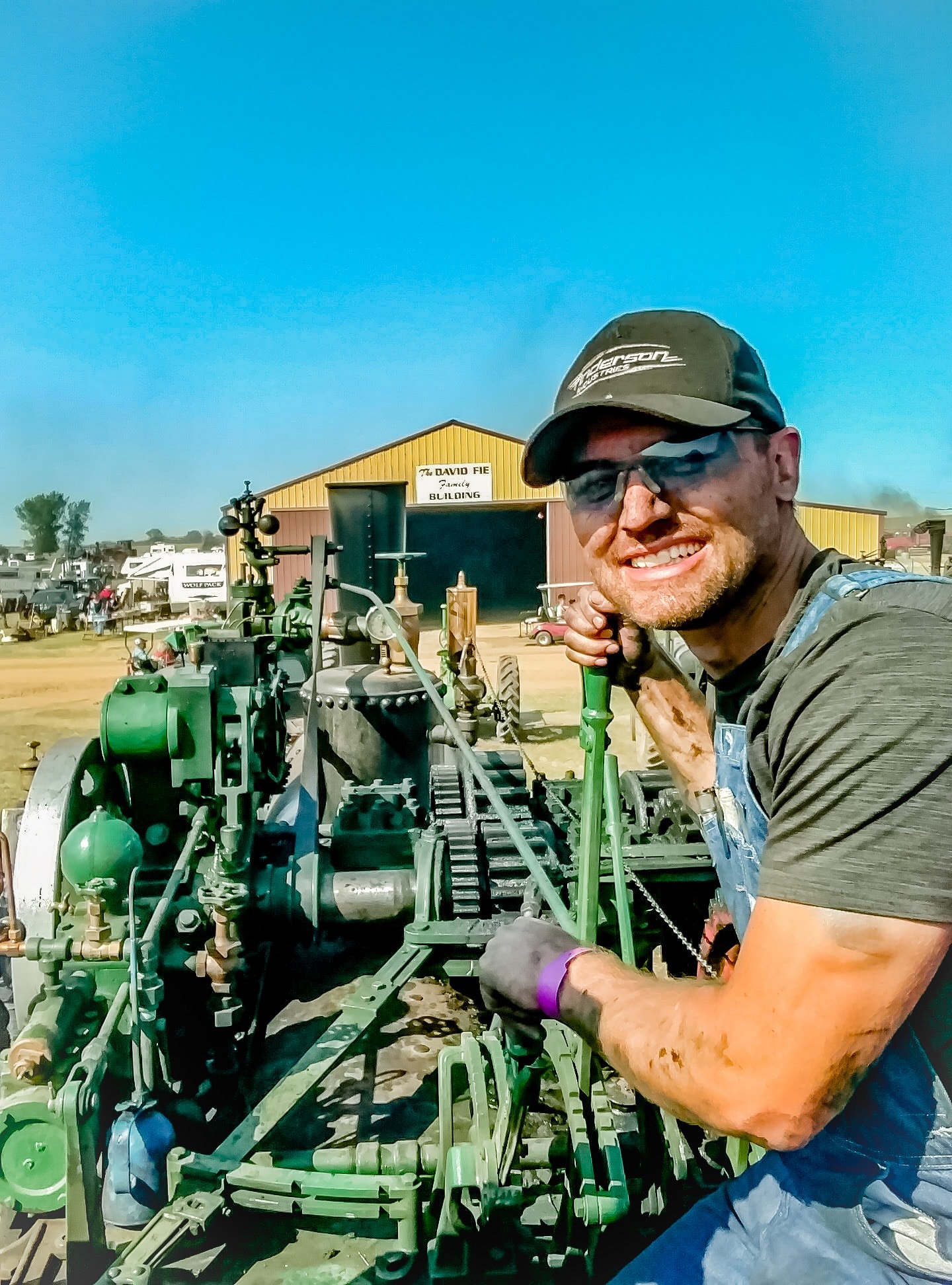
Kory's smile after a successful round pulling 24 bottoms — the look of a man who refused to quit.
September 7, 2018. The 150 HP Case makes its public debut before hundreds of witnesses. A machine lost for over a century pulls 24 bottoms through South Dakota soil — and the people who made it happen are honored in front of the crowd that came to see history.
The wheels went on in Sheridan, Wyoming — Kevin Anderson, Gary Bradley, Mike Bradley, Jeff Detwiler, and Kory standing in front of the finished machine for the first time with those massive red wheels in place. That photo says everything about what this team built together. From that moment, the 150 Case was complete.
First fire happened in the days before the debut — Colin Beamish, Kory, Gary Bradley, Kevin Anderson, and Jack Beamish gathered around the boiler as steam pressure climbed for the first time. After twelve years of dreaming and eighteen months of building, the 150 Case was alive. The sound of that engine turning over under its own steam is something none of us will ever forget.
On September 7, 2018, the 150 Case made its public debut at the Andover, South Dakota threshing show. Hundreds of people had come from across the country — steam enthusiasts, engineers, farmers, historians, and curious onlookers — all gathered to see whether a machine that hadn't existed for over a century could actually work. Jim Briden and Brian Krog assembled the two John Deere plows together in the field for the first pass. The crowd pressed in from every side.
After the differential fix that cost us an hour, the 150 Case backed up to the 24-bottom plow and pulled. The engine dug in, the steam held, and the plows turned South Dakota soil in a row that stretched as far as you could see. The crowd erupted. Twenty million YouTube views would follow — but in that moment, it was just the engine, the field, and the people who believed it could be done.
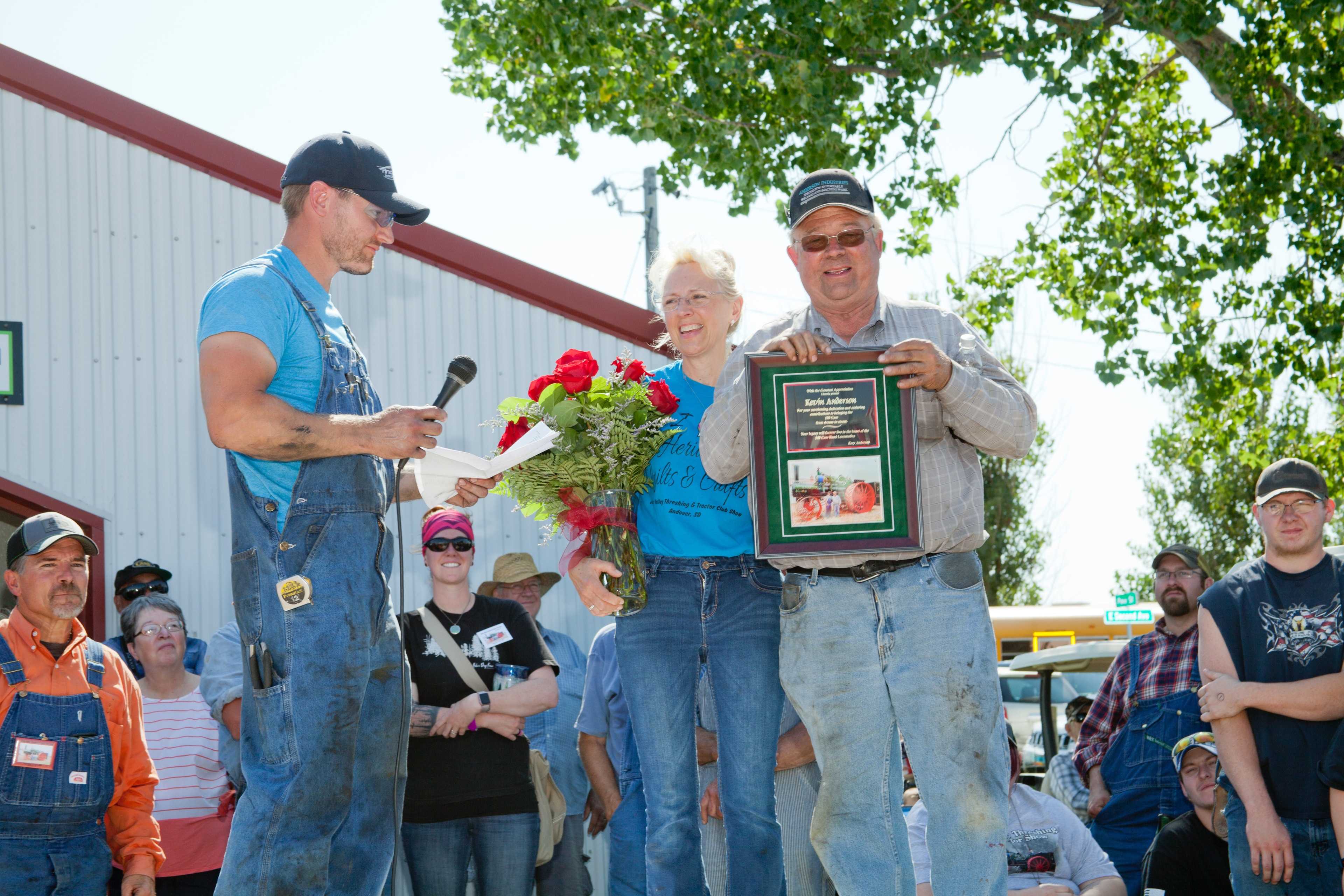
After the plowing, Kory took the stage to honor the people who made it happen. Gary Bradley — the master machinist who gave eighteen months of his shop and his skill — received a plaque of dedication to a standing ovation. Jim Briden — the man who built the wheels, the fixture, and showed up every time he was needed — received his. Kevin Anderson, Kory's father, who was there from the first casting to the last bolt, was honored alongside Donna Anderson, Kory's mother, who supported the dream through every setback and every late night. The embrace between Kory and his father after it was all done said more than any speech could.
The 150 Case team photo — taken in front of the engine on the day of the debut — shows over eighty people in white shirts. Machinists, welders, foundry workers, farmers, engineers, friends, and family. Every one of them a part of this machine. The Dakota Foundry team in Webster, South Dakota poured every casting — thirty-plus men who turned Kory's patterns into iron. Without them, there was no engine.
This is what the Dream to Steam series has been about from the beginning — not just the machine, but the people. The ones who showed up at 9:00 pm on a Tuesday with no obligation and stayed until midnight. The ones who tore down their own jobs to help. The ones who drove from Manitoba. The ones who said yes when they could have said no. The 150 Case is theirs as much as it is anyone's. The legend lives on.
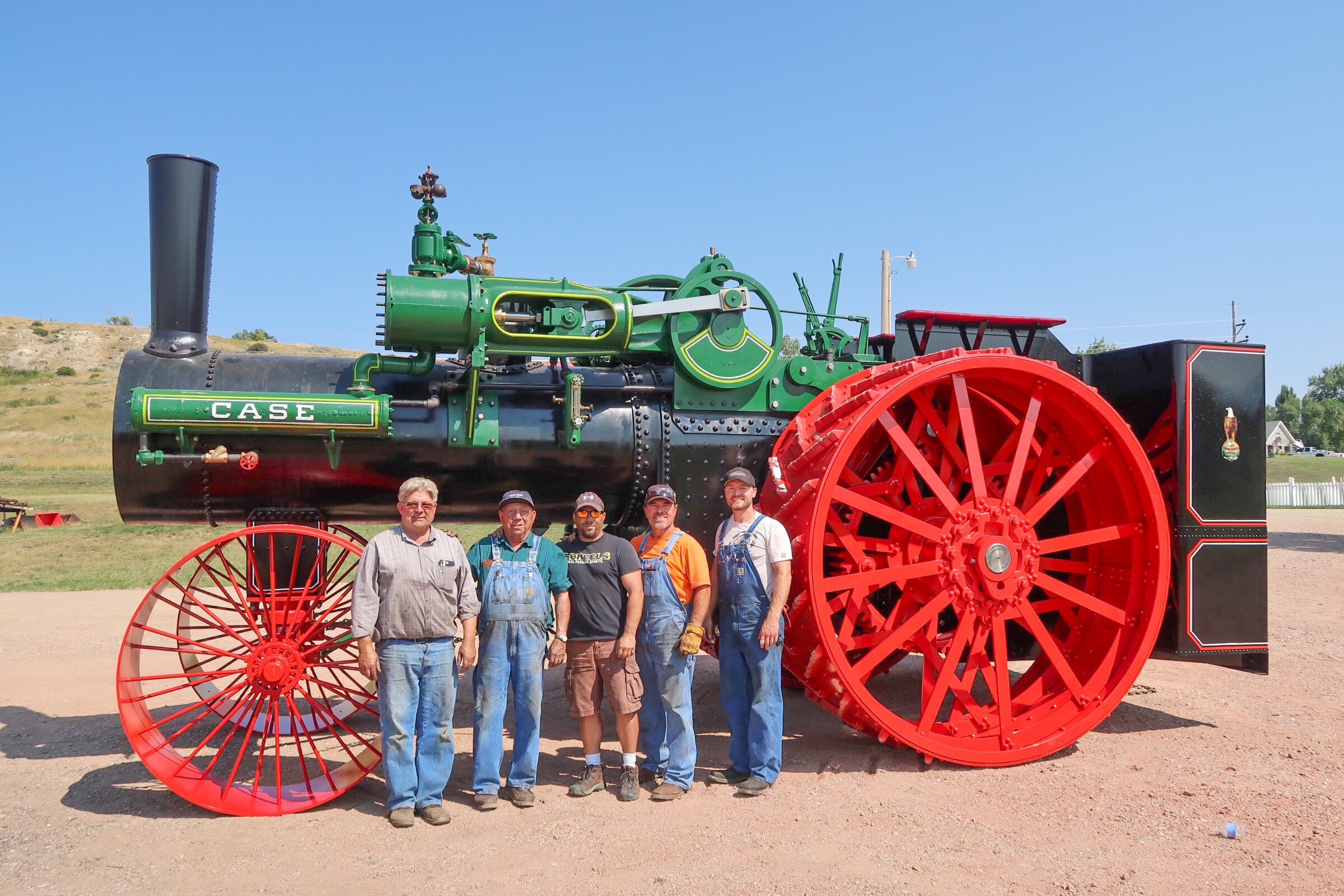
Kevin Anderson, Gary Bradley, Mike Bradley, Jeff Detwiler, and Kory — the wheels just installed, the machine complete for the first time.
First fire — Colin Beamish, Kory, Gary Bradley, Kevin Anderson, and Jack Beamish as steam pressure climbs for the first time.
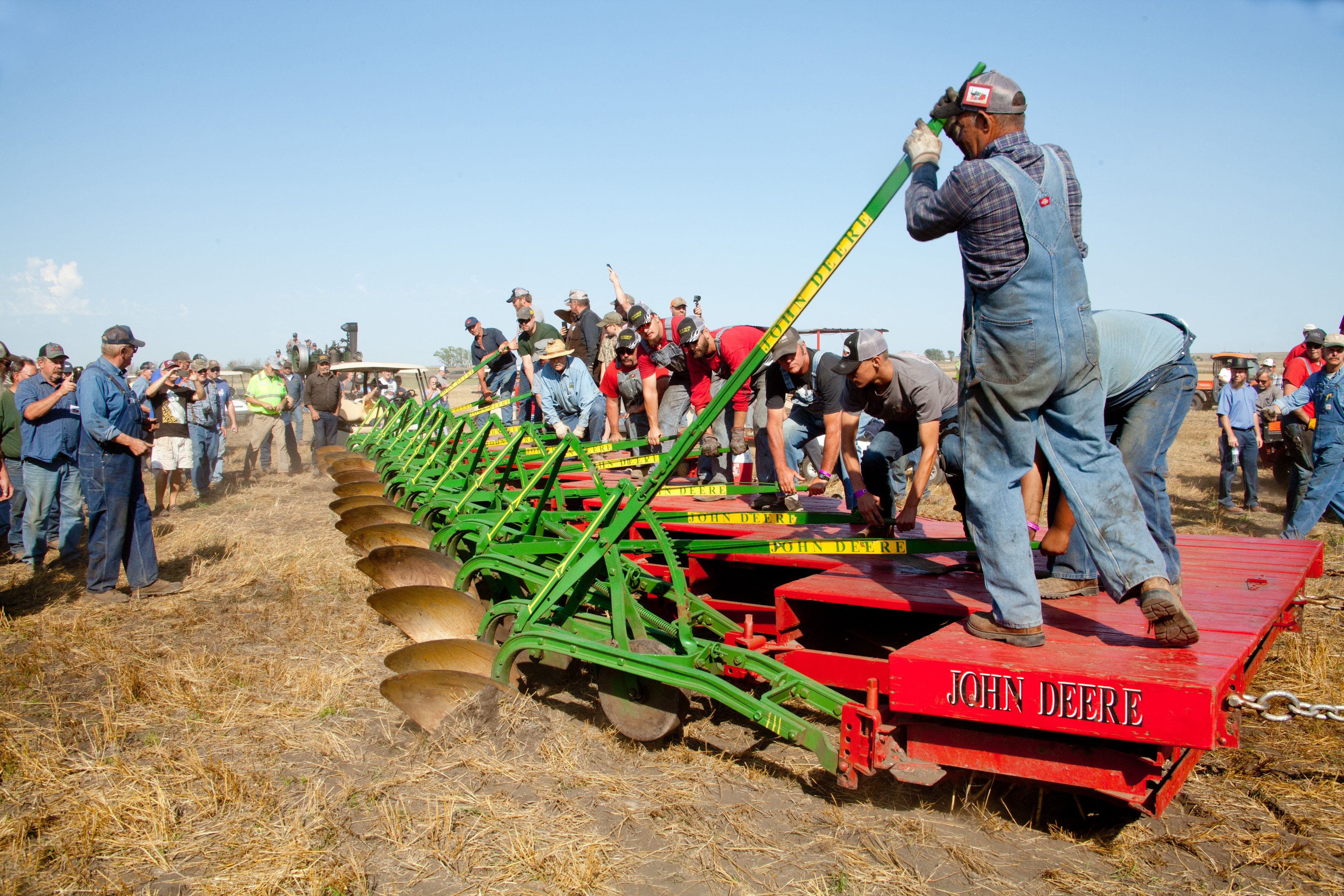
Jim Briden looks on as the crew assembles the two John Deere plows together for the first pass — Brian Krog drops in the first bottom.
The 150 Case team — over eighty people in white shirts who each played a part in bringing the engine back to life.
The Dakota Foundry team in Webster, South Dakota — the men who poured every casting that became the 150 Case.
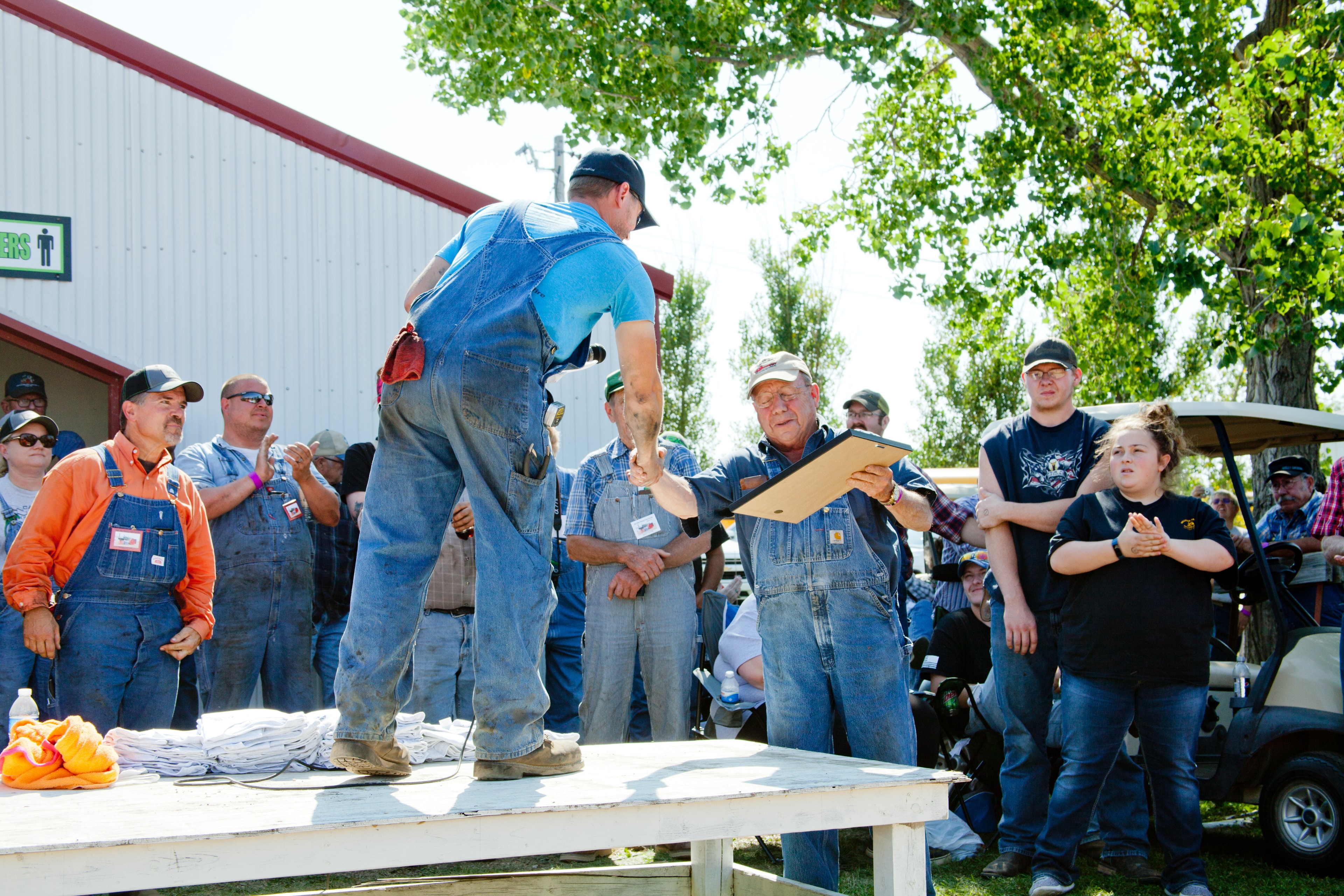
Kory presenting Gary Bradley with his plaque of dedication — eighteen months of skill, shop, and friendship honored before the crowd.
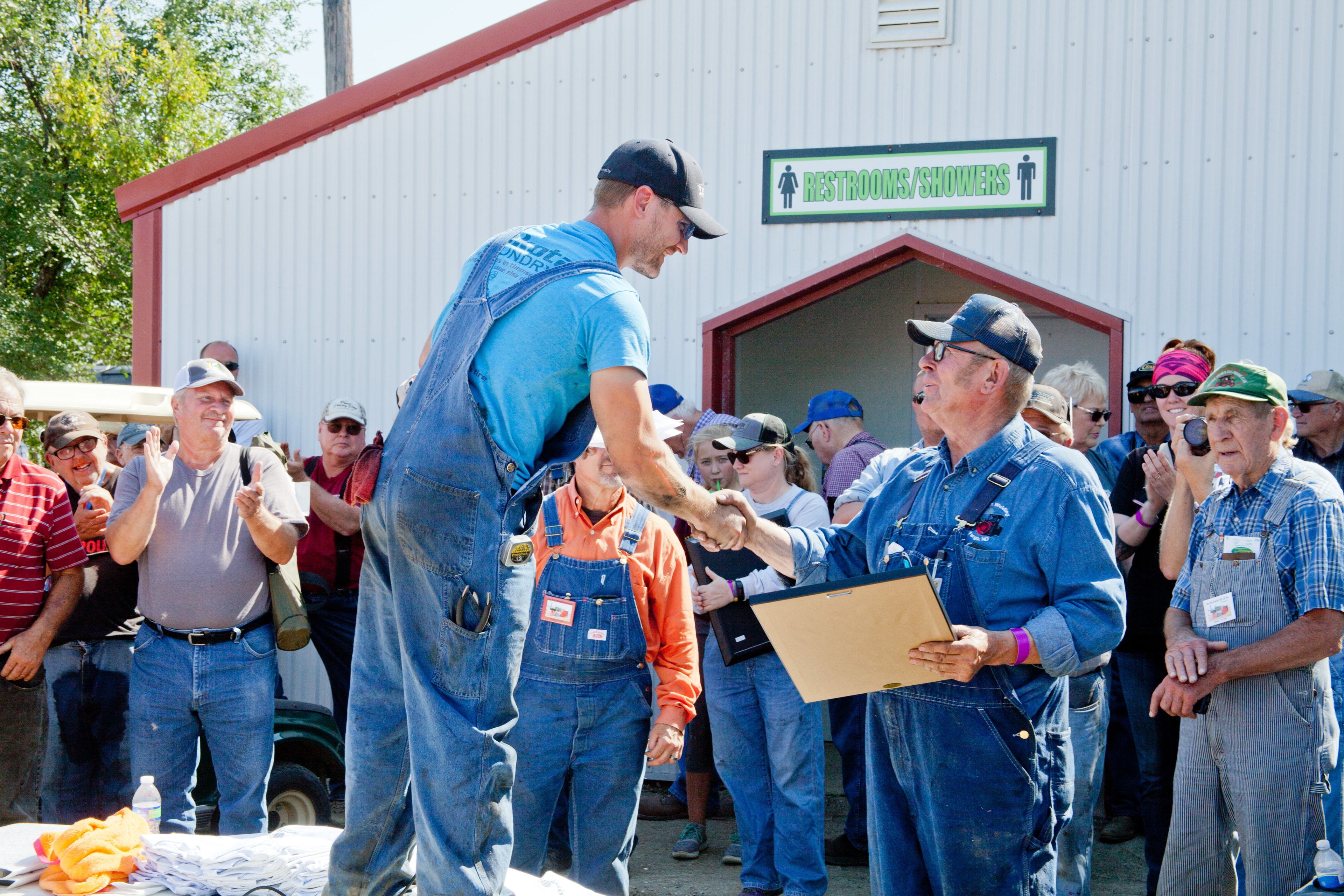
Kory presenting Jim Briden with his plaque of dedication — the man who built the wheels and showed up every time he was needed.
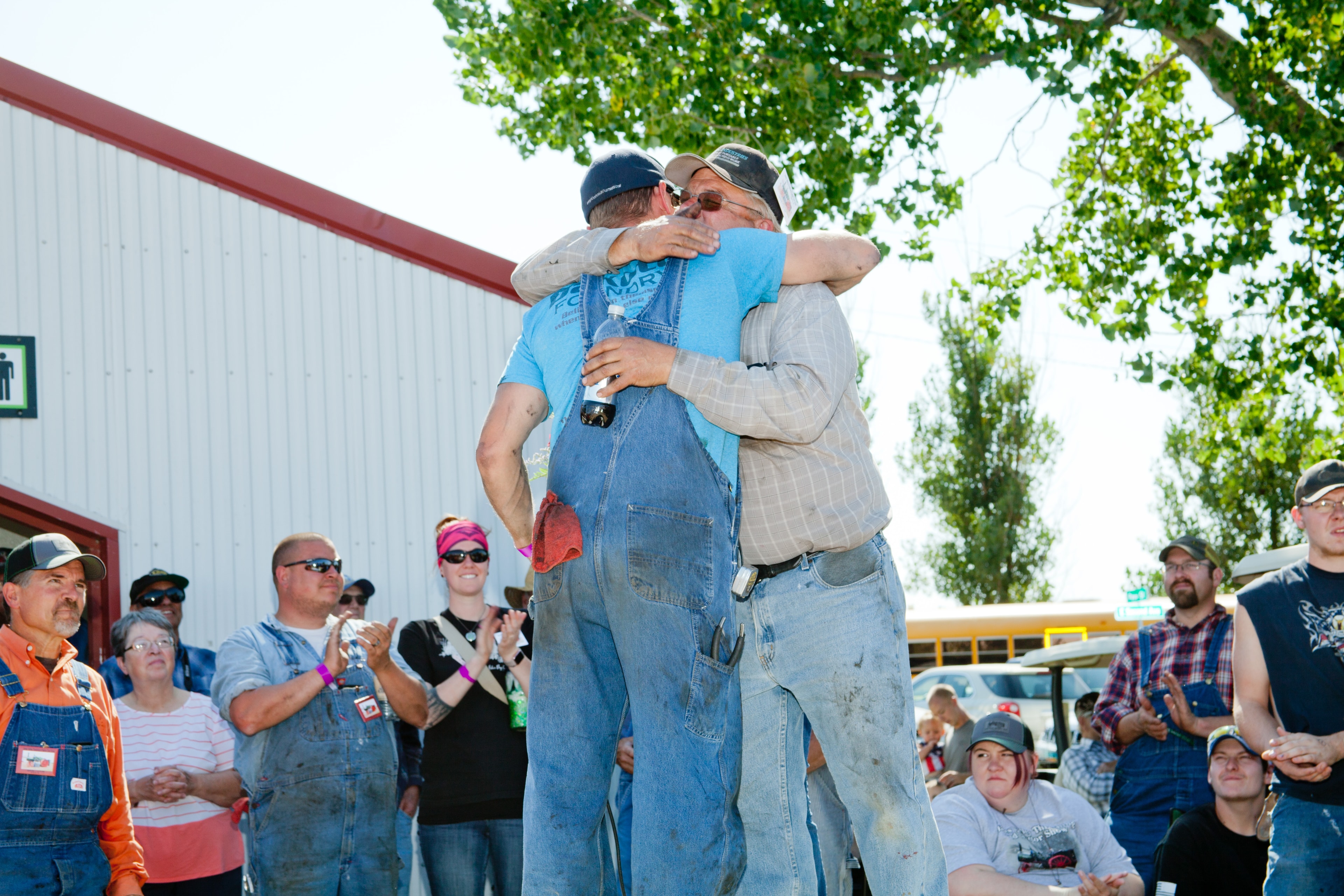
Kory and his father Kevin Anderson embrace after it's all done — the moment that needed no words.
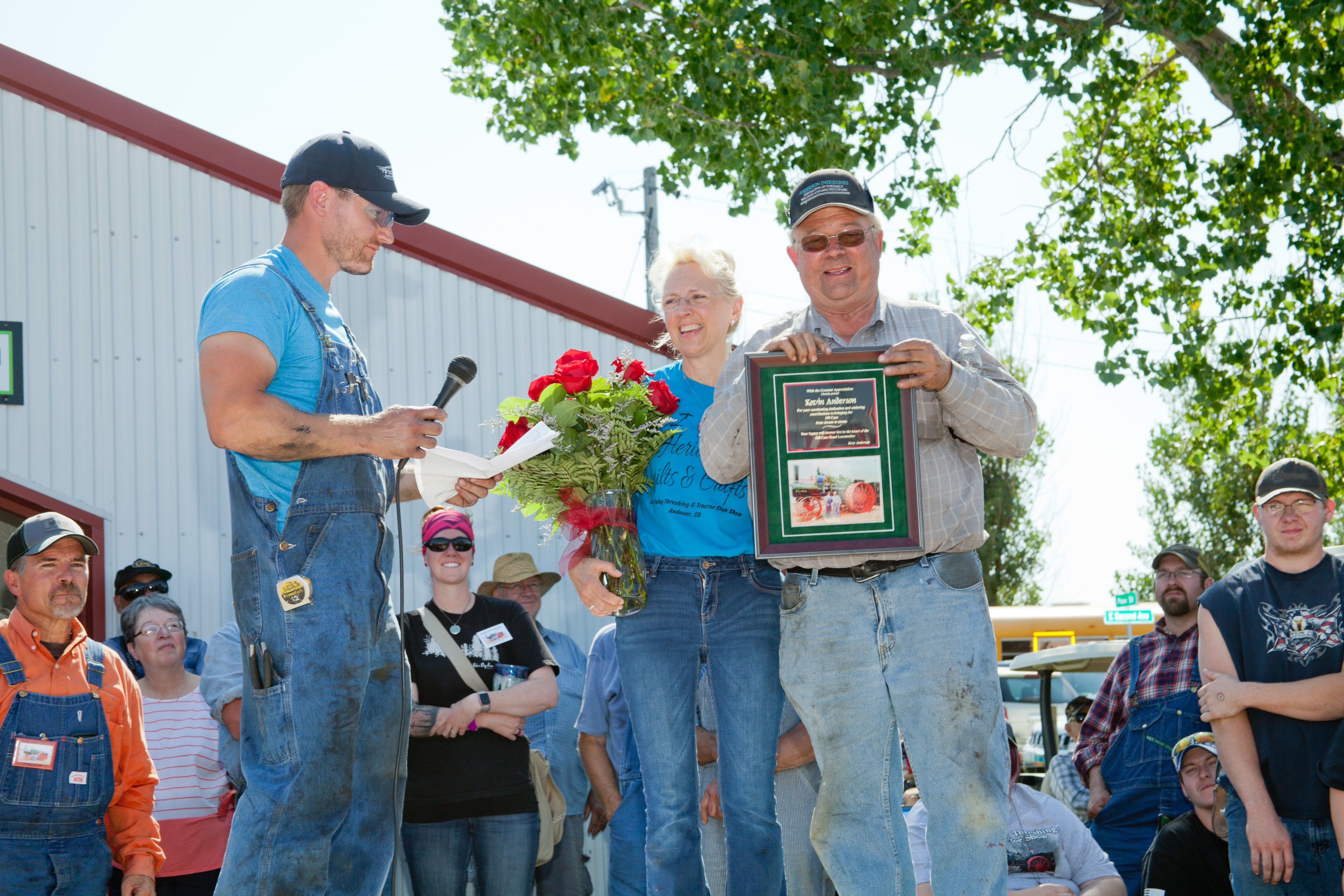
Kory with his mother Donna and father Kevin Anderson during the unveiling celebration — the family that made the dream possible.
Original Build Stories
Firsthand Accounts from the Build
The story of the 150 HP Case was documented in real time — in firsthand posts, articles, and accounts written by Kory and the team as the build unfolded. This archive preserves those original voices.
Full archive coming soon.